
Burnout is more than ordinary fatigue. It’s the experience of being stretched past your limits without a safety net. From delivery drivers working shift after shift to freelancers chasing late payments, the pressure builds quickly.
This article examines the causes of burnout in gig work, its impact on mental health, and the steps that workers, platforms, and policymakers can take to make gig work more sustainable.
What Gig Burnout Really Means
Burnout is a prolonged state of emotional, mental, and physical exhaustion. In the gig economy, these issues often stem from irregular hours, income uncertainty, customer-driven ratings, and the absence of traditional workplace benefits.For many gig workers, this means juggling multiple platforms, working late to make ends meet, and feeling constant anxiety about the next paycheck. Unlike traditional jobs, there’s no HR department, wellness plan, or paid leave to ease the pressure.
Evidence from Research
A growing body of research confirms these risks. A 2025 scoping review of gig work health outcomes found that many studies report increased stress, lower well-being, and burnout among gig workers compared to traditional employees.Another study on algorithmically controlled gig work highlights how ratings and opaque rules intensify stress and make it harder to disconnect from work. A large multi-country survey also found that gig workers report poorer mental health and life satisfaction than full-time employees, with loneliness and financial instability as key factors.
How It Manifests in Daily Life
In practice, burnout may look like:- Drivers skipping rest breaks to maximize earnings
- Caregivers are anxious about unpredictable schedules
- Freelancers are overwhelmed by constant client turnover
Why Gig Workers Are More Likely to Burn Out
Burnout in gig work builds gradually. Multiple pressures overlap: financial instability, long hours, social isolation, and lack of benefits. Combined, they make independent work harder to sustain.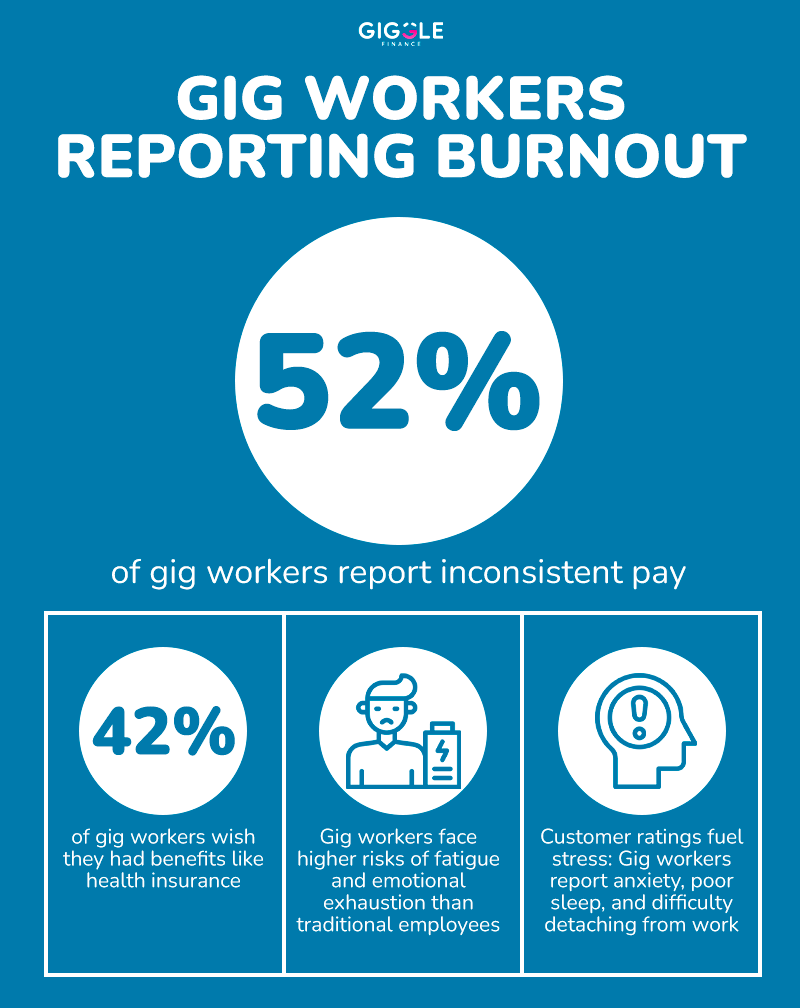
Financial Insecurity and Irregular Income
One of the biggest stressors is not the work itself but the pay. A driver might have a good week, only to see requests fall off the next. Freelancers deal with late payments or canceled gigs. These fluctuations make budgeting a daily challenge.Federal Reserve reports on household economic well-being show that many people doing gig or short-term tasks would prefer more consistent pay or benefits to stabilize their lives. While precise figures vary by survey, the trend is clear: without safety nets, financial stress often snowballs into mental and physical exhaustion.
Creating even a small emergency fund or using income-smoothing tools can help reduce this stress.
Long Hours and Constant Availability
Flexibility can shift into obligation. Many gig workers feel they must accept every offer because rejecting requests may mean lower future ratings or fewer opportunities. Instead of setting schedules, they find themselves tethered to apps, always on the lookout for work.A 2025 Rice University study highlighted how this “always on call” environment leads to difficulty detaching from work, disrupted sleep, and increased anxiety. For delivery drivers and rideshare workers, peak demand times like evenings or weekends often mean working irregular, exhausting shifts that cut into rest and family life.
Over time, the lack of predictable downtime creates a cycle of fatigue and declining mental health, leaving workers burned out despite logging more hours than ever.
Isolation and Lack of Support
Many independent workers spend long stretches of time alone, delivering food, driving passengers, or freelancing from home, without the social support that helps buffer stress in conventional workplaces. Over time, this isolation can amplify feelings of loneliness and detachment.Research from the PMC (2025) shows that gig workers often report lower levels of social connectedness compared to employees in standard jobs. Without peer interaction or professional support systems, challenges that might be manageable in a team environment, like difficult clients, low ratings, or late payments, can feel overwhelming when handled alone.
The lack of community also means fewer opportunities to share coping strategies or advocate for better conditions, leaving many workers feeling replaceable and unsupported.
Lack of Benefits and Safety Nets
Traditional employees often rely on benefits like health insurance, sick leave, and paid time off to recover from stress. Gig workers, however, are left to manage without these protections. When illness strikes or family emergencies come up, many have no choice but to keep working or risk losing critical income. That constant pressure to perform—even when unwell—only accelerates burnout.The Federal Reserve’s 2024 report found that a significant share of gig workers said they wanted benefits such as health insurance and retirement options, but their work arrangements didn’t provide them. Without these safety nets, even routine issues like a flat tire or an unexpected bill can trigger financial and emotional strain. One rideshare driver in the report noted, “If I don’t work, I don’t get paid, and that means no money for rent.” The absence of security makes every setback feel larger, eroding resilience over time.
The Toll on Mental Health
Burnout goes beyond being tired. For gig workers, financial pressure, erratic hours, and limited support can lead to anxiety, depression, and persistent stress. These effects spread to families and communities.The Psychological Impact
Research shows that gig workers face higher rates of stress and fatigue compared to traditional employees. The PMC (2025) review found that job insecurity, low pay stability, and unpredictable hours are directly linked to symptoms of anxiety and depression.Sleep disruption is another major issue, especially for drivers and delivery workers who often work late into the night. Over time, these factors compound, leading to emotional exhaustion and detachment from work.
For many, the mental toll is just as damaging as the financial strain. Feeling constantly “on edge” or unable to plan for the future creates a sense of instability that wears workers down physically and emotionally.
Impact on Families and Communities
Burnout doesn’t stay isolated. It affects relationships, caregiving responsibilities, and household stability.A 2024 American Psychological Association survey found that job stress has a measurable impact on family relationships, with nearly 70% of U.S. workers saying stress affects their home life. For gig workers, whose income and schedules are less predictable, these effects are even sharper. The instability makes it harder to plan for essentials like rent, childcare, or healthcare, often forcing families to live paycheck to paycheck.
At a community level, widespread burnout reduces participation in local activities, weakens social ties, and can even strain public health systems as stress-related conditions rise. In short, gig burnout is not just an individual problem, but a social one.
Recognizing the Signs of Burnout
Burnout doesn’t usually arrive all at once. It builds gradually, often so slowly that it’s hard to notice until it begins to affect your work and daily life. Learning to spot the warning signs early can make a huge difference, helping you take action before stress turns into something more serious.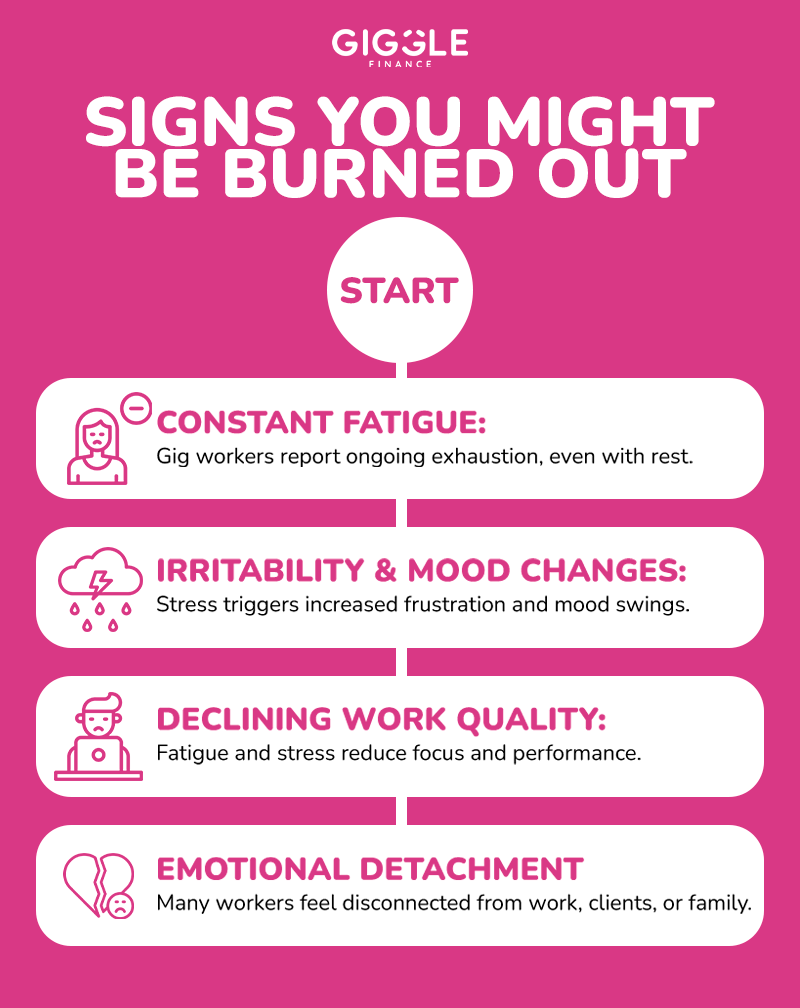
Common Warning Signs
- Persistent fatigue: Constant tiredness, even after what should be enough rest, is one of the clearest indicators of burnout. You may wake up exhausted, struggle to get through routine tasks, or feel like your energy never fully returns.
- Irritability or mood swings: When stress piles up, your patience shrinks. Small inconveniences—such as a late payment, a low rating, or a delayed order—trigger stronger reactions than usual. This can spill over into your interactions with family, friends, and clients.
- Declining work quality: As burnout deepens, focus and motivation tend to drop. Mistakes may become more frequent, deadlines may be more challenging to meet, and your usual standards may feel out of reach. This can create a cycle where reduced performance leads to lower income or ratings, which adds even more pressure.
- Emotional distance: Feeling disconnected from your work, your clients, or even the people you care about is another hallmark of burnout. This detachment can often be a coping mechanism for managing stress, but over time, it can deepen isolation and erode your sense of purpose.
Why These Signs Matter
Noticing these red flags early gives you a chance to intervene. Taking a step back to reassess your workload, set clearer boundaries, or reach out for support can prevent stress from escalating into long-term damage. Simple measures, such as scheduling breaks, discussing with peers, or seeking professional help, can help restore balance before burnout becomes overwhelming.Strategies for Gig Workers to Protect Mental Health

Burnout is real, but it’s not inevitable. By taking proactive steps, gig workers can manage stress and build healthier routines that make their work more sustainable. Here are some strategies to protect both income and well-being.
Set Work-Life Boundaries
Flexibility is one of the biggest appeals of gig work, but it only helps if you use it intentionally. Set clear work hours, schedule breaks, and turn off notifications outside of your chosen shifts. Research from the APA’s 2024 Work in America survey shows that workers who set boundaries report higher life satisfaction and lower stress levels.Build a Financial Buffer
Financial instability is one of the biggest contributors to burnout. Creating even a small emergency fund can reduce anxiety when income dips. For gig workers, using tools like automatic savings apps or applying for resources from Giggle Finance can help bridge income gaps and provide peace of mind.Use Mental Health Tools and Resources
Affordable therapy apps, meditation platforms, and mental health hotlines can make support more accessible. For example, the National Alliance on Mental Illness (NAMI) offers free resources, and apps like Headspace provide guided stress management exercises tailored for busy workers.Join a Community
Isolation intensifies burnout, so finding a sense of community is key. Online forums, local coworking spaces, or gig worker groups offer social connection and provide an opportunity to share coping strategies with others. Studies show that social support networks are strongly linked to lower rates of anxiety and depression, making this one of the most powerful (and overlooked) burnout buffers.What Platforms and Policymakers Can Do
While individual coping strategies are vital, systemic changes also play a critical role in addressing burnout. Platforms that rely on gig workers have an opportunity and responsibility to create healthier environments.Platform-Level Solutions
Offer Wellness Support
Some gig platforms are beginning to experiment with wellness perks, such as discounted mental health apps or access to counseling hotlines. These initiatives can help workers feel valued while giving them tools to manage stress. Even small offerings, such as free access to mindfulness or fitness apps, can make a significant difference when integrated into the worker experience.Build in Rest Breaks
Driving apps already enforce rest after long shifts for safety—but the idea can go further. Adding regular “rest reminders” or downtime features across more gig platforms would help normalize breaks and reduce chronic fatigue.Pilot Benefits for Workers
A growing number of platforms are piloting benefits such as health stipends, accident insurance, or retirement savings options. While these programs are still limited, they show recognition that workers need more than just pay per task. Early evidence suggests that even partial benefits can ease financial anxiety, reducing one of the main triggers of burnout.Policy-Level Solutions
Expand Access to Affordable Healthcare
One of the leading causes of stress for gig workers is going without health coverage. Policymakers can reduce this burden by expanding affordable healthcare options, ensuring that independent workers don’t have to choose between medical bills and daily needs.Strengthen Worker Protections
Policies that guarantee minimum pay standards, prevent unfair deactivations, and protect against exploitation can reduce job insecurity—one of the biggest triggers of burnout. Establishing these protections at state and federal levels would create more stability across gig platforms.Support Mental Health Resources
Government-backed mental health initiatives, such as grants for counseling programs or partnerships with nonprofits, could make affordable services available to gig workers nationwide. This kind of support recognizes mental health as a workplace issue, not just a personal one.Moving Toward a More Balanced Gig Economy
Burnout in the gig economy is a real concern, but it doesn’t have to define independent work. By combining individual safeguards with structural reforms, gig work can move from a survival hustle to a sustainable option.At its core, burnout stems from a lack of balance: too much stress and too little security. Address both sides, ES, and gig work can support financial stability and mental health. With thoughtful changes, the gig economy can work better for everyone.