On this page
The holiday season brings big opportunities for self-employed people, but it also brings long hours, unpredictable workloads, and more stress than usual. Freelancers, gig workers, and independent contractors often take on extra projects to meet year-end demand, which can quickly lead to exhaustion if there’s no plan in place.
Studies show that self-employed workers often experience higher stress levels than traditional employees, especially during busy seasons. During these periods, sleep declines, workdays stretch longer, and finding time to rest becomes increasingly difficult.
This guide shares practical, simple stress hacks to help you stay balanced during the holiday rush and finish the season feeling steady, healthy, and in control.
Why Holiday Stress Hits the Self-Employed Hard
The holidays are one of the busiest times of the year for independent workers. Clients rush to finish end-of-year projects, families hire more help, and many gig platforms experience major spikes in demand.
While this can boost income, it also comes with more pressure, tighter schedules, and higher expectations. For self-employed workers, managing all of this alone can quickly become overwhelming.
Irregular Workloads and Unpredictable Hours
Freelancers often experience sudden workload changes during November and December. Many feel the need to accept every opportunity, which leads to long days, minimal breaks, and rising anxiety.
Adding to this strain, research shows that self-employed individuals experience higher stress levels overall. This is because they manage everything themselves, including client communication, scheduling, delivery, invoicing, and support.
Pressure to “Make the Most” of Peak Season
The holiday rush often feels like a once-a-year chance to maximize earnings. This pressure can push self-employed people to overbook, accept last-minute jobs, or work through evenings and weekends.
But as the season gets busier, the pressure creates tension between financial goals and personal well-being. Even experienced freelancers admit that holiday workloads can feel emotionally draining.
Reduced Rest and Recovery
Sleep and recovery often take a hit during the busiest weeks. Studies on remote and independent workers show that long work cycles reduce sleep quality, increase stress hormones, and make it harder to stay focused.
Beyond poor sleep and stress, the pressure of juggling multiple clients can also lead to unhealthy habits like skipping meals or pushing through without breaks.
Stress Management for Long Shifts and Tight Deadlines
When every client wants their project finished before the end of the year, self-employed workers often end up working late nights, early mornings, or both. Managing this pressure becomes easier when you use simple systems that protect your time and energy.
Use a Flexible Scheduling System
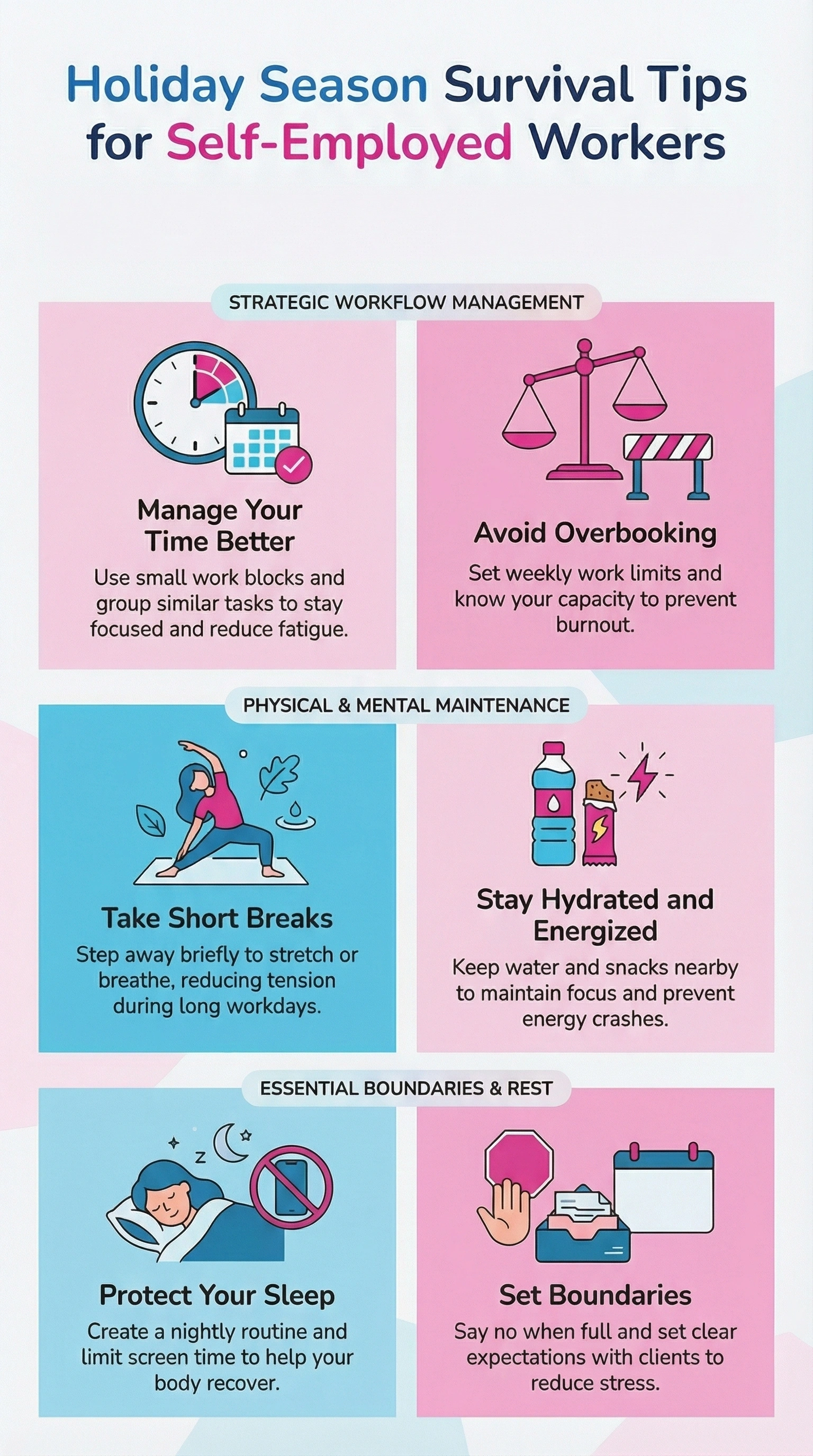
A flexible schedule helps prevent burnout while still allowing you to take on the extra work that comes with the season. Instead of packing tasks into one long block, break your day into small, manageable sections. This helps you stay focused and prevents overwhelm from building.
Practice time blocking
Use short blocks to separate client work, messages, breaks, and admin tasks. Keep blocks realistic and add buffer time between them so deadlines don’t stack on top of each other. This creates a calmer flow, even on busy days.
Batch similar tasks
Group similar activities like writing, editing, deliveries, and consultations so your brain doesn’t constantly switch gears. This reduces mental fatigue and helps you finish work faster with less stress.
Avoid Overbooking With a “Holiday Capacity Cap”
Setting a limit on how much work you’ll take each week helps you stay sustainable during peak season. To do this, consider how much time you realistically have, then decide your maximum number of projects or hours. Sticking to this “capacity cap” prevents days from spiraling into endless work and provides space for rest.
Also, let clients know early when your schedule is filling up. Clear communication makes it easier to turn down extra work without feeling guilty.
Quick Health Practices to Manage Physical Strain
Holiday deadlines often require longer hours and faster turnarounds. For the self-employed, it’s easy to focus so intensely on work that you forget to take care of your body.
To maintain balance, consider these simple habits that help you stay grounded through the busiest weeks without slowing your progress.
Micro-Breaks That Reset the Body
Micro-breaks are short pauses that relax your muscles and give your mind a chance to settle. Even a few minutes can help you feel less tense and more focused as the day goes on.
Gentle movements that ease tension
Small actions like rolling your shoulders, stretching your neck, or shaking out your hands help reduce stiffness from long work sessions. These movements keep your body from tightening up during hours of typing, driving, lifting, or sitting in one position.
Short pauses that reset your focus
Stepping away for a moment, taking a slow breath, or walking to another room can provide a mental reset. These tiny breaks prevent fatigue from building up and make it easier to return to your tasks with better focus.
Hydration and Nutrition Basics for Busy Weeks
Stressful days often lead to skipped meals, low water intake, and energy crashes. But a few simple habits can help keep your body strong even when your schedule feels packed.
Easy ways to stay energized
Choosing small, hearty snacks throughout the day helps maintain steady energy. Foods like fruit, nuts, or yogurt are easy to keep nearby and prevent long gaps without eating, which often cause headaches and fatigue.
Keeping hydration within reach
Having water within arm’s reach encourages more frequent sipping. Staying hydrated supports your concentration, reduces tension, and helps your body manage the physical effects of stress.
Create a Simple Sleep-Protecting Routine
Busy weeks can make it hard to unwind at night. As such, a calming routine helps your body switch out of work mode and prepares you for deeper rest.
Wind-down habits that signal rest
Gradually lowering the lights, stretching lightly, or practicing a brief breathing exercise can help your body shift out of work mode. These quiet rituals send a clear signal that it’s time to rest and recharge.
A nighttime ritual that clears your mind
Writing down the next day’s tasks or thoughts helps release mental tension. Setting aside screens for a little while also reduces overstimulation, making it easier to settle into sleep even when you’re juggling a heavy workload.
Mental Wellness for High-Demand Months
Holiday stress isn’t just physical, as the mental load of managing clients, deadlines, and unpredictable schedules can feel just as heavy. Protecting your mental well-being during peak season helps you stay steady, make better decisions, and enjoy the work you take on. These small, practical habits can keep stress from building up.
Say “No” Without Feeling Guilty
It’s normal to feel pressure to accept every opportunity during the holidays, but taking on more than you can handle often leads to burnout. Saying “no” doesn’t mean you’re turning away from success. It simply means choosing work you can complete with care and without overwhelming yourself.
To respectfully turn down clients or extra work, you can use simple phrases like:
- “My schedule is full this week, but I can offer availability next week.”
- “I’m not able to take this on right now, but I can recommend someone who may help.”
Clear communication protects your time while still sounding helpful and professional. It also builds trust by helping clients understand expectations and deadlines.
Set Boundaries With Repeat Clients
Clients often reach out more during the holidays, sometimes with urgent requests or last-minute changes. Setting gentle but firm boundaries helps keep your workload stable.
You can:
- Establish clear working hours
- Define response times
- Confirm the scope before starting work
- Flag early if something will require extra time
Most clients appreciate clear communication, and setting boundaries helps them understand what’s realistic while preventing misunderstandings.
Build “Digital Downtime” Into Your Week
Constant notifications make stress feel heavier. Giving your brain short breaks from screens can help reduce tension and improve focus. It doesn’t need to be a long detox because even small breaks help reset your mind.
10-minute no-screen breaks
Try taking a few minutes throughout the day to:
- Step outside
- Drink water without your phone
- Stretch
- Look away from the screen while resting your eyes
These pauses give your mind space to breathe, especially when your workload is high.
Build a Peak-Season Stress Plan That Lasts Through January
Many self-employed people finish December feeling drained, only to face another wave of tasks in early January. Creating a simple, steady stress plan can help you stay balanced during peak season and recover more smoothly afterward.
Identify Stress Patterns From Previous Years
Understanding what typically overwhelms you during the holidays makes it easier to prepare this time around. Taking a moment to reflect on past seasons helps you notice where pressure tends to build.
Look for moments that felt heavy
Recall the periods that felt the heaviest. This could be when deadlines stacked up, clients needed quick turnarounds, and your sleep suffered from long hours. Reflecting on these moments can help you see the stress patterns that surface year after year.
Notice the habits that made things harder
You might recall skipping breaks, saying yes too often, or letting tasks blend together without structure. Recognizing these habits gives you the chance to make small changes that protect your energy this season.
Create a Weekly “Stress Map”
A weekly stress map is a simple guide that helps you manage your time with intention. It gently shapes your week so you respond to stress instead of reacting to it, and move through your days with more control.
Plan for natural highs and lows
Choose at least one day to be lighter, such as a slower morning or an early finish in the evening. On heavier days, build in pockets of rest, even if they are only a few minutes long. Doing so can help keep your schedule from turning into one long stretch of work.
Add small check-ins during the week
A midweek check-in helps you adjust your schedule and keep the rest of the week manageable before stress starts to build. You can briefly review your workload, shift tasks that no longer fit, or communicate early with clients if something needs more time.
Keep Your January Light
January often becomes difficult because many freelancers continue December’s pace without a recovery period. To give you breathing room to adjust, lightening your schedule after the holiday season helps you regain energy.
Let yourself slow down after the holiday rush
Even a few days with shorter hours can make a noticeable difference. This slower start gives your mind and body space to recover from weeks of intense work.
Use the quiet period to rebuild energy
As the holiday pressure fades, you can ease back into routines that support you, such as steadier sleep, regular meals, or simple creative breaks. These gentle habits help set a healthier tone for the new year.
Support for Growing Your Self-Employed Work
Sometimes holiday demand reveals that your business is ready for its next step. You might need better tools, a more organized workflow, or financial support to take on bigger opportunities.
If you feel stretched thin yet ready to expand, you can look into flexible help through Giggle Finance’s Business Funding Program. It is built to support independent workers who want to grow without adding unnecessary stress.
Moving Forward: You Deserve a Calmer Holiday Season
The holidays may be a busy time for self-employed people, but they don’t have to become overwhelming. With simple stress habits, clear boundaries, and a flexible plan, you can manage the season with more balance and less pressure. Even small changes can help you stay grounded, protect your energy, and enjoy the work you choose to take on.
If the holiday rush opens the door to new possibilities or bigger goals, you can explore support through Giggle Finance, created to help independent workers grow without stretching themselves too thin. Apply here.
References
- Buffer. State of Remote Work Report. https://buffer.com/state-of-remote-work
- Harvard Business Review. We’re Still Lonely at Work https://hbr.org/2024/11/were-still-lonely-at-work
- Harvard Business Review. What Your Coworkers Need Right Now Is Compassion. https://www.harvardbusiness.org/wp-content/uploads/2020/04/HBR_What-your-Coworkers-Need-Right-Now-is-Compassion.pdf
- Microsoft Work Trend Index. The Rise of the Infinite Workday https://news.microsoft.com/de-ch/2025/06/17/new-microsoft-study-reveals-the-rise-of-the-infinite-workday-40-of-employees-check-email-before-6-a-m-evening-meetings-up-16/
- Upwork. Freelance Forward Report 2022 https://www.upwork.com/research/freelance-forward-2022
- Sleep Foundation. The Link Between Sleep and Job Performance https://www.sleepfoundation.org/sleep-hygiene/good-sleep-and-job-performance
- American Psychological Association. Stress in America™ https://www.apa.org/pubs/reports/stress-in-america/2025
Disclaimer: Giggle Finance provides Revenue-Based Financing programs for business purposes only. Any mention of any loan product(s), consumer product(s), or other forms of financing is solely for marketing and educational content purposes and to help distinguish Giggle Finance’s product from other comparable financing options available in the markets.