On this page
With income that changes from month to month, keeping up with estimated quarterly taxes can feel like one of the trickiest parts of working for yourself. The process gets much easier, though, once you understand the rules. And for self-employed workers, it comes down to two things: a simple calculation and a steady set-aside habit. Together, they help you pay on time and stay ahead of every deadline.
A quick note: This content is for general informational purposes and is not tax, legal, or financial advice. Tax rules change, so confirm current requirements with a qualified tax professional or on IRS.gov.
Key takeaways
- Basing your payments on last year’s tax is a straightforward way to reduce the risk of an underpayment penalty, while annualizing lets your payments follow uneven income.
- A missed or short payment can trigger an underpayment penalty that grows the longer it remains unpaid, so paying as soon as you can keeps costs down.
- Keeping a separate tax account and moving a set percentage from every deposit into it is a reliable way to have the cash ready by each deadline.
- Saving more during strong months and checking your numbers midyear helps keep slow seasons from leaving your tax account short.
- Putting all four due dates on your calendar with reminders two weeks ahead gives you time to review your numbers and top up your tax account.
What Are Estimated Quarterly Taxes for the Self-Employed?
Estimated quarterly taxes are how self-employed workers pay their taxes during the year, since no employer is withholding anything from their pay.
Freelancers who also work a salaried job have another option. You can ask your employer to withhold more tax from your paycheck to cover what you’ll owe on your freelance or project-based income, which may reduce or remove the need for estimated quarterly payments.
What the Payments Cover
Your estimated quarterly payments cover regular federal income tax and self-employment tax. Self-employment tax is how independent workers pay into Social Security and Medicare, at a rate of 15.3%, since you cover both the employee and employer shares. That rate doesn’t apply to everything you earn, though.
To find your net earnings, subtract your ordinary and necessary business expenses from your business income, and the tax then generally applies to 92.35% of that amount. Your state may also require its own estimated payments, so check with your state tax agency.
Who Needs to Pay
You’re generally considered self-employed and likely responsible for estimated taxes if you earn income as any of the following:
- An independent contractor or freelancer
- A sole proprietor
- A partner or LLC member who receives guaranteed payments
- Someone running a business of their own, including part-time
Next, look at how much tax you expect to owe. The IRS generally requires estimated payments once both of these conditions apply:
- You expect to owe $1,000 or more in federal tax at filing, after subtracting withholding and refundable credits.
- Your withholding and credits won’t cover the smaller of these two amounts:
- 90% of the tax you expect to owe this year
- 100% of the tax shown on last year’s return, as long as that return covered a full 12 months
Also, look at last year’s tax return. Owing any federal tax for that year means you may need to make estimated payments this year as well, while owing nothing for the full year generally means you don’t need to. To double-check, use the worksheet in Form 1040-ES, Estimated Tax for Individuals.
Estimated Quarterly Tax Due Dates
Pay on time each period to avoid an underpayment penalty. For the 2026 tax year, the remaining due date is (based on this blog’s posting):
- 4th Payment: January 15, 2027, for income earned September 1 through December 31
Planning further out? The 2027 tax year is expected to follow the same pattern, with payments likely due April 15, 2027, June 15, 2027, September 15, 2027, and January 15, 2028. These dates can shift, so check the IRS Self-Employed Tax Center for official announcements before you put them on your calendar.
Whichever year you’re planning for, keep in mind that due dates falling on a weekend or a legal holiday move to the next business day. Since the fourth payment lands as you close out the year, a year-end tax checklist for 1099 workers can help you pay and get ready to file at the same time.
What Happens If You Miss a Payment
A missed or short payment triggers an underpayment penalty, which works like interest on the amount you fell short. It’s based on how much you underpaid and how long that amount stayed unpaid, so the cost keeps growing until you catch up. Making the payment as soon as you can, even partway through a period, limits how much it adds up.
How to Calculate Your Estimated Payments
Form 1040-ES is the IRS form for estimated taxes, and it includes a worksheet to figure out your payments for the year. You’ll need to estimate your adjusted gross income (AGI) and your deductions, so pull together your income and expense records before you start.
There are three methods you can use for computing your payments.
Method 1: Base Your Payments on Last Year’s Tax
Estimating a full year of income in advance is hard, especially with earnings that shift month to month. Safe harbor rules give you a simpler target. You generally avoid an underpayment penalty once your withholding plus timely estimated payments equal at least:
- 90% of your tax for the current year, or
- 100% of the tax shown on last year’s return, or 110% if your adjusted gross income last year was above $150,000 ($75,000 if married filing separately)
Basing payments on last year’s tax is a simple option, since you already know the number. Earn more this year, and you’ll owe the difference when you file, generally without a penalty.
Method 2: Annualize Your Income
Annualizing bases each payment on what you’ve earned so far in the year. This method suits income that rises and falls, since your payments stay smaller during slow stretches and grow as your earnings pick up. To calculate your payments this way, use IRS Form 2210.
For further guidance on the calculations, see IRS Publication 505, which includes the forms and instructions for refiguring your payments. Even so, the math can get complicated, so working with a tax professional is the simplest way to make sure each installment is accurate.
Method 3: Get Help From a Tax Professional
A tax professional can help you choose the right method, check your numbers, and adjust your estimated quarterly tax payments as your income changes. That support is especially useful in your first year of self-employment, when you have no prior-year return to work from, or in any year your income shifts significantly.
Beyond the math, they can also spot deductions you may have missed, flag any state estimated payments you owe, and handle the paperwork for methods like annualizing, which takes extra calculations on Form 2210.
To find the right fit, look for a certified public accountant (CPA) or an enrolled agent, since both are licensed to represent taxpayers before the IRS. Ideally, choose someone who works with self-employed clients and understands irregular income.
On top of that, the portion of their fee tied to your business is generally deductible as a business expense, which helps offset the cost. That includes preparing your Schedule C, the IRS form sole proprietors and single-member LLC owners use to report their business income and expenses.
How to Set Money Aside So You’re Ready for Every Deadline
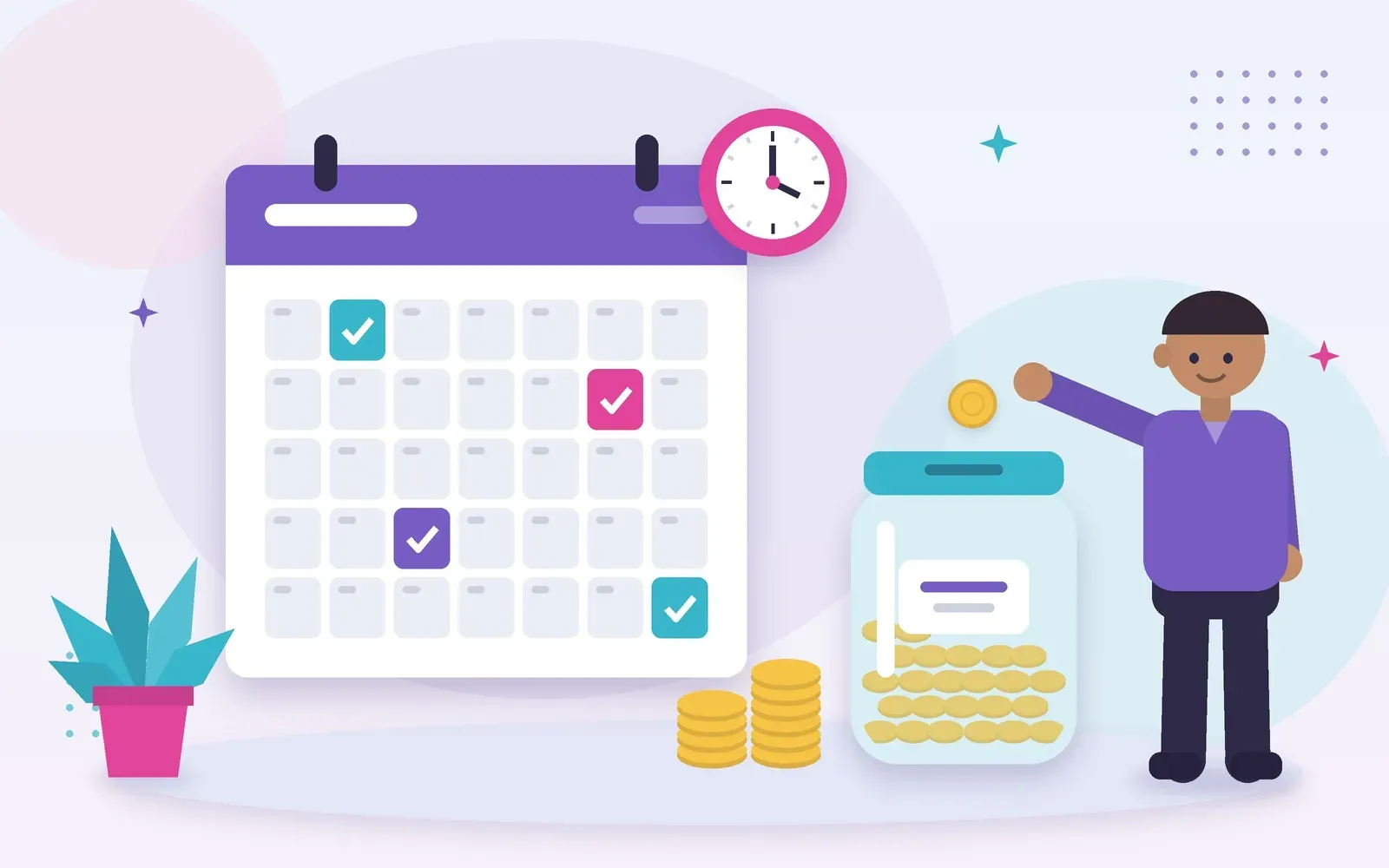
Once you know what you owe, the next step is making sure the money is there by the deadline. These habits help you set it aside without feeling the pinch all at once.
1. Keep a Separate Tax Account and Leave It Alone
A dedicated tax account keeps that money out of your everyday spending, with your business account handling the costs of running the business. Think of the tax balance as money that already belongs to the IRS, since dipping into it for a supply run or an equipment repair can leave you short on the due date.
Some business banking platforms make this even easier with built-in tax tools. Depending on the provider, you can set aside a percentage of each deposit automatically, see a running estimate of what you owe, or keep your tax savings in a separate sub-account within the same app. Compare a few options to see which features align with how you get paid.
2. Move a Set Percentage From Every Deposit
Pick a percentage you can set aside, then transfer it to your tax account each time a client or platform pays you. Small, frequent transfers are easier to keep up with than one large transfer right before a deadline.
To make the habit stick, check whether your bank lets you schedule recurring transfers or set rules that move money between accounts on its own. That way, a weekly transfer timed to your usual payout day keeps your tax savings growing, even during your busiest weeks. Then, at the end of each quarter, revisit the percentage against your actual profit so far and adjust it up or down as needed.
3. Put the Deadlines on Your Calendar
Add all four due dates to your calendar at the start of the year, then set a reminder about two weeks before each one. That window gives you time to compare your tax savings against your latest income, update your estimate after a strong or slow stretch, and move extra money into your tax account if the balance looks short. A second reminder a few days out works as a final check, so the payment never slips past a busy week.
For the payment itself, IRS Direct Pay lets you pay from your bank account for free, while card payments go through an approved processor for a fee. Pick one method and stick with it to keep each payment quick and routine.
4. Plan Around Slow Seasons
Seasonal or irregular income calls for saving more heavily during strong months, so a slow stretch doesn’t leave you short on a due date. Start by looking back at last year’s deposits to spot which months tend to run lighter for your business. From there, raise your set-aside percentage during your peak months and aim to have the next payment fully funded before your slow season begins.
A separate business cushion adds another layer of protection. Building a buffer for irregular gig income covers everyday costs during a quiet month, so you never have to pull from your tax savings to keep the business running.
5. Check In Midyear
A quick review around the summer, on your own or with a tax professional, shows whether your payments still match your actual income. Compare what you’ve earned so far against your original estimate.
Adjusting your remaining payments at that point is far easier than finding a large balance due when you file. It can also help you lower your payments after a slower first half, which frees up cash for your business.
Make Quarterly Taxes Routine
Estimated quarterly taxes don’t have to feel like a quarterly crisis. Know your deadlines, choose a safe harbor target, save a set share of every deposit, and review your numbers before each due date. Over time, the process becomes a habit, which leaves you more time to focus on growing your business.
Still, even the best plan can’t control when a slow stretch hits, and a quiet month right before a deadline can tighten your cash flow. Giggle Finance offers revenue-based funding for self-employed workers and small businesses, so you can keep covering business costs like supplies, equipment, and software while your tax savings stay set aside.
Each part of the funding is designed around how independent work pays:
- Business Activity-Based Approval: Your business income and deposits drive eligibility.
- Revenue-Based Repayment: Weekly payments adjust with what your business earns.
- Flexible Use of Funds: Put the money toward any business costs, from equipment to supplies to operating costs.
- Business Credit Reporting: On-time payments are reported to Experian and TransUnion.
Need to keep business costs covered through a slow quarter? See what funding you may qualify for.
And for more ways to stay on top of your taxes and cash flow, explore the money and tax guides on the Giggle Finance blog.
Disclaimer: Giggle Finance provides Revenue-Based Financing programs for business purposes only. Any mention of any loan product(s), consumer product(s), or other forms of financing is solely for marketing and educational content purposes and to help distinguish Giggle Finance’s product from other comparable financing options available in the markets.