What is Microwork?
Microwork refers to ultra-small, online, task-based jobs, and this slice of the gig economy has grown rapidly. Thanks to platforms like Amazon Mechanical Turk and Clickworker, it has become easy for businesses to break down large jobs into thousands of smaller ones that gig workers apply for and do. Because most tasks are straightforward, formal training is rarely required. The primary draw for microworkers is filling income gaps, flexible work locations and the opportunity to develop digital skills are also significant motivators. The roots of microwork date back to when businesses first began outsourcing tasks like data entry online, utilizing digital platforms to tap into vast pools of remote labor. As demand grew, more microtasking platforms emerged, harnessing a truly global workforce.What Counts as Microwork?
These tasks are often straightforward, sometimes taking only seconds or minutes and rarely requiring specialized expertise. And among those tasks are:1. Data Handling and Quality Assurance
Tasks such as data entry, validation, verification, and cleaning involve entering information from scanned documents or forms, verifying accuracy, and removing duplicates or errors.2. Annotation and Categorization for AI
Data annotation, image labeling, image categorization, and video captioning all contribute to training machine learning models. Workers may tag images, identify objects in videos, or add subtitles to clips.3. Audio, Text, and Language-Based Tasks
This may include audio transcription, note transcription, text summarization, proofreading, and translation. These jobs rely on good language skills and attention to detail, supporting research, accessibility, and language model development.4. Online Content Interaction
Blog commenting, social media engagement, content moderation, sentiment analysis, and short content creation all involve interacting with or managing digital content. Some tasks support marketing or community growth, while others ensure the creation of safe and respectful online spaces.5. Digital Marketing and SEO Support
Keyword tagging, SEO research, and link building help businesses enhance their online visibility. These tasks can offer exposure to digital marketing, though consistency and strategy matter more than speed.6. Email and Information Management
Email sorting and verification, keyword tagging, and online research center on organizing or retrieving digital information. While these tasks are often simple and fast, they require focus and efficiency to deliver accurate results.7. Market and User Research
Surveys, polls, market research, and social media listening provide insights into consumer opinions and behavior. They’re easy to start with and offer flexibility, though earnings depend heavily on availability and region.8. Creative and Product-Based Writing
Writing product descriptions and short-form content creation call for creativity and clarity. These tasks allow for expressive writing while supporting e-commerce and digital marketing needs.9. Website and App Testing
Involves reviewing the usability and performance of websites or apps. It’s an engaging task suited for detail-oriented individuals who enjoy evaluating user experience and providing constructive feedback.10. CAPTCHA Solving
Completing CAPTCHA puzzles to confirm human presence online. It’s one of the simplest entry-level tasks, offering accessibility but typically low pay.Freelancing vs Microworking: What's the Distinction?
Freelancing and microjobs are both part of the gig economy, but they operate on different terms. Freelancing is centered around specialized skills, longer-term projects, and higher earning potential. Freelancers are typically experts, secure projects that might last weeks or months, and need to pitch their services to clients. This setup often means managing client relationships and investing more time in each job. Microwork, on the other hand, is all about simplicity and speed. These are short, repetitive tasks, like survey taking, data entry, or content tagging, that require minimal experience and are open to nearly anyone. Microwork can be an excellent fit for students, parents, or anyone looking to earn money quickly without committing to lengthy or complex work. They offer instant access and immediate results, but seldom lead to big paydays or ongoing client relationships. In short: If you want to develop expertise and build a sustainable income over time, freelancing is the path to consider. If you’re looking for easy, accessible side cash with no barriers, microjobs deliver but just don’t expect the same rewards or growth opportunities.Pros of Microwork
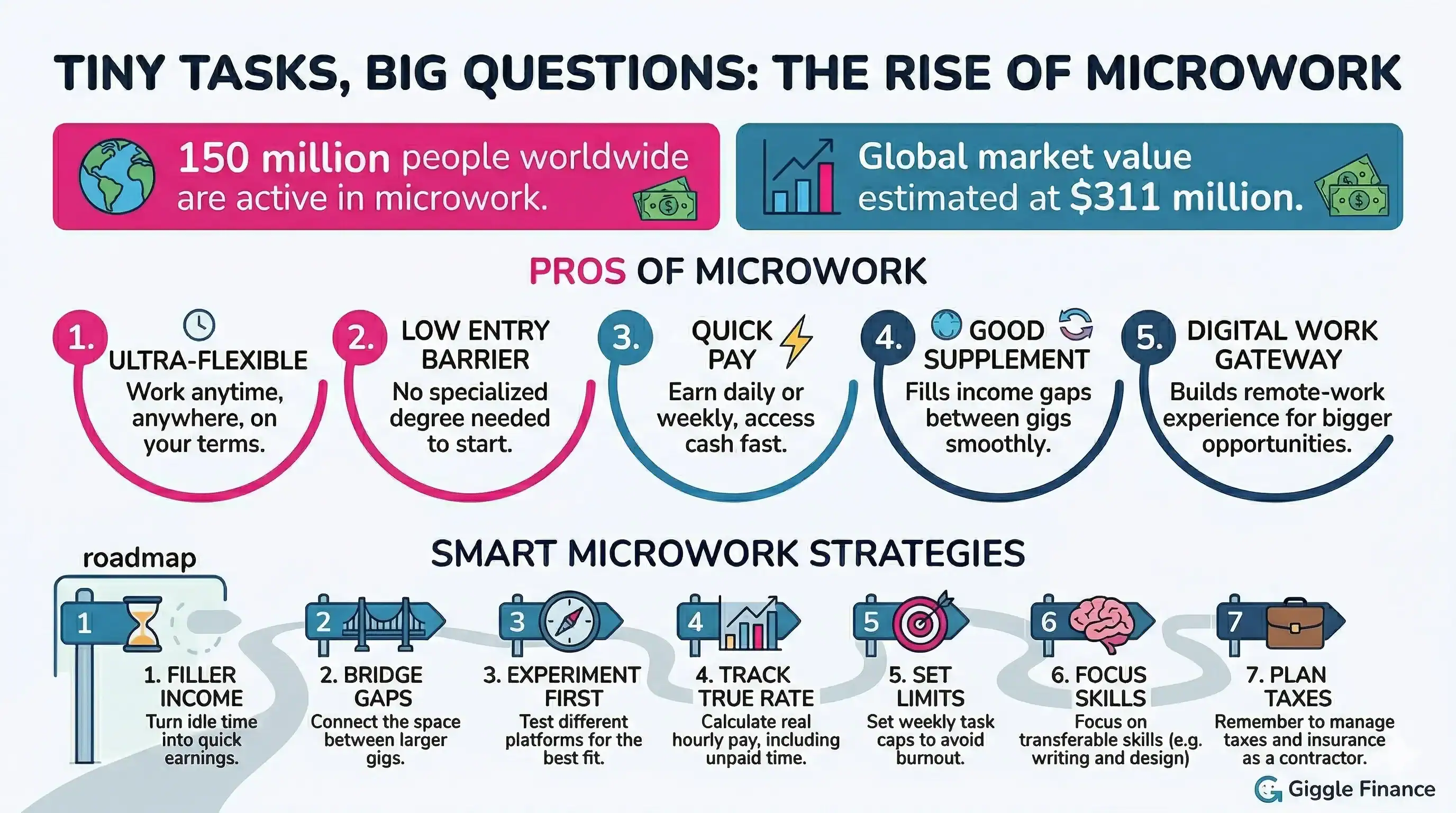 Microwork brings a range of practical benefits that set it apart as a side hustle or income supplement. For individuals seeking flexibility or a convenient way to earn extra money, it ticks several essential boxes.
- Ultra-Flexibility: Microwork lets you jump in or out whenever it fits your schedule. This flexibility is particularly attractive to students, caregivers, and anyone whose availability is unpredictable.
- Low Barriers to Entry: You won’t need special degrees or certifications, as many tasks are designed for anyone to tackle with minimal training.
- Quick Pay: Unlike traditional freelance contracts that may take weeks to process, microwork jobs can pay out instantly or within a couple of days. You can complete dozens of short tasks in an hour and transfer earnings to your account right away.
- Complementary to Other Incomes: Because microwork isn’t tied to fixed shifts or minimum hours, it’s easy to use as a supplement between bigger projects, freelance contracts, or traditional part-time jobs. Many workers use it strategically to boost their income without committing to extra-long-term work hours.
- Gateway to Remote Work: For many, microwork is an entry point to the world of digital employment. It enables people to become familiar with remote work platforms, digital payment tools, and online communication, all while developing foundational work habits that can support larger opportunities down the line.
Cons of Microwork
Microwork isn’t without its pitfalls, and it’s important for anyone considering this path to recognize where the risks and limitations lie.- Low Pay Per Task: Hourly earnings on most microwork platforms are typically much lower than local minimum wages. People can earn between $1 and $7, which means that even a high volume of completed tasks may not translate to a meaningful income. However, it's essential to take note that there are high-paying microwork jobs available as well, but they may often require specialized skills, prior experience, or consistent performance to qualify.
- Income Unpredictability: Microwork may or may not be a reliable source of steady income because task availability fluctuates according to platform demand, client activity, and the broader competition. As such, workers frequently spend additional unpaid hours searching for new opportunities, with sudden droughts or slow periods making it difficult to rely on these platforms for basic financial needs.
- Lack of Growth or Development: Most microtasks are short, highly repetitive, and may not be able to foster advanced skills. Opportunities for real professional development are limited, which can contribute to “deskilling,” making it harder to transition to better-paying roles in the future.
- Risk of Burnout: Because the path to higher earnings often involves taking on more tasks or working multiple jobs, microwork can quickly become draining. This is because a repetitive, quota-driven environment or working multiple jobs can lead to mental fatigue, boredom, and increased stress over time.
- Minimal Protections and Benefits: Nearly all microworkers are treated as independent contractors. Therefore, there can be a lack of access to standard employee benefits, including health insurance, paid leave, and retirement benefits.
- Global Competition and Depressed Rates: With a vast international workforce eager to complete microtasks, wages are subject to downward pressure.
Integrating Microwork into a Gig Strategy
By knowing when and how to leverage microwork, workers can boost their earnings and preserve a more stable work-life balance.- Use as Filler Income: Microwork is ideal for those brief moments of free time during the day, such as while waiting in a waiting room, taking a bus, or in the evenings when longer projects aren’t feasible. It lets you convert downtime into measurable income without committing to regular hours.
- Bridge Between Bigger Jobs: If you already have a main gig, microwork can fill the financial gaps between contracts or shifts. This helps you maintain steady earnings even when your primary work slows down or seasonal fluctuations hit.
- Entry Point for Experimentation: For those new to gig platforms, microwork offers a risk-free way to test out different platforms, types of tasks, and workflows. You can get comfortable with online work, build reviews, and experiment to see what suits your skills and interests.
- Track Your True Hourly Rate: Don’t just look at what you earn per task. Include time spent searching for jobs, dealing with rejected work, and any unpaid effort. This gives you a clearer picture of whether microwork is truly worth your time.
- Set Clear Limits: Decide in advance how many hours each week or how much money you want microwork to bring in. This keeps shorter gigs in perspective, leaving you time to develop more advanced skills or higher-paying work.
- Choose Platforms and Tasks Carefully: Focus on platforms with transparent payments and reliable payout options. Avoid oversaturated or high-risk jobs, and opt for clear instructions and realistic pay to minimize wasted effort and rejections.
- Focus on Transferable Skills: Even when microworking, try to reserve time for upskilling in areas such as writing, coding, or design, so you can transition to better opportunities later.
- Avoid Burnout: Chasing tiny tasks non-stop can drain your energy and health. Stay alert to how microwork affects your well-being and make adjustments when needed.
- Track Your Portfolio: Keep a personal log tracking each task, platform, payout, and hours worked. This helps you spot trends and decide objectively whether microwork stays worthwhile.
- Understand Tax and Benefits Responsibilities: As an independent worker, you’ll be responsible for taxes, retirement, and insurance. Therefore, plan accordingly to avoid surprises.