On this page
- Mistake 1: Maxing Out Your Personal Credit Cards
- Mistake 2: Too Many Hard Inquiries in a Short Window
- Mistake 3: No Separation of Business and Personal Expenses
- Mistake 4: Ignoring Collections or Derogatory Marks
- Mistake 5: Closing Old Accounts
- Mistake 6: Not Monitoring Your Credit Report Regularly
- Mistake 7: Only Applying to Traditional Lenders
- How Alternative Funders Assess Risk Differently
- Quick Fix Checklist: Credit Health for Freelancers
- Explore Flexible Approval That Looks Beyond Your Credit Score
Good news: most of the credit mistakes freelancers make are completely fixable once you know what to look for. The not-so-good news: many of them are not obvious.
For gig workers and 1099 earners, understanding your credit helps you make more informed financial decisions — though funding is still reachable with bad credit. It also makes it easier to spot common credit pitfalls, understand why they matter, and take practical steps to stay on track.
But what are the credit mistakes to watch for, and how do they affect your chances of getting the right funding for your situation?
Key takeaways
- High credit utilization is a fast way to hurt your credit score, even if you always pay on time.
- Too many hard inquiries in a short window signal financial stress to lenders and can lower your score.
- Mixing business and personal expenses makes it harder to build a separate credit profile for your business.
- Ignoring collections or derogatory marks does not make them go away and can seriously damage funding eligibility.
- Closing old accounts shortens your credit history length, which lowers your overall score.
- Not monitoring your credit report means errors can go unnoticed and uncorrected for months.
- Alternative funding platforms for freelancers like Giggle Finance assess risk differently, giving gig workers a real path to funding even with an imperfect credit history.
Mistake 1: Maxing Out Your Personal Credit Cards
Your credit utilization ratio is the percentage of your available credit that you are currently using. It makes up about 30% of your credit score, making it one of the most important factors you can control.
Credit utilization is an easy one to overlook for freelancers who use credit cards to cover business expenses between client payments. You charge equipment or software and intend to pay it off when the next invoice lands, but if your statement closes first, that high balance gets reported, and your score dips.
How to Fix It
Pay down your balance before your statement closing date, not just by the due date. Consider requesting a credit limit increase so your utilization ratio improves even if your spending stays the same. If possible, spread expenses across multiple cards to keep individual card utilization lower.
Mistake 2: Too Many Hard Inquiries in a Short Window
Every time you apply for a new credit card or line of credit, the lender runs a hard credit inquiry on your report. One or two applications are generally manageable. However, applying to several sources at the same time, which is common when you need funding quickly, can lower your score and signal that you may be financially stretched.
A hard credit inquiry typically stays on your report for two years, though its impact fades significantly after about 12 months. The smart move is to research your options first, identify what fits your situation, and then apply intentionally rather than broadly.
How to Fix It
Some of these options use a soft credit check, allowing you to review offers without the effects of a hard credit score check. Giggle Finance uses only a soft credit check to show you offers, so checking your eligibility does not affect your score at all.
Mistake 3: No Separation of Business and Personal Expenses
Running business charges through a personal credit card is a common starting point for freelancers, but it creates two challenges worth knowing about. First, it can raise your personal credit utilization mid-cycle. Second, it can slow down your ability to build a separate business credit profile.
Business credit and personal credit are evaluated differently. And a strong business credit profile can eventually allow you to access funding based on your business activity alone.
How to Fix It
Opening a dedicated business card or bank account can help separate your finances early on. If you are unsure how business and personal credit differ, it can be helpful to review the key differences so you understand how each one is used.
Mistake 4: Ignoring Collections or Derogatory Marks
Collection accounts and derogatory marks stay visible to lenders and can affect funding decisions even when everything else in your profile looks good. Derogatory marks on a credit report can remain active for up to seven years, but taking action on them sooner rather than later can lead to noticeable score improvements. Even a partial resolution can improve how your profile looks to a reviewer.
How to Fix It
Address collections directly. In some cases, you can negotiate a pay-for-delete arrangement, where the creditor agrees to remove the mark in exchange for payment. Even if full removal is not possible, a settled status is better than an open one.
Mistake 5: Closing Old Accounts
Closing an old card feels tidy, but it actually shortens your credit history length, which is also a factor that can influence your credit score. The longer your track record with credit, the more context lenders have to work with when reviewing your profile.
A shorter credit history length, combined with less available credit, can also push your utilization ratio up. Managing credit utilization for freelancers means keeping an eye on both sides: what you spend and how much available credit you hold onto.
How to Fix It
Unless the account carries an annual fee that genuinely is not worth paying, leave old accounts open. Make a small purchase every few months to keep the account active and avoid having it closed by the issuer due to inactivity.
Mistake 6: Not Monitoring Your Credit Report Regularly
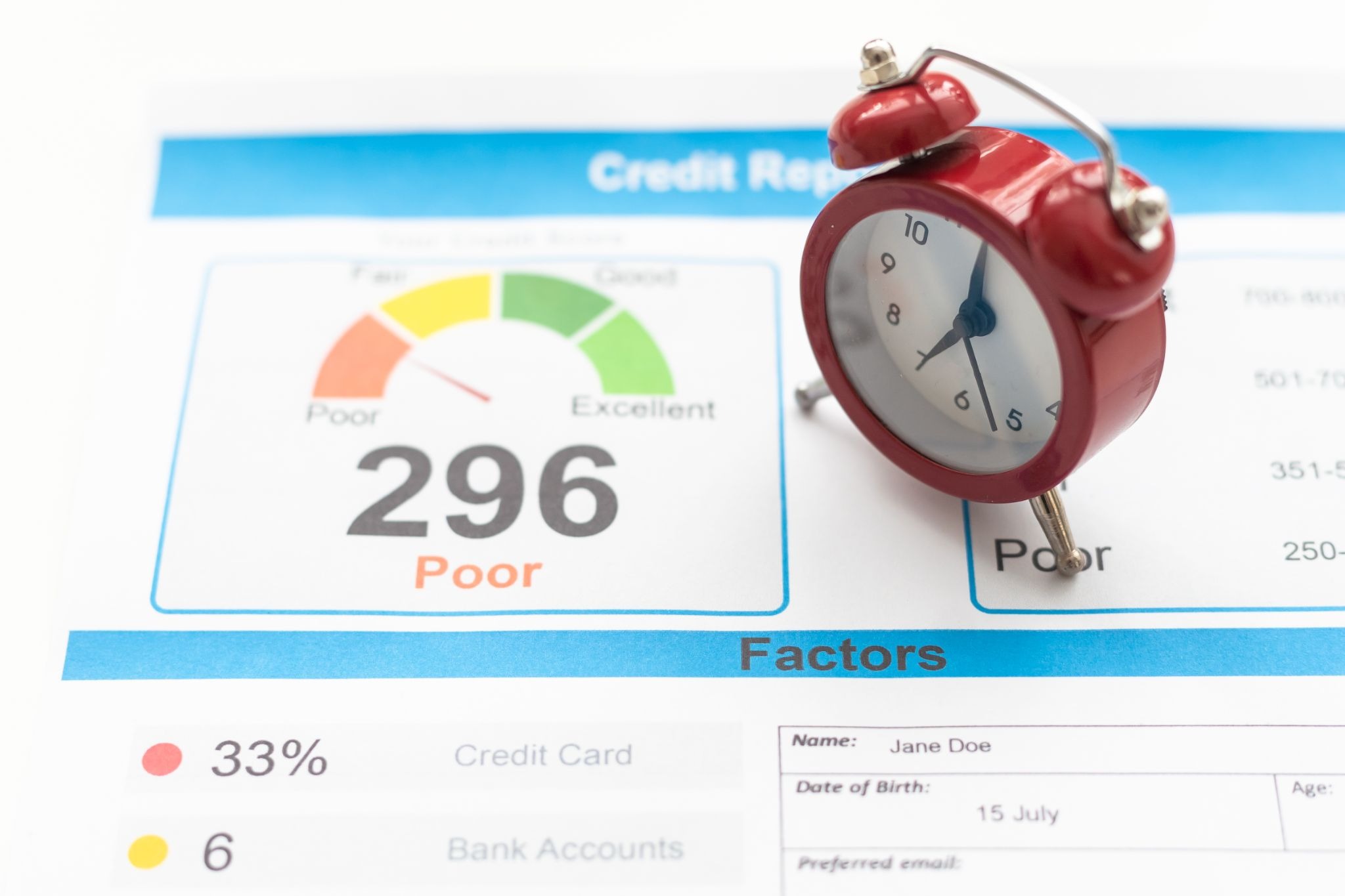
If you are only checking your credit report when you are getting ready to apply for something, it is still a good step. However, reviewing it more regularly gives you the chance to catch and fix errors before they become a problem.
Credit report errors happen more often than people realize. These can include accounts that do not belong to you, outdated balances, incorrect payment statuses, or duplicate entries. The good news is that disputing errors is a straightforward process, and correcting them can result in a quick score improvement.
How to Fix It
One of the best ways to improve your credit score as a self-employed individual is simply to check your report regularly and dispute any inaccuracies as soon as you spot them. You’re entitled to a free report from each of the three major bureaus every year at AnnualCreditReport.com. To make the most of this, you can stagger your requests by pulling one report every four months, which helps you maintain a current view of your credit throughout the year without paying for access.
Mistake 7: Only Applying to Traditional Lenders
Traditional banks use a fairly rigid checklist: stable income, strong credit score, and two or more years of tax returns. For most freelancers and gig workers, that checklist simply does not reflect how they earn.
Applying through channels that were not designed for independent workers can be discouraging, and each application also adds a hard inquiry to your report. The good thing is that there are options built specifically for the way gig workers and 1099 earners operate.
How to Fix It
This is one of the most overlooked credit mistakes freelancers make: assuming that traditional banks are the only option. Understanding how alternative lenders assess credit changes the picture entirely. Instead of relying solely on your credit score, alternative funders evaluate your actual business activity, recent revenue, and earning patterns. This approach gives self-employed individuals or those with lower credit a chance to qualify for funding.
How Alternative Funders Assess Risk Differently
Alternative funders, such as Giggle Finance, take a broader view, looking at how you actually earn rather than just how you score. Here is how it works in practice:
Revenue and Activity Over Credit Score
When Giggle Finance reviews an application, the focus is on your revenue history and business activity, not a three-digit number that may not reflect the full picture of your financial life. The process is fully automated, fast, and designed with how gig workers earn income.
Have more questions about how funding eligibility works? Our frequently asked questions page covers the most common ones in plain, straightforward language.
What a Credit Score Actually Measures
A credit score mostly reflects whether you have paid fixed debts on time within a traditional employment context. It does not account for consistent client work, steady platform earnings, or years of responsible business expense management. Understanding how alternative lenders assess credit differently is what makes this model a genuinely better fit for independent workers.
Your Credit Does Not Have to Be Perfect
The steps you take to improve your credit score as a self-employed worker today will open more doors over time. But you do not have to wait for a perfect score to access funding. A freelancer earning $4,000 to $6,000 a month consistently tells a very different story than a three-digit number alone. Alternative funders are built to read that story accurately.
Where to Go From Here
If you want to understand the full picture of what shapes your creditworthiness as a freelancer, our guide on how to build business credit without using your personal credit is a great next step.
Quick Fix Checklist: Credit Health for Freelancers
Run through this list and check off what you have already done. Anything unchecked is worth addressing before your next funding application.
Many of the most common funding denial reasons trace directly back to items on this list.
- Keep credit utilization below 30% across all cards
- Space out credit applications to avoid multiple hard inquiries
- Open a separate business bank account or credit card
- Address any collections or derogatory marks directly
- Keep old accounts open to preserve credit history length
- Check your credit report at least once every four months
- Explore alternative funding options that look beyond your credit score
Explore Flexible Approval That Looks Beyond Your Credit Score
Fixing credit mistakes that freelancers often make takes time, but you do not have to wait until your credit is perfect to access business funding. Giggle Finance evaluates your application based on your real business activity, not just a credit score snapshot.
Whether you are working to rebuild your credit or simply want a funding option that fits how you actually earn, there is a path forward.
Apply for a cash advance today and see what you qualify for in minutes.
Disclaimer: Giggle Finance provides Revenue-Based Financing programs for business purposes only. Any mention of any loan product(s), consumer product(s), or other forms of financing is solely for marketing and educational content purposes and to help distinguish Giggle’s product from other comparable financing options available in the market.