On this page
The gig economy promised to remove barriers for women by offering flexibility, remote work, and equal access to clients. Yet even with these advantages, women still earn less than men for similar jobs.
Recent studies show that the gender pay gap hasn’t disappeared, but has moved online. These findings make one thing clear: digital platforms alone can’t fix inequality. To close the gap, both workers and platforms must understand where the problem starts and how to address it.
The Pay Gap in Gig Work: How Big Is It?
Women make up a large share of the freelance and gig workforce, but their earnings still lag behind men’s across almost every major platform. Despite flexible hours and equal access to digital tools, income gaps remain surprisingly wide. Looking at the numbers helps show how deep the problem goes, and why it still exists in “neutral” online marketplaces.
Global and U.S. Data Show Persistent Gaps
Studies around the world show that pay inequality hasn’t disappeared even as work moved online.
Key Findings
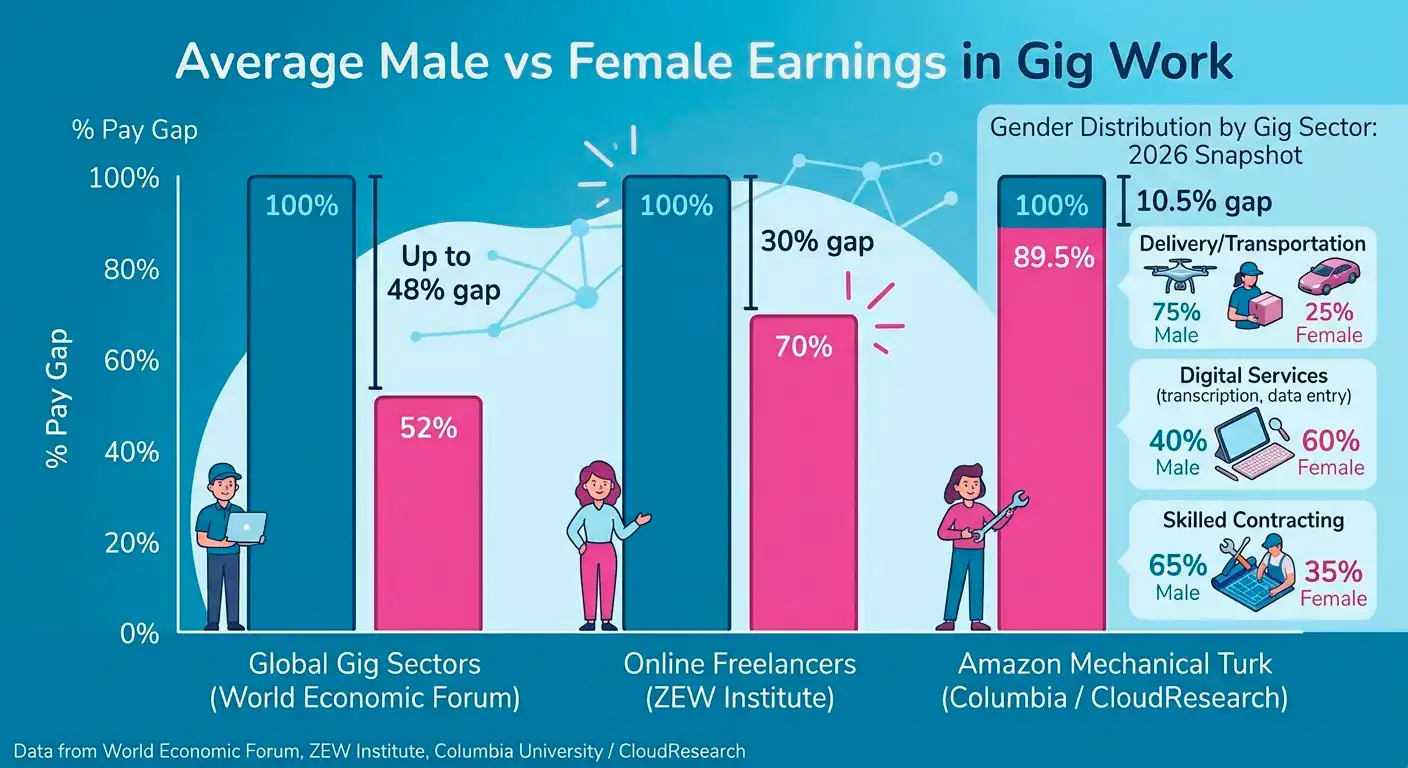
According to the World Economic Forum, women in some gig sectors earn up to 48% less than men doing the same type of work. On the other hand, the ZEW Institute in Germany found a 30% gap among online freelancers, largely due to differences in the types of projects men and women take on. Meanwhile, researchers at Columbia University and CloudResearch examined data from Amazon Mechanical Turk and found that even when controlling for task type and experience, women still earned 10.5% less on average than men.
These studies reveal that even when the work happens through algorithms instead of offices, the gap doesn’t close. Digital platforms have reduced some traditional barriers, such as location or schedule, but they haven’t eliminated the cultural and behavioral patterns that drive pay differences.
Context from Traditional Jobs
For comparison, the U.S. Bureau of Labor Statistics reported a national gender wage gap of around 17% in 2023. In other words, women doing gig work experience a pay gap almost twice as wide as those in traditional jobs. This suggests that technology alone hasn’t created fairness, and, in some cases, has made old inequalities harder to see.
Where the Gap Is The Widest
The pay gap isn’t the same everywhere. It’s strongest in fields where men dominate high-paying categories, and women are concentrated in lower-paying or “soft skill” work.
By Platform and Sector
Men earn more on gig platforms tied to technical, delivery, or risk-based work, such as rideshare driving, coding, and design. Women, on the other hand, are overrepresented in creative, tutoring, and virtual assistant roles, which tend to have lower base rates and fewer tipping opportunities.
Aside from discrimination, these patterns show that the pay gap is also about how work is divided. Gig platforms reward speed, volume, and technical specialization, areas where men are more active. Women often prioritize stability, flexibility, and reputation building, which can mean fewer but longer projects at lower rates.
When combined with social expectations and client perceptions, this mix leads to consistent pay differences even when skill levels are similar.
Why Women Still Earn Less
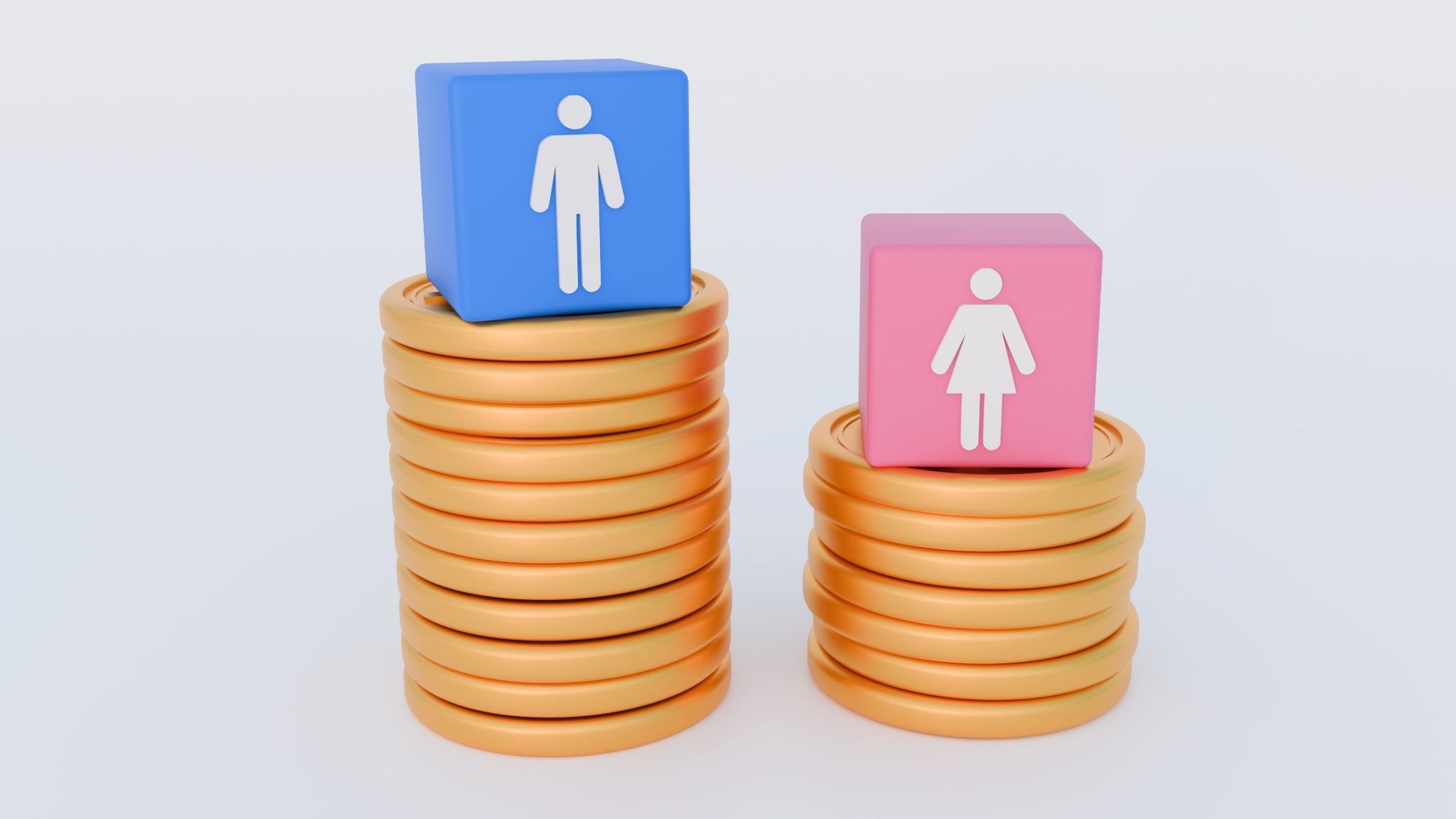
Pay gaps in gig work come from a mix of factors, and understanding them can help explain why many women still earn less, even with flexible work.
Platform Design and Algorithm Bias
Online platforms are built to connect clients with workers quickly, but the systems behind them can unintentionally favor certain groups.
Visibility and Ratings
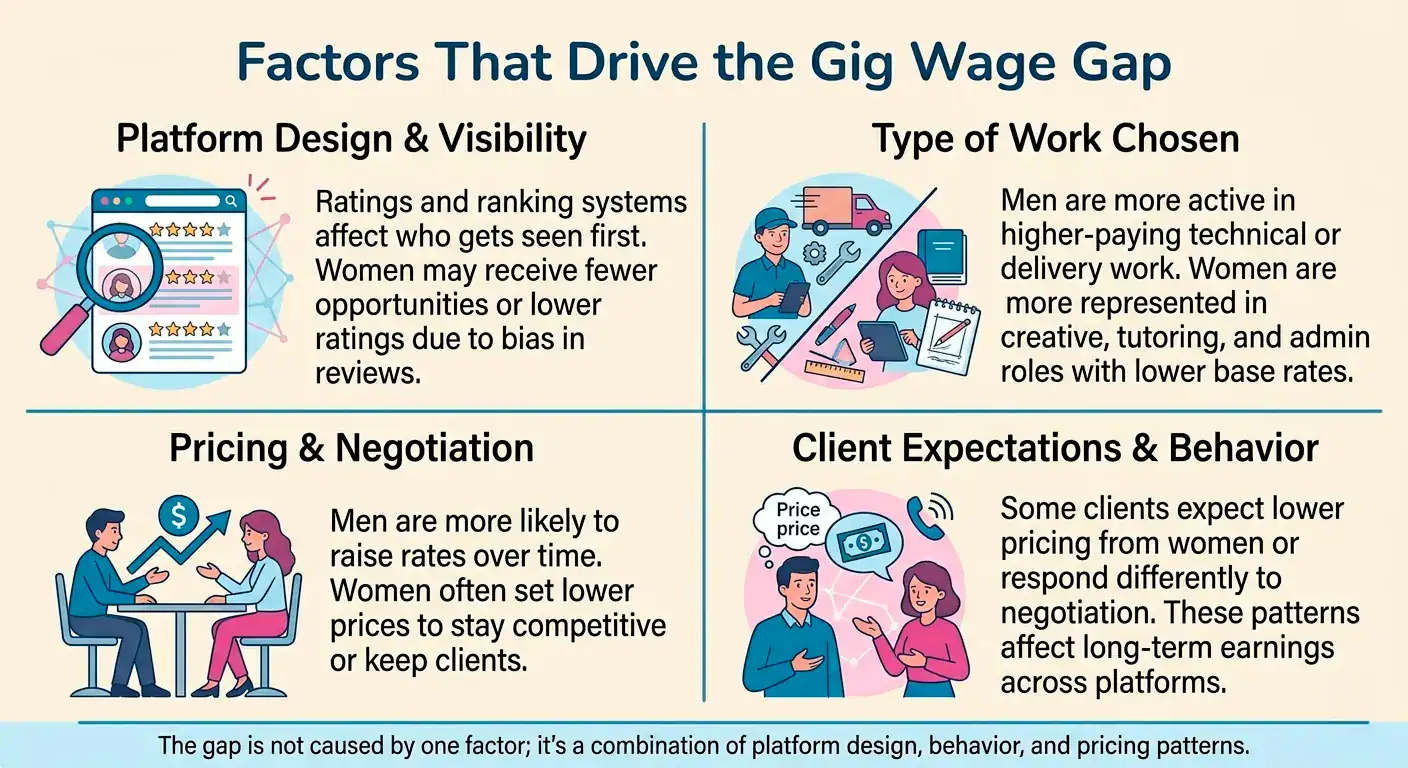
Many gig platforms use ratings and ranking systems to decide who gets seen first and receives job offers. Studies have found that female workers are rated slightly lower or offered fewer jobs when their gender is visible in a profile or name.
Even if a platform doesn’t show gender directly, bias can slip through client reviews. For example, some clients expect women to charge less or react more positively to feedback. These small patterns, multiplied across thousands of transactions, create real earnings differences.
Task and Category Choices
Gig platforms offer a wide range of work, from coding to caregiving. Men tend to choose technical or risk-based work, such as delivery or IT gigs, which usually pay more. Women, meanwhile, more often choose creative or flexible tasks like writing, tutoring, or administrative work.
This isn’t because women lack skill. Many simply choose jobs that fit their schedules, caregiving roles, or work-life balance goals. However, these categories are often undervalued by clients and platforms, resulting in lower average pay rates.
Pricing and Negotiation Gaps
How workers price their work also affects the pay gap. Research shows that men are often more confident about pricing, while women are more likely to lower rates to stay competitive.
Underquoting and Client Pressure
On freelance platforms, pricing too high can also mean losing a client. Many women report setting lower prices to avoid being passed over or to win repeat customers. Some also say they feel pressured to offer discounts or extra revisions to maintain good reviews. Unfortunately, these patterns can reduce earnings over time, even for skilled professionals.
Confidence and Self-Valuation
Confidence plays a big role in how rates are set. Men are often quicker to raise prices as their experience grows. Women, however, tend to hesitate or wait for client approval before adjusting rates.
In surveys, female freelancers say they fear that pushing for higher pay could damage client relationships. As a result, even when women and men have the same skill level, men often earn more simply because they ask for more.
How These Factors Connect
The biggest takeaway is that no single factor can explain the pay gap. Factors, such as platform bias, client expectations, and personal pricing habits, all work together to affect how much women actually earn when doing gig work.
For the gender gap to close, both individual awareness and systemic change are needed. Workers can learn to recognize their value, while platforms can design fairer systems that reward quality, and not bias.
Real Experiences from Women in Gig Work
Behind every percentage gap are women who face daily challenges while trying to price their work fairly or find consistent opportunities in the gig economy.
Voices Behind the Numbers
Across freelance platforms, many women describe similar experiences, including earning less for the same type of project, struggling to negotiate higher pay, or feeling pressured to accept lower bids.
A freelance graphic designer from Texas shared that she once discovered a male colleague earned nearly double for a project with the same client. When she raised her rate, the client stopped sending new work. Experiences like this create hesitation about pricing fairly in the future.
On delivery and rideshare apps, women often choose shorter hours or avoid late-night shifts for safety reasons, which lowers their total income compared to male drivers. Even small differences in when and how long workers stay active on an app can lead to large earning gaps over time.
Writers and virtual assistants face similar struggles. Female freelancers often take on repeat work from the same clients at lower pay instead of switching to higher-paying projects because it feels more stable. This pattern can limit their overall earning growth even as experience increases.
How Women Are Responding
While the gap remains, many women are finding ways to change it. Online communities like Freelancing Females, Women in Freelance, and similar local groups encourage open conversations about rates and help workers benchmark fair, sustainable prices. Public rate sheets shared through these networks also give freelancers a way to compare what others charge and gain confidence in their pricing.
Some platforms are also taking steps to improve pay transparency and reward consistent quality work instead of favoring speed alone. These changes may be small, but they show that when workers and platforms focus on fairness, real progress can happen.
Closing the Gap: What Can Be Done
Addressing pay gaps in gig work means moving beyond awareness and taking action, both from workers and the platforms they rely on. The good news is that there are ways to make freelance and gig income fairer, from improving transparency to building confidence in pricing.
Platform Solutions
Gig platforms have a clear impact on how income is distributed. From how jobs are assigned to how rates are set, these decisions can either support fairer earnings or make existing gaps more noticeable.
Promote Pay Transparency
Displaying average project rates or pay ranges by skill level helps freelancers set realistic prices. It also limits the chance that two people doing the same work will unknowingly charge very different rates.
Several platforms have started experimenting with this approach. For example, some writing and design marketplaces now show typical hourly or project fees based on previous transactions. These updates make it easier for workers to understand what fair pay looks like before submitting a quote.
Audit Algorithms and Rating Systems
Independent audits can help reveal whether certain profiles or names are shown more often than others. Adjusting those algorithms ensures that visibility and opportunity are based on quality and reliability, not assumptions about gender.
Worker Solutions
While systemic change takes time, gig workers can start protecting their value today.
Set Fair and Consistent Rates
Freelancers can research what others charge using rate calculators or public rate sheets from trusted communities. Setting a personal minimum rate and sticking to it helps avoid undervaluing work. If clients decline, it’s better to move on than to stay locked into unsustainable pay.
Build Confidence Through Community
Joining online groups helps workers share pricing strategies, client experiences, and negotiation advice. These spaces also make it easier to spot underpriced work and adjust your own rates with more confidence.
Upskill for Higher-Paying Work
Many women are turning to skill-based gigs that pay more steadily, such as tech support, content strategy, or data-related work.
Free or low-cost training programs can help bridge the skills gap that keeps some workers in lower-paying categories. Investing in even a few hours of professional development each month can also lead to better-paying projects and long-term income growth.
The Role of Awareness
Closing the gender pay gap starts with knowing it exists. By combining better tools, open information, and a stronger sense of community, the gap can narrow over time. Equal pay for equal work shouldn’t depend on who negotiates the hardest or who the algorithm notices first. It should be the baseline for everyone.
Conclusion
The gig economy gives millions of women new ways to work on their own terms, but pay inequality remains a challenge. The data shows that flexibility alone isn’t enough to create fairness, as change depends on both individual and collective action.
Workers can start by sharing rate information, building confidence in pricing, and developing new skills. Meanwhile, platforms can support equality by being transparent about pay and reviewing their systems for bias. When both sides act together, fair pay in gig work becomes the new normal for everyone earning independently.