

On this page
Gig workers today are responding to growing environmental expectations from consumers, cities, and even app platforms. The result is the rise of what many now call ‘green gigs,’ side hustles and independent jobs built around energy-efficient tools, eco-conscious clients, and environmentally responsible practices.
The gig economy is entering an era where environmental accountability meets entrepreneurship. In other words, sustainability promises reduced costs, better client appeal, and access to new opportunities. Whether you’re a rideshare driver upgrading to an electric vehicle (EV), a courier switching to a cargo bike, or a freelancer branding yourself as an eco-conscious creative, environmental priorities can reshape how you earn.
The Shift Toward Sustainable Gig Work
Across industries, climate goals are moving from policy reports to day-to-day work decisions. For gig workers, this transformation is evident in the tools they select and the companies they partner with.
Environmental Expectations in the Changing Workforce
Consumers are increasingly expecting on-demand services to align with their environmental values.
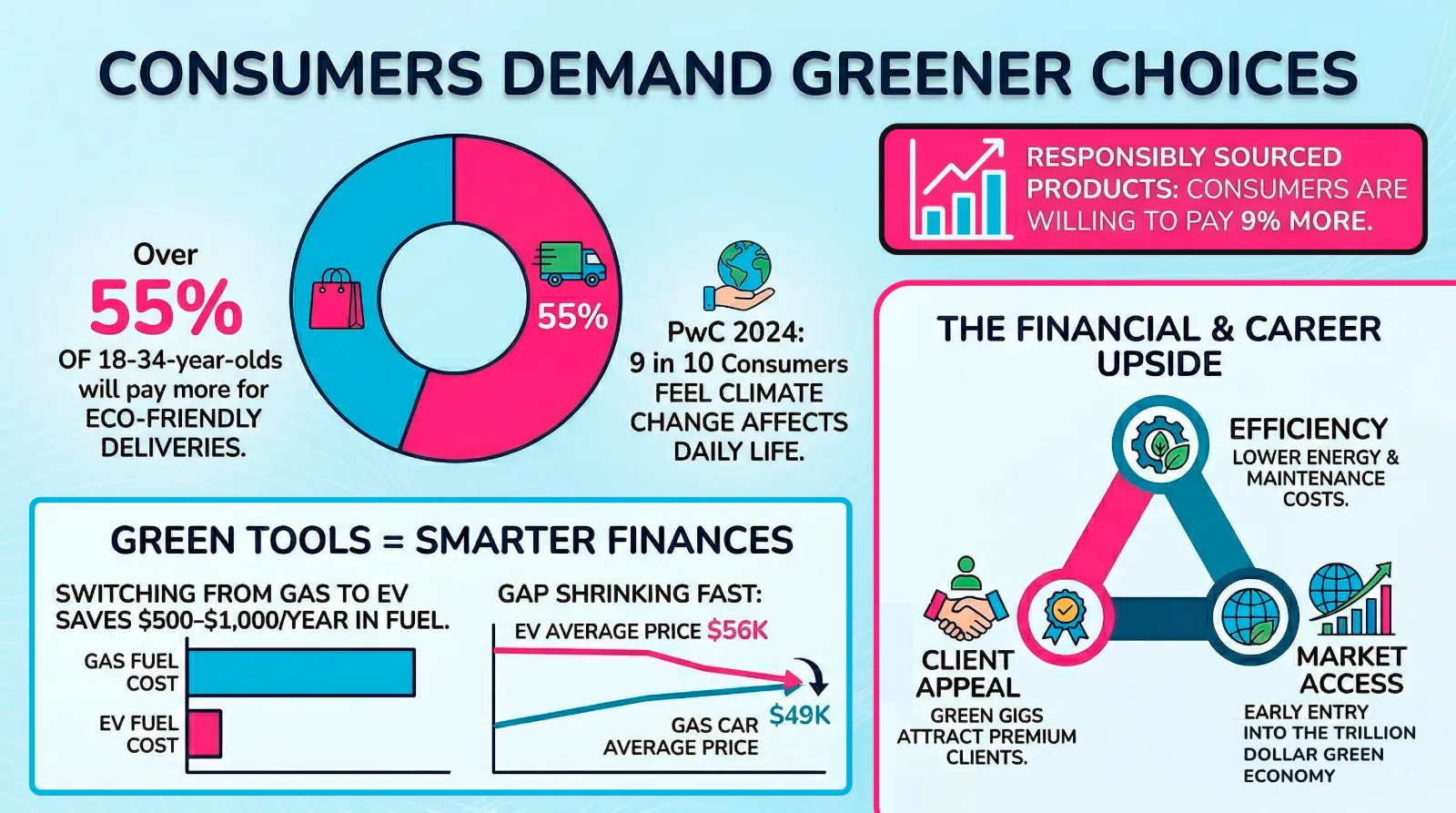
According to the PwC 2024 Voice of the Consumer Survey, many consumers are choosing sustainability. On average, even with rising living costs, they’re willing to pay about 9% more for products that are responsibly made or sourced. Nearly nine in ten say they already feel the impact of climate change in their daily lives, showing that environmental awareness is now shaping real spending behavior.
On the other hand, a McKinsey survey of over 1,000 US consumers found that more than a third of respondents said they would pay an extra one to two dollars for environmentally friendly delivery options. The willingness is even higher among certain groups, with over 55% of younger consumers aged 18 to 34, more than 50% of those living in cities, and approximately 45% of households earning at or above the US median income stating they’re ready to spend more for greener logistics.
To accommodate this, platforms like Uber and DoorDash have introduced green delivery options, set emissions reduction targets, and launched EV-focused fleet programs. This push aligns with a cultural shift where workers take pride in contributing to climate action while earning, viewing sustainability as both a responsibility and a value-added benefit.
The Economics Behind the Shift
Electric vehicles are becoming a smarter financial choice over time, offering lower running costs compared to traditional gas-powered cars. Although EVs still tend to have higher upfront prices, their fuel and maintenance expenses are generally much cheaper, which can make the total cost of ownership lower in the long run. The actual savings depend on factors like the vehicle model, location, and charging habits.
According to the US Environmental Protection Agency, replacing a primary gas-powered car with an EV can save a household about $500 to $1,000 a year in fuel costs. Additionally, electric vehicles typically have lower maintenance expenses, which helps reduce overall ownership costs and improve long-term profitability for gig workers.
In mid-2024, the average EV sold for about $56,000, compared to $49,000 for a gas-powered car, according to Kelley Blue Book. That gap continues to shrink as automakers reduce prices and more government incentives come into play. Federal tax credits of up to $7,500, which are now available as an upfront discount, are helping more drivers make the switch. Experts say that as production scales and battery technology improves, EVs could soon match or even beat gas cars on total cost, turning sustainability into an economic advantage.
Inside the Green Gig Economy
Green side hustles are now a growing part of the labor market. Data and incentives are guiding workers toward cleaner, cheaper models of entrepreneurship that balance environmental performance with profit potential.
Electric Vehicles in Rideshare and Delivery
The move toward electric vehicles has become one of the most visible trends within the sustainable gig economy. According to a Harvard Business School report, gig drivers are playing a notable role in shaping urban EV infrastructure. Public chargers are expanding because rideshare and delivery professionals rely on them to meet consumer demand.
Platforms like Lyft now reward EV adoption through incentives, discounts, cash back, and more. For example, Lyft’s EV bundle gives drivers multiple ways to save and earn more. In California, drivers can earn an extra $150 each week for completing 50 rides in their electric cars through 2024, with total bonuses of up to $8,100. They also receive up to 45% off fast charging at EVgo stations, plus cash back ranging from 1% to 7% on public charging when using the Lyft Direct debit card.
On the other hand, Uber is urging more drivers to switch to electric vehicles through new financial incentives. High-mileage drivers in major US cities can qualify for grants of up to $4,000 toward a new or used EV. Meanwhile, all Uber drivers nationwide are eligible for a $1,000 discount through TrueCar. Together, these programs make going electric more affordable for gig workers who are ready to make the switch.
Cargo Bikes and Micro-Mobility for Urban Last-Mile Deliveries
Cargo bikes are quickly becoming a sustainable solution for last-mile deliveries in densely populated cities. According to the World Economic Forum, switching from ICE two-wheelers to e-bikes in urban areas can cut carbon emissions by up to 90% and reduce last-mile delivery costs by 22%.
Zero-emission zones in city centers can accelerate the transition to clean delivery fleets, resulting in citywide carbon reductions of up to 55%. With more charging stations and bike lanes in place, these measures help make urban logistics greener and more efficient.
Several companies, including Amazon and FedEx, have begun integrating green delivery programs into city operations. For delivery gig workers, owning or renting a cargo bike not only saves money but also opens access to companies and zones that prioritize sustainable logistics.
Eco-Conscious Freelancing and Creative Work
Sustainability is not limited to transportation, as green freelance work is taking off in a big way. On Upwork, sustainability-focused jobs increased by 500% from 2019 to 2023, indicating a significant shift in client demand.
Moreover, more companies are bringing in outside expertise, with over two-thirds of organizations now hiring their newest sustainability talent from outside, compared to 45% a decade ago.
With green jobs expected to make up 14% of the US workforce by 2030, and a shortage of skilled professionals, freelancers have a real edge. Independent experts in fields such as renewable energy and sustainable design are helping companies close critical gaps and drive progress toward their ambitious environmental goals.
Freelancers are also lowering their own operational footprint through remote work, digital-first production, and renewable-powered workflows. Positioning oneself as a “sustainable freelancer” or “green consultant” now provides both differentiation and proof of values alignment with eco-conscious clients.
Why Sustainability Matters to Gig Workers

The transition to greener gig tools is ultimately about protecting income as much as meeting expectations. Sustainability can help improve cost efficiency, build trust with clients, and open new earning channels that align with public policy and market trends.
Financial Logic: Efficiency and Long-Term Savings
Energy costs remain one of the most significant expenses for rideshare and delivery drivers. Shifting to EVs can significantly cut fuel spending and vehicle maintenance costs. Moreover, gig workers can also leverage federal tax credits, as well as state or utility incentives, to help offset costs.
For anyone interested in going electric, checking both federal and local programs, as well as connecting with Clean Cities coalitions, can help unlock the most value. And for full-time gig drivers, this compounds to thousands in long-term savings.
Differentiation: Market Position and Client Appeal
Sustainability helps gig professionals stand out. Rideshare drivers using electric cars can market their service as cleaner and more comfortable while aligning with customer values. On the other hand, freelancers showcasing eco-friendly practices gain access to audiences and clients willing to pay a premium for socially responsible work.
On gig platforms like Fiverr or Upwork, environmental certifications and sustainability focus tags can enhance credibility. The same is true for delivery providers who identify as “eco-courier” or “zero-emission service.” Differentiation through sustainability translates into stronger visibility and higher long-term customer retention.
Access to the “Green Gig” Market
Sustainability commitments now drive a growing part of the labor market. Gig workers entering green markets gain early access to a rapidly expanding niche economy built around renewable energy and climate-conscious commerce.
As companies seek to hire more sustainability experts, the demand for green freelancers has led to a surge in pay. Between 2019 and 2023, earnings for sustainability-focused freelancers on Upwork jumped 460%. By 2023, these professionals were earning 47% more per hour than their peers in other skill categories, reflecting strong demand and the premium placed on expertise in this field.
Barriers and Practical Challenges
Despite its clear advantages, the sustainable shift also presents practical challenges. Upfront costs, lack of infrastructure, and uneven policies make it difficult for some gig workers to adopt eco-friendly tools at scale.
Upfront Costs and Financing Hurdles
Purchasing an electric vehicle or high-end cargo bike requires significant upfront investment. Independent contractors without full-time employment status often face limited access to affordable financing. This is because traditional lenders may still view gig income as uncertain, creating barriers to obtaining green equipment loans.
However, new financing options are emerging. Some automakers have partnered with rideshare platforms to offer EV leasing programs tailored to rideshare professionals. At the same time, local cooperatives offer zero- to low-interest loans for sustainable equipment, and fintech companies provide cash advances with repayments based on the gig worker’s weekly pay to help offset the upfront costs of adopting green practices.
Competitive Shifts
As more gig workers adopt green practices, competition within these niches intensifies. Premium visibility becomes increasingly challenging to maintain once eco-friendly work practices become the standard. To stay competitive, workers need to focus on efficiency, such as selecting the right tools, adjusting timing to match charging patterns, and building personal brands that emphasize credibility and transparency.
Making the Switch: Practical Guidance for Gig Workers
Going green requires thoughtful planning to ensure the shift delivers both environmental and financial benefits. Gig workers should evaluate costs, market positioning, and available support before fully transitioning to low-emission tools or eco-branding strategies.
Evaluating Eco-Friendly Upgrades
Assess the net cost versus benefit before making changes. Additionally, calculate the savings in fuel, maintenance, and tax breaks compared to upfront and ongoing expenses.
Workers should also consider the availability of maintenance services and charging infrastructure in their area. For those in dense urban zones, cargo bikes or e-scooters may deliver faster payback than full EV investments. However, the right choice depends on gig type, mileage, and regional policy.
Marketing Yourself as an Eco-Focused Freelancer
To succeed as a green worker, clearly communicate your commitment to sustainability. Highlight certifications, partnerships, and results achieved for eco-conscious clients in online profiles or portfolios to build authenticity.
Furthermore, freelancers can join sustainability networks, online communities, or local green events to build credibility. Many gig platforms now offer “sustainable” or “eco-friendly” service categories, providing visibility to professionals who align with environmental goals.
Finding Platforms that Reward and Support Green Practices
Several gig platforms now actively reward and support gig workers who adopt sustainable practices, making it easier to prioritize green choices.
For example, Uber Green pays per-trip bonuses to drivers who use electric vehicles, which can reach $200 per 100 trips using an EV, offering real financial incentives for switching to cleaner cars. In select states, Uber also works with local partners to provide thousands of dollars in grants and stackable state rebates for EV purchases, helping reduce costs for early adopters.
Lyft offers similar EV-focused rewards, including weekly bonuses for meeting ride goals with your electric car and discounts of approximately $140 on home charging equipment.
Meanwhile, DoorDash has made it more accessible to use e-bikes for deliveries by offering exclusive discounts on e-bike rentals and purchases, helping couriers lower their emissions and operating costs at the same time.
Looking Ahead: The Gig Worker’s Role in a Sustainable Future
Gig workers are at the forefront of the shift toward a cleaner economy. Their flexibility allows experimentation, quick technology adoption, and real-world innovation in sustainability. As regulations tighten and consumer preferences evolve, green practices will become a foundation for stable earnings rather than a niche selling point.
The future of gig work is both digital and environmental. Those who embrace sustainability early will not only cut costs but also position themselves at the heart of the green economy where purpose and practicality meet. The next generation of side hustles will thrive on environmental awareness, proving that doing good and earning well can coexist in the same job.
Disclaimer: Giggle Finance provides Revenue-Based Financing programs for business purposes only. Any mention of any loan product(s), consumer product(s), or other forms of financing is solely for marketing and educational content purposes and to help distinguish Giggle Finance’s product from other comparable financing options available in the markets.