
On this page
What used to be “just a hobby” has become a real way to earn money. In 2025, creativity isn’t confined to weekends or after-work hours, but it’s now a potential income stream for anyone willing to share their skills.
The U.S. hosts the world’s largest online freelance community, accounting for about 28% of the global market. For creatives like photographers, designers, writers, and makers of all kinds, that means more chances than ever to get paid for doing what you love. Creative and multimedia gigs already make up over 21% of all freelance work in the country, and that share is still growing.
If you’re ready to turn your hobby into a steady income, here’s what you need to know.
Why Creative Gigs Are Booming in 2025
Creative freelancing is thriving in 2025 as digital platforms and remote work continue to expand. Businesses and individuals are eager for original content that helps them stand out and turn to independent creatives to deliver it.
Social media, e-commerce, and streaming platforms are fueling this demand. On one hand, creatives now have more user-friendly tools to produce and share high-quality work. On the other hand, clients have access to a wider, more diverse pool of freelancers worldwide, making it easier to find specialized talent on flexible terms.
Recent data from Freelancer shows steady growth in job postings for writers, designers, and video editors, even with the rise of AI tools. Companies continue to value the human touch, emotion, and originality that machines can’t replicate. Many brands prefer freelancers with strategy and custom creativity over generic, automated output.
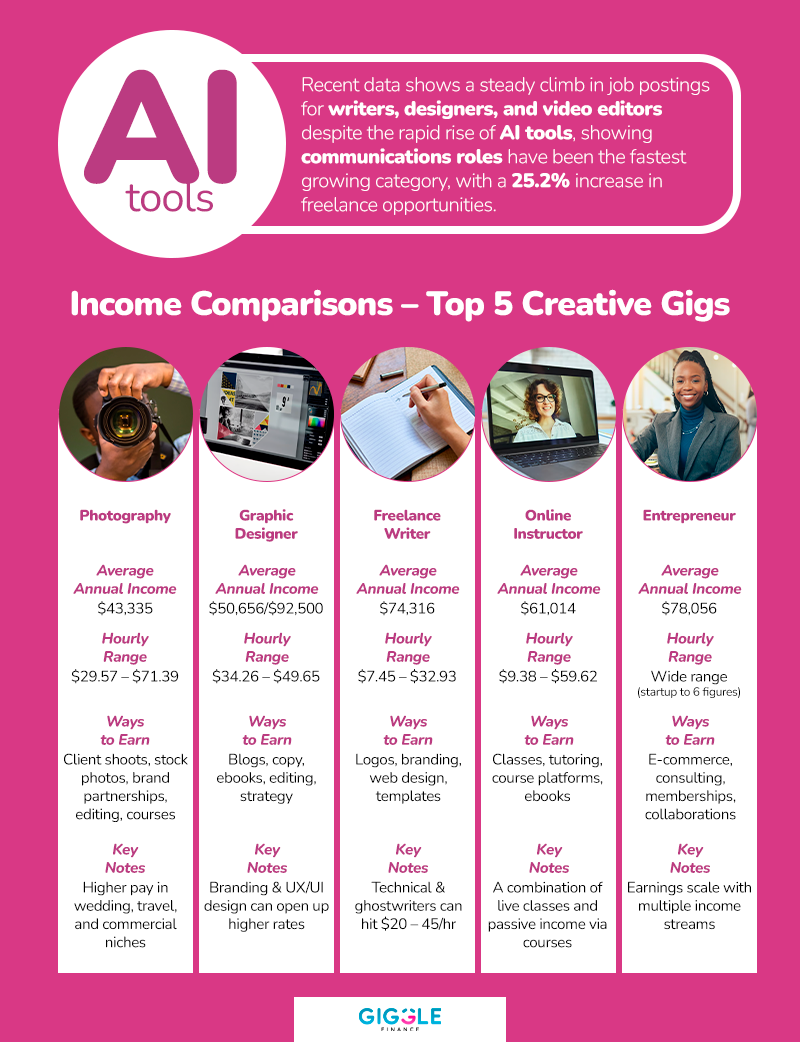
In fact, communications roles are the fastest-growing category, with a 25.2% increase in freelance opportunities. Clients hire professionals to craft contracts, edit manuscripts, and produce compelling content, pushing back against the flood of “AI slop” that dominates social media and search results.
Video and visual production are also booming. Skills like Adobe After Effects, Instagram content creation, and 3D design are in high demand. Freelancers in these areas thrive by offering personal style, spontaneity, and tailored solutions—qualities AI-generated content can’t match.
The Most Profitable Creative Categories Today
Many professionals are drawn to creative gigs because they offer flexibility and the chance to grow income without the constraints of a 9-to-5 job. Aside from talent, success requires consistent effort, smart platform choices, and a focus on income potential.
1. Photography
Why It Works
Photography is one of the most versatile creative side hustles. From weddings and travel shoots to commercial projects and portraits, there are countless ways to earn.
Income Potential
The average U.S. photographer earns about $43,000 annually, but rates vary widely by niche, location, and workload. Top earners can make over $70 per hour, while casual or local event gigs fall closer to $30 per hour. Wedding, travel, and commercial photography typically bring in higher rates than casual or local events.
Ways to Earn
Income isn’t limited to client shoots. You can:
- Sell stock photos on platforms like Shutterstock or Adobe Stock
- Partner with brands for sponsored shoots
- Offer photo editing or retouching services
- Run workshops or online courses for aspiring photographers
Diversifying these streams helps create a more stable income.
Time vs. Effort
Building a strong portfolio takes time, but a solid client base leads to more predictable work. New photographers may see income swings at first, but consistent marketing and networking can stabilize earnings. Instagram and TikTok are powerful tools for showcasing your style and reaching new clients.
Where to Start
- Instagram & TikTok: Build your audience and showcase your style.
- Stock photo sites (Shutterstock, Adobe Stock): Earn passive income by selling photos online
- Freelance platforms (Fiverr, Upwork): To find quick gigs.
- Your own website: Boost credibility and attract direct clients.
2. Freelance Writer
Why It Works
If you love words and enjoy writing stories, freelance writing is one of the most dynamic and rewarding creative side hustles. From blog posts and website copy to newsletters and full-length books, there are countless ways to turn your writing skills into a steady income.
Income Potential
Freelance writers in the U.S. earn about $74,000 per year on average, but rates vary widely depending on experience and niche. Most writers charge between $20–$26 per hour, while top freelancers earn $30+ per hour.
Entry-level writers may start closer to $7–$10 per hour as they build their portfolio. Once established, specialized roles such as technical writing, ghostwriting, or copywriting often pay $20–$45 per hour.
Ways to Earn
Writers can earn through:
- Website copy, blogs, and newsletters
- E-books and full-length books
- Editing, proofreading, or content strategy consulting to diversify income streams
The more skills you develop, the more doors open for higher-paying work.
Time vs. Effort
Freelance writing is flexible, but steady earnings require regular pitching, client management, and meeting deadlines. Beginners may spend more time landing their first clients, while experienced writers with strong reputations can secure ongoing projects and enjoy more predictable income.
Where to Start
- Freelance platforms (Upwork, Fiverr, Freelancer): Land first gigs and build reviews and ratings.
- Content marketplaces (ClearVoice, Contently): Connect with brands needing writers.
- LinkedIn & personal website: Showcase samples and attract higher-paying clients.
3. Graphic Designer
Why It Works
From logos and branding to social media content and product packaging, businesses depend on graphic designers to help them stand out and connect with customers. Some designers work entirely digitally using tools like Adobe Illustrator or Canva, while others blend in hand-drawn elements. Either way, the goal is to create visuals that tell a story.
Income Potential
Graphic designers typically earn between $50,000 and $92,000 per year, with many freelancers charging $34–$50 per hour. Rates increase as you build a strong portfolio and specialize in high-demand areas such as branding, UX/UI, or digital marketing.
Ways to Earn
Your income streams can be as creative as your designs. Designers make money through:
- Branding (logos, style guides, and identity systems)
- Marketing materials (social media graphics, ads, packaging)
- Digital design (websites, UX/UI, app design)
- Passive income (selling templates, fonts, or digital assets online)
Time vs. Effort
Expect to invest time upfront to build your portfolio and attract clients. Once you’ve established your style and reputation, projects become easier to land and more profitable. Many designers start with small, quick-turnaround gigs and later move into higher-paying, long-term contracts.
Where to Start
- Freelance platforms (Upwork, Fiverr): Find first gigs and build client reviews.
- Portfolio sites (Behance, Dribbble, Instagram): Showcase your style and attract organic leads.
- Personal website: Highlight your best work, boost credibility
4. Online Professor/Instructor
Why It Works
Teaching online lets you share your knowledge, inspire learners, and earn a competitive income from home or anywhere you have a reliable internet connection. With technology bridging educators and students around the world, it’s both a financial opportunity and a chance to shape the next generation of thinkers and professionals.
Income Potential
Online instructors earn about $61,000 per year on average or $30 per hour, but rates vary widely. Entry-level instructors may earn closer to $10 per hour, while experienced or specialized educators can make $50+ per hour, depending on demand, subject matter, and platform.
Ways to Earn
You can generate income by:
- Teaching live or recorded classes through universities or online platforms
- Creating and selling courses on Udemy, Skillshare, or your own site
- Offering one-on-one tutoring or group coaching
- Developing curriculum, training materials, or e-books as passive income streams
Time vs. Effort
Creating your first course or lesson plan takes upfront work, but once your content is developed, it can bring in ongoing income, especially with pre-recorded or evergreen courses. For side hustlers, teaching just one or two classes a week can provide steady extra income without overwhelming your schedule.
Where to Start
- Online course platforms (Udemy, Skillshare, Coursera, LinkedIn Learning): Publish and monetize your own classes.
- University and school job boards: Apply for remote adjunct or online teaching roles.
- Tutoring platforms (Wyzant, Preply, Varsity Tutors): Find one-on-one teaching opportunities.
- Personal website & social media: Build your brand as an educator and attract direct clients.
5. Entrepreneur
Why It Works
Entrepreneurship lets you turn creative ideas into businesses that earn income and make an impact. It’s one of the most flexible and fulfilling paths, but it also takes planning, persistence, and smart money management to see real results.
Income Potential
Entrepreneurs in the U.S. average about $78,000 per year, but income varies widely. Some new businesses make only a few thousand dollars at first, while established ventures can scale to six figures or more. Most entrepreneurs start small and grow their earnings as they build their brand and diversify revenue streams.
Ways to Earn
You can build a business by:
- Selling handmade or digital products through e-commerce platforms
- Offering services like consulting, design, or coaching
- Launching subscription products, memberships, or online communities
- Expanding into multiple revenue streams through collaborations or hiring
Time vs. Effort
Starting a business often means wearing many hats—marketing, product creation, networking, and managing finances. Income is typically slow at first but grows as your reputation and customer base expand. Many creatives and side hustlers begin part-time and scale up once their income becomes more consistent.
Where to Start
- E-commerce platforms (Shopify, Etsy): Sell handmade goods, digital downloads, or branded products.
- Social media (Instagram, TikTok, Facebook): Build brand awareness, connect with customers, and drive sales.
- Networking & communities: Join online groups or local events to connect with mentors, collaborators, and potential clients.
Real Stories of Creative Hustle Turned Empire
Many successful businesses start as hobbies or small side projects fueled by curiosity and passion. With dedication and smart strategy, those simple beginnings can grow into something much bigger.
Penny Linn’s Story
Penny Linn began painting canvases for fun, investing less than $100 in supplies. After she started sharing her art on Instagram, followers began requesting custom pieces. That initial interest turned into a full-fledged business. Penny scaled step by step—sourcing products, building a team, and eventually launching her own Shopify store. Today, her business generates about $570,000 per month and continues to grow each year.
Katelyn Alsop’s Story
Katelyn Alsop, a wedding photographer and mom, first picked up photography as a college hobby. She started by photographing friends, dedicating 40 hours a week to her side hustle while still in school to build her portfolio and network. Over time, she refined her brand, raised her rates, and built a name for herself. What really transformed her income was adding multiple revenue streams, balancing high-ticket weddings with passive income from online courses. That combination pushed her earnings to nearly $240,000 monthly, making her a millionaire before 30.
The Takeaway
These stories show what’s possible when passion meets persistence. Start small, share your work, and pay attention to where demand comes from. As you grow, diversify your income streams through products, services, or digital courses. You don’t need to build an empire overnight—step by step, a creative hustle can become a sustainable and rewarding business.
Turning Your Hobby into a Steady Income Stream
Turning a passion project into reliable income takes more than luck. It’s about adding a structure to your creativity and making intentional moves. Here’s how to get started:
1. Shift Your Mindset
Treat your hobby like a business by setting clear, realistic income goals. Knowing how much you want to earn and by when gives you structure, focus, and motivation to turn ideas into actionable plans.
2. Build Your Portfolio or Product Line
Your portfolio or product range is your showcase to attract clients and customers. Keep creating high-quality, unique work that highlights your style and professionalism—whether it’s art, photography, writing, or crafts.
3. Market with Intention
Share your work strategically instead of posting everywhere at once. Focus on key channels like social media, your website, or direct outreach to potential customers. Consistent, targeted marketing builds steady growth and repeat business.
4. Automate and Delegate
Don’t try to do everything yourself. Use tools to handle scheduling, payments, or emails, and outsource small tasks when you can. Freeing up your time from repetitive work leaves more energy for creating and scaling.
5. Keep Learning and Adapting
Creative industries move fast. Stay updated on trends, learn new skills, explore fresh tools, and experiment with new income streams such as digital products, courses, or collaborations. This keeps your hustle relevant and future-proof.
6. Connect and Collaborate
Join online groups, local meetups, or creative communities to learn, share ideas, and find partners. Collaboration can expand your reach, spark new ideas, and keep you motivated.
Creativity Can Be Your Next Paycheck
Creativity merged with strategy opens the door to a rewarding income path. The key is treating your passion like a business: set clear goals, keep building your portfolio, market intentionally, and diversify how you earn.
It won’t happen overnight, but step by step, you can grow from a side hustle to a steady income and maybe even a thriving business. Therefore, start small, stay consistent, and lean into opportunities to learn and collaborate.
Disclaimer: Giggle Finance provides Revenue-Based Financing programs for business purposes only. Any mention of any loan product(s), consumer product(s), or other forms of financing is solely for marketing and educational content purposes and to help distinguish Giggle Finance’s product from other comparable financing options available in the markets.