On this page
- Inflation’s Grip on Gig Workers
- The “More Jobs” Phenomenon: How Gig Workers Are Multiplying Income Streams
- Why Gig Workers Are Accepting Extra Gigs
- Same Platforms or New Ones? The Strategy of Diversification
- Is the Extra Workload Worth It?
- Coping Tools: Instant or Same-Day Pay
- Practical Financial Resilience Strategies for Multi-Gig Workers
- Rethinking the “Freedom” Narrative
Across the country, growing numbers of independent workers now balance multiple platforms and income streams to keep up with their bills and rising costs. In other words, “multi-hustling” has become the new survival strategy.
As living costs stay high due to inflation, gig workers are effectively building their own safety nets. The “freedom to choose your schedule” narrative has cracked under financial pressure, replaced by a reality of forced juggling and a risk of burnout.
Inflation’s Grip on Gig Workers
Inflation measures the rise in prices of goods and services over time. When prices grow faster than wages, people can afford less with the same income.
In the United States, the annual inflation rate increased to 2.9% in August 2025, marking the highest level since January. Food prices picked up, rising 3.2% in August compared to 2.9% in July. Overall, food prices have climbed 30.7% since 2019, fueled by higher production costs, persistent supply chain challenges, and sustained corporate profit margins.
Moreover, prices for used cars and trucks jumped 6%, up from a 4.8% increase the previous month, while new vehicle prices rose 0.7%, slightly higher than July’s 0.4% gain.
Gig earnings, however, haven’t kept pace. According to a nonprobability survey conducted by Human Rights Watch between 2020 and 2023, the median wage reported by respondents was $5.12 per hour, after accounting for work-related costs and missing benefits. That’s nearly 30% less than the federal minimum wage, which hasn’t kept up with productivity or inflation since 2009. It’s also about 70% below the living wage needed for a single adult without dependents to meet basic needs in the state.
Furthermore, out of 127 people surveyed, 95 said they had trouble affording housing over the past year. Most also reported struggling to pay for essentials like food, groceries, electricity, and water. When asked about a $400 emergency expense, 44 respondents said they couldn’t cover it, while another 64 said they would rely on credit cards or borrow from family or friends to get by.
The “More Jobs” Phenomenon: How Gig Workers Are Multiplying Income Streams
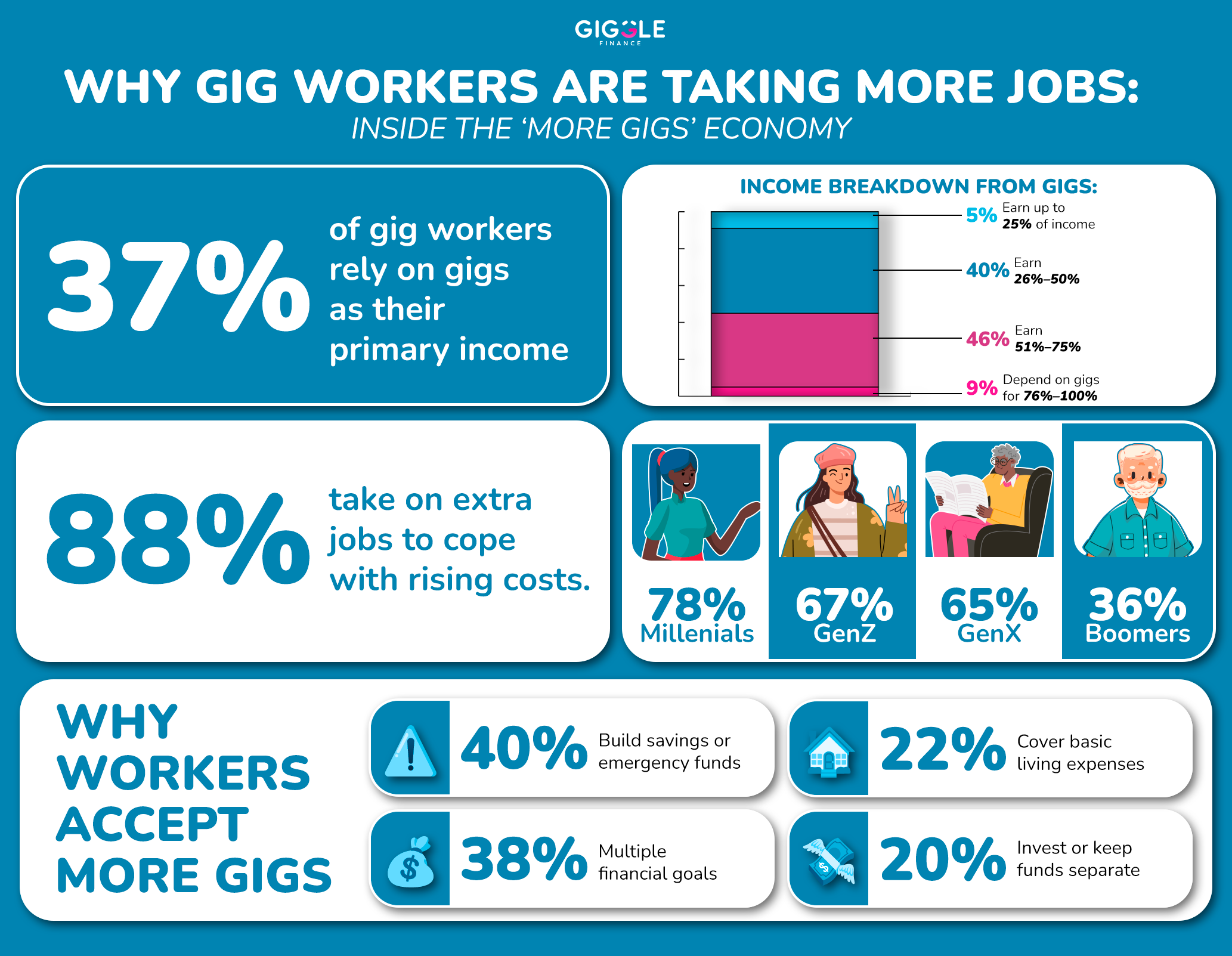
Gig work has become a critical source of income for many in the country. According to the TransUnion Fall 2024 US Gig Economy Report, around 37% of all gig workers report using gig work as their primary source of income.
It mentioned that 55% of millennials rely on gigs as their primary source of employment and income, and that this generation is the most engaged in gig work, with 78% currently earning through one or more gig platforms. They are followed closely by Gen Z and Gen X, with participation rates of 67% and 65%, respectively. While only 36% of Baby Boomers currently earn through gig platforms, 40% of them plan to enter the gig economy in the future.
Meanwhile, according to Zety’s 2025 State of Gig Work Report, 88% of respondents reported taking on extra jobs to offset rising costs. Moreover, the survey also shows a heavy reliance on gig income. Over half of respondents (55%) said gig work makes up the majority of their total earnings:
- 5% earn up to a quarter of their income from gigs
- 40% earn between 26% and 50%
- 46% earn between 51% and 75%
- 9% depend on gig work for nearly all their earnings (76%–100%)
Why Gig Workers Are Accepting Extra Gigs
Most are doing it out of necessity, not choice. According to the PYMNTS Intelligence report, “Do the (Side) Hustle: Four in 10 U.S. Consumers Seize the Opportunity to Earn More Income,” nearly one in four consumers has started or increased side work due to economic pressures.
Among those living paycheck to paycheck, 75% report taking on more hustles or hours as prices rise, often sacrificing leisure time to make ends meet. The primary driver for picking up side work is still necessity, with 22% saying they do it mainly to cover living expenses and 38% listing it as one of multiple goals.
However, a growing number are using side hustle income strategically, aiming to stabilize their finances and plan for the future. About 40% of side hustlers are building savings or emergency funds, and 20% invest or keep their earnings separate. Notably, Gen Z leads this shift: 24% invest their side hustle income, compared to 14% overall, showing a trend toward turning gig earnings into financial runway rather than just immediate survival.
Same Platforms or New Ones? The Strategy of Diversification
Gig workers make careful choices about where to expand. Some workers choose to remain on a single platform. In contrast, others intentionally spread their work across multiple, unrelated platforms to reduce their dependency on any one source of income.
That said, each approach comes with its own advantages and trade-offs:
Within Platform Expansion
- Simplified Management: Focusing on a single platform enables workers to establish routines more easily, thereby reducing the time and energy spent on learning and adapting to different systems.
- Consistent Payout System: Earnings, incentives, and bonuses are centralized, making it easier to predict weekly or monthly income.
- Fewer App Conflicts: Workers avoid the logistical challenges of switching between multiple apps, such as managing overlapping notifications, accepting or declining simultaneous orders, and navigating different delivery or ride processes.
- Better Familiarity: Over time, workers gain a deeper understanding of platform-specific trends, such as high-demand zones or peak times, leading to improved efficiency and increased earning potential.
- Streamlined Tax and Record-Keeping: With income from one source, tracking payments and preparing tax documents is more straightforward.
- Limited Earning Opportunities: Relying solely on one platform can cap income potential and increase vulnerability to external changes. If demand drops, policies shift, or technical issues occur, there’s little flexibility to pivot to alternative income streams. This dependence can make financial stability more fragile, especially during off-peak seasons or platform disruptions.
Across Platform Diversification
- Broader Income Coverage: By working across multiple platforms, gig workers can fill gaps during slow periods on one app with opportunities from another, creating more stable overall earnings.
- Access to Different Customer Bases: Diversification enables gig workers to tap into various markets, increasing flexibility and the potential for higher total income.
- Reduced Reliance on a Single Platform: If demand drops, policies change, or technical issues arise on a single app, earnings are less likely to be severely impacted.
- More Complex Management: Juggling multiple platforms by constantly monitoring different apps, switching between interfaces, and coordinating pickups or deliveries can lead to cognitive overload.
- Unclear or Fragmented Tax Tracking: Managing multiple income streams requires more careful documentation and organization, which can complicate budgeting and tax reporting.
Is the Extra Workload Worth It?

Working multiple gigs simultaneously is physically and psychologically taxing. Multi-giggers often work odd, split shifts, with late-night deliveries after full-day freelance work, or early morning rides before a second gig kicks in.
While stacking gigs may boost weekly gross income, workers can also hit diminishing returns. After 50 to 60 hours a week, additional hours yield a smaller net income once vehicle wear, taxes, and rest deficits are factored in. The “more jobs” model offers short-term income stability but can lead to long-term exhaustion if not managed effectively.
Furthermore, burnout is a common issue that arises from working excessively. A recent survey of 1,000 American gig workers reveals a troubling picture of health risks and financial insecurity. Burnout is widespread, with two in five workers experiencing it from pushing through health issues. Meanwhile, 15% reported being injured or falling ill due to their gig work. Yet, nearly 90% admitted to continuing to work despite these injuries or illnesses.
Also, over 80% received no compensation or insurance benefits for their work-related injuries, forcing many to pay out of pocket. Worryingly, 87% of respondents fear a future injury could leave them without income or support. These findings underscore the urgent need for stronger policies and protections for gig workers, who often lack the safety nets that traditional employees receive.
Coping Tools: Instant or Same-Day Pay
Despite instability, new platform features are helping gig workers gain more predictable control over their cash flow, particularly through instant payouts.
Data shows gig workers overwhelmingly value fast access to their earnings. About 81% of freelancers, contractors, and consultants prefer instant payment over traditional pay cycles. Emergencies drive this preference even higher, with 83% willing to pay a small fee to get their money immediately when needed, and 58% would opt for real-time payouts after every shift.
Platform choice is also influenced by payment speed, with nearly 80% of gig workers choosing one platform over another if instant payment is offered without fees. Additionally, about 70% want to receive payment on the same day they work.
Same-day pay is becoming a crucial financial tool for millions who rely on gig income, offering stability and alleviating the stress of waiting for traditional paycheck cycles. This shift underscores the importance of prompt payments for gig workers, who manage fluctuating income streams and urgent expenses.
Practical Financial Resilience Strategies for Multi-Gig Workers
Even as reforms evolve, much of the burden remains on workers themselves. Financial resilience is now a core job skill in gig work.
1. Diversify Gigs Strategically, Not Reactively
- Pair Complementary Platforms: Choose gigs that cover different time slots, physical demands, or types of work. For example, a driver might deliver meals during weekday lunch hours and freelance remotely on weekends, rather than stacking multiple delivery apps back-to-back.
- Avoid Geographic and Energy Overlap: Doing similar gigs in the same areas can increase fatigue without meaningfully boosting income. Therefore, select roles that balance physical, mental, and logistical demands.
- Anticipate Platform Volatility: No single platform is stable forever. As mentioned earlier, by spreading work intentionally, you protect yourself from sudden changes in pay structures, demand fluctuations, or account deactivations.
- Review Platform Performance Quarterly: Treat diversification like a portfolio where you cut platforms that drain your time without consistent return and double down on the ones that deliver sustainable value.
2. Track Income and Expenses Meticulously
- Build a Clear Financial Dashboard: Use apps, spreadsheets, or accounting software to log earnings, mileage, tips, maintenance, and downtime in real time.
- Include Hidden Costs: Many workers underestimate expenses such as vehicle wear and tear, tolls, parking, or self-employment tax. Accounting for these upfront costs gives a more realistic picture of net income.
- Separate Personal and Work Finances: Maintaining a dedicated bank account for gig earnings can simplify budgeting, tax preparation, and expense tracking.
- Automate Where Possible: Using tools that auto-categorize transactions or track mileage reduces manual workload and ensures better accuracy.
3. Build an Emergency Fund Early
- Start Small but Consistent: Even setting aside 5 to 10% of weekly earnings can accumulate into a meaningful cushion over time.
- Target At Least 3 Months of Expenses: A basic safety net can help cover slow weeks, illness, or platform disruptions without forcing unsustainable overwork.
- Use Automated Transfers: Treat savings like a fixed cost rather than an afterthought, and automating contributions removes the temptation to spend it elsewhere.
- Revisit and Adjust: As income grows or fluctuates, scale the emergency fund goal accordingly.
4. Budget and Pay Yourself First
- Prioritize Taxes and Savings: Set aside estimated tax payments and savings at the start of each payout cycle, not the end. This builds discipline and prevents unpleasant surprises in the future.
- Create a Baseline Income Target: Determine how much you need weekly to cover essentials, savings, and taxes, and then build your work schedule around achieving that number, rather than chasing inconsistent bonuses.
- Treat Gig Work as a Business: Think like an owner who plans for slow periods, tracks profitability, and sets aside funds for reinvestment (e.g., equipment upgrades, certifications, or health coverage).
- Build Flexibility Into Your Budget: Gig income fluctuates, so your spending should adjust too. A tiered budget (needs, wants, growth) can provide structure without rigidity.
5. Leave Room for Downtime
- Schedule Rest Deliberately: Overworking may spike short-term income, but it undermines long-term consistency. Regular rest days or reduced-hour blocks help keep you sharp and reduce the risk of burnout.
- Protect Your Energy Like an Asset: Your health directly impacts your earning capacity, so treat recovery time as an investment and not a luxury.
- Recognize the Signs of Overextension: Fatigue, reduced attention to detail, or a decline in income per hour are often early warning signs. And addressing them early helps avoid forced breaks later.
- Balance short-term effort with long-term goals: Pace your workload, protect your rest time, and set realistic weekly targets to maintain consistent performance without sacrificing your health.
6. Invest in Skills and Tools That Compound Over Time
- Upgrade Strategically: Investing in better equipment (e.g., fuel-efficient vehicles, software subscriptions, reliable phones) can reduce costs or increase efficiency.
- Develop Complementary Skills: By upskilling, freelancers can access higher-paying opportunities beyond entry-level gig work.
- Build Multiple Income Streams: Passive or semi-passive channels, such as digital services, tutoring, or content creation, can help buffer income volatility.
- Think Long Term: Gig work can serve as a bridge to a core career. Investing in yourself ensures options beyond the platform economy.
Rethinking the “Freedom” Narrative
American gig workers have evolved from side hustlers into multi-portfolio earners, piecing together unstable ecosystems to survive persistent inflation. Flexibility remains part of the appeal, but it coexists with financial fragility, fatigue, and structural inequities.
This “more gigs” economy shows both resilience and vulnerability. It highlights a labor force unwilling to surrender autonomy, yet forced to navigate fragile conditions alone. The path forward lies in modernization: platform accountability, portable protections, and smarter tools that turn flexibility from a marketing slogan into a sustainable livelihood.
As the cost of living stays stubbornly high, gig workers are proving what innovation under pressure looks like. They aren’t just delivering orders or driving riders; they’re delivering the blueprint for the next generation of work—one built on adaptability, endurance, and the relentless pursuit of stability in an unstable economy.
Disclaimer: Giggle Finance provides Revenue-Based Financing programs for business purposes only. Any mention of any loan product(s), consumer product(s), or other forms of financing is solely for marketing and educational content purposes and to help distinguish Giggle Finance’s product from other comparable financing options available in the markets.