
On this page
- Why More Americans Are Turning to Loans
- The Statistical Divide: The Self-Employed in Lending
- Why Banks Say “No” to Nontraditional Workers
- The Real-World Impacts for Gig Workers
- How Fintech, Credit Unions, and New Models Bridge the Gap
- How Gig Workers Can Improve Their Creditworthiness
- Toward Financial Inclusion in a Changing Workforce
Since the pandemic, platforms like Uber, DoorDash, Upwork, and Fiverr have helped make self-employment part of the mainstream economy. Yet despite their growing influence, millions of gig workers still face barriers when trying to access traditional financial services.
Access to loans, credit, and basic banking tools should be a standard part of modern work life. But for many freelancers and contractors, these remain privileges reserved for W-2 employees. Without access to fair financial products, gig workers often face higher costs, limited flexibility, and an increased risk of turning to predatory lenders.
Why More Americans Are Turning to Loans
Rising living expenses continue to put pressure on American households. Inflation, soaring grocery bills, housing costs, and uncertain job security have made it difficult for many to stay on budget. To keep up, more people are relying on personal loans to bridge financial gaps.
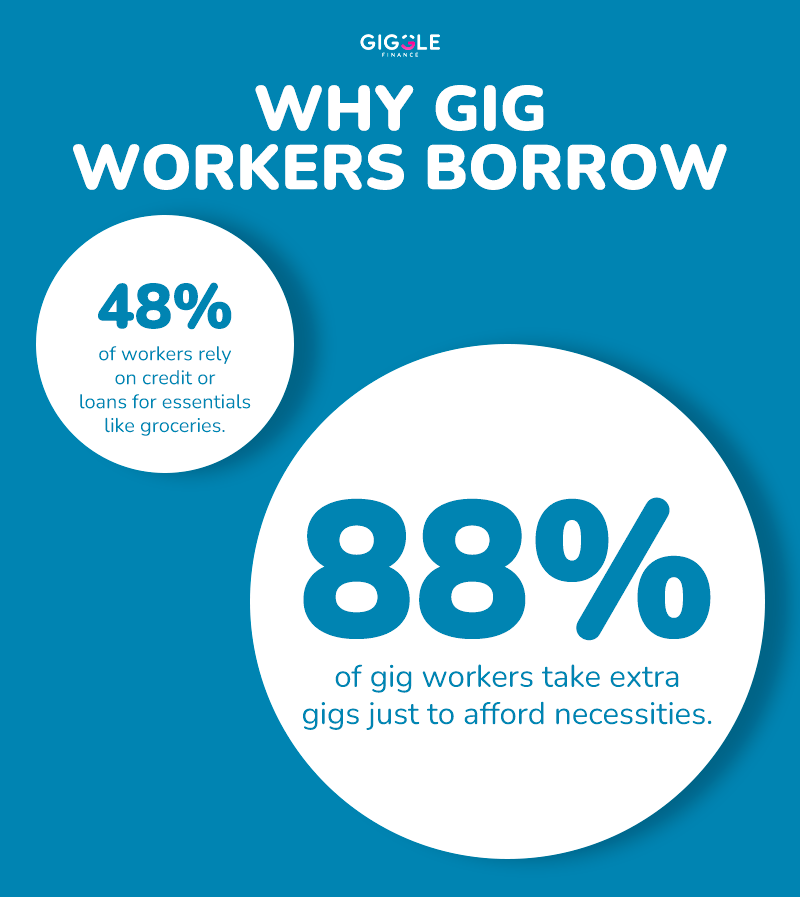
A Zety survey revealed that 48% of workers have used credit or loans to pay for essentials like groceries. Among gig workers, 88% reported taking on additional side jobs just to cover basic needs.
According to SoFi’s Real Borrowers, Real Reasons survey, 58% of borrowers took out loans of $10,000 or less. Nearly half were able to pay them off within two years, and 43% have already cleared their balance entirely. Debt consolidation was the most common reason for borrowing, with one in four using a personal loan to combine existing debts.
Many borrowers secured relatively low rates, with 64% locking in at or below 9%. Still, high interest charges remained the most common struggle in managing repayments.
Overall, most borrowers show financial discipline. Nearly 80% said they would consider taking out another loan in the future, and 65% reported that their financial situation improved afterward. However, not every borrower saw positive results. About one in five said their finances stayed the same or worsened, while others regretted the reason they borrowed in the first place.
For gig workers already navigating income uncertainty, these mixed outcomes highlight how critical fair access to banking and credit truly is. Without it, the path to financial stability remains steeper (and riskier) for millions of independent earners.
The Statistical Divide: The Self-Employed in Lending
For many gig workers, the biggest challenge isn’t finding work — it’s convincing banks they’re creditworthy. Without a steady paycheck or employer verification, freelancers and contractors often struggle to qualify for loans and credit cards, no matter how consistent their income may be.
Credit Access Remains Unequal
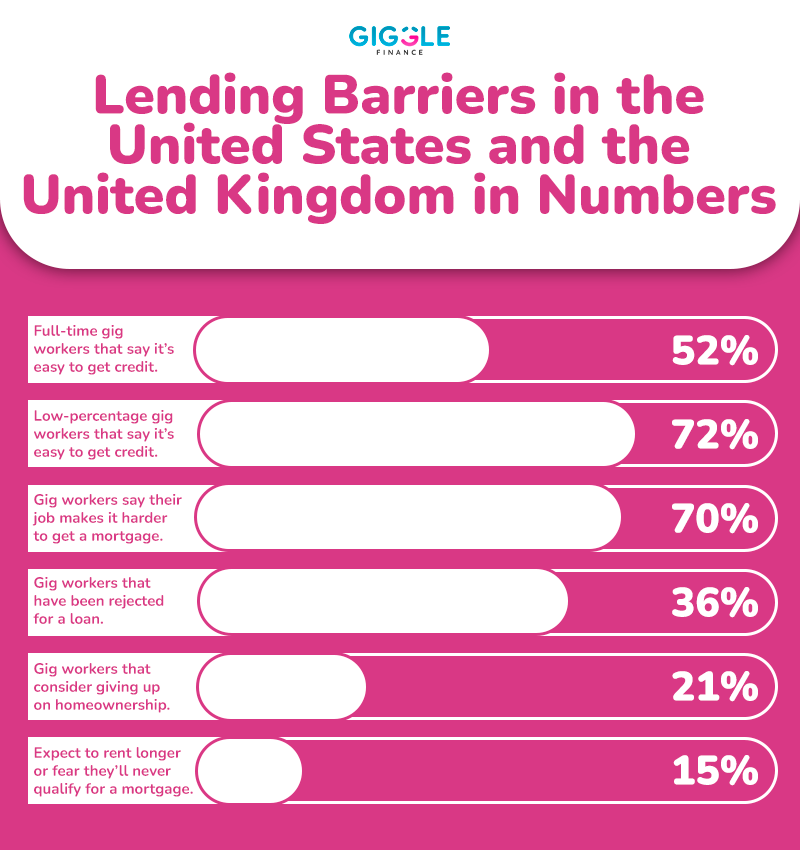
A 2024 Experian survey found that only 52% of gig workers who earn most of their income through self-employment find it easy to access credit. In contrast, 72% of part-time gig workers, those who earn less than a quarter of their income this way, report easier access. That 20-point gap highlights how traditional lending systems still favor predictable, W-2-style employment.
This challenge extends beyond the United States. In the UK, research from The Mortgage Lender (TML) revealed that 37% of freelancers and short-term workers plan to buy their first home, but 70% say their employment status makes mortgage approval harder.
Rejection Rates Tell the Real Story
For many self-employed applicants, rejection is expected. 63% report being denied credit at least once, most often because lenders see their work as unstable (36%) or their income as unpredictable (29%). Poor credit scores and missed payments only compound the problem, with 38% citing credit score issues and 33% admitting to late payments.
These numbers represent people being sidelined from major financial milestones. Among those affected, 21% are considering giving up on homeownership altogether, while others plan to rent longer or fear they’ll never qualify for a mortgage.
The Financial Roadblocks and the Signs of Change
The lending gap for gig workers extends far beyond homeownership. Many rely on financing to buy cars, tools, or supplies that keep their work going. Yet, even with good credit, traditional lenders often require steady proof of income that freelancers and contractors may struggle to provide.
This leaves many self-employed workers in a cycle of exclusion, where access to credit depends more on their employment type than on their actual financial responsibility.
However, the landscape is beginning to shift. Financial and tech companies are introducing new tools tailored to flexible income streams, including auto loans, buy-now-pay-later options, and direct deposit services designed for gig workers’ unpredictable pay cycles. These solutions aren’t widespread yet, but they signal a positive move toward a more inclusive, adaptable financial system for independent earners.
Why Banks Say “No” to Nontraditional Workers
The gig economy now fuels a major share of the U.S. workforce. From rideshare drivers and delivery couriers to freelancers and online contractors, more than one-third of Americans earn income outside a traditional job. Yet, as this modern workforce expands, it faces an old problem — getting approved for loans.
Traditional banks still depend on outdated metrics: steady monthly income, employer-verified pay stubs, and long-term job stability. Gig workers, by nature, rarely meet those expectations, leaving them at a disadvantage from the start.
Why Lenders Struggle to Approve Gig Income
According to Fannie Mae’s 2025 Mortgage Lender Sentiment Survey, 83% of lenders say gig income is difficult to assess during underwriting, and 71% report similar issues with variable pay like tips or commissions.
Banks often hesitate because they can’t easily fit gig income into their risk models. Their main concerns typically fall into three categories:
- Documentation gaps: Gig workers don’t have standardized pay stubs or employer records. Income is spread across multiple platforms and 1099 forms, making it harder to verify.
- Unpredictable earnings: Gig income fluctuates month to month, leading underwriters to view it as unstable.
- Verification challenges: Each platform—whether it’s Uber, DoorDash, or Upwork—uses different systems to track earnings, and few integrate smoothly with banks’ verification tools.
Outdated Verification Rules Add to the Problem
As more borrowers rely on flexible income sources, lenders are caught between strict rules and a changing workforce. Fannie Mae data shows how divided the industry has become.
Nearly half (46%) of lenders say they want clearer verification standards for digital gig income to reduce uncertainty during loan reviews. Meanwhile, 29% believe current rules are adequate, and 26% want looser guidelines that give them more flexibility.
Variable income creates a similar split. Workers paid through bonuses, commissions, or seasonal cycles often face additional scrutiny. 44% of lenders are satisfied with current verification rules, but 32% want more specific guidance, and 23% believe flexibility is the key to adapting to unique borrower situations.
The Real-World Impacts for Gig Workers
Alt text: a calculator with the total amount of debt and a pile of bills
Many gig workers face more than just financial setbacks when denied credit. The challenge affects how they live, work, and plan for what’s next. When people can’t qualify for loans or credit lines, it affects everything from where they live to how they grow their income.
Limited Access to Capital
Without traditional financing, many gig workers find it nearly impossible to buy a home, start a small business, or handle unexpected expenses. This lack of access limits upward mobility and keeps many independent earners living paycheck to paycheck, even when their work is consistent and in demand.
Riskier Borrowing Options
When mainstream credit is out of reach, payday lenders, auto-title loans, and high-interest credit cards often fill the gap. These options may offer quick cash but come with sky-high rates and aggressive repayment terms that can trap borrowers in ongoing debt.
The Cycle of Debt
Predatory lenders often target those excluded from traditional financial systems. For gig workers, that can mean relying on short-term fixes that only worsen long-term instability. As debts grow and credit scores drop, it becomes even harder to qualify for fair financing in the future—creating a cycle that’s difficult to escape.
How Fintech, Credit Unions, and New Models Bridge the Gap
As traditional banks struggle to adapt to the gig economy, new financial players are rewriting the rules. Fintech lenders and forward-thinking credit unions are creating products that reflect how gig workers actually earn, spend, and save.
A New Way to Evaluate Creditworthiness
Instead of depending on W-2s or fixed pay schedules, these institutions use alternative data to assess financial reliability. This includes gig platform payment histories, recurring utility payments, and even consistent spending or savings patterns. The result is a fuller picture of a borrower’s financial health—one that recognizes consistent effort over traditional employment.
Faster Access to Earnings
One of the most impactful innovations is the ability to access earned pay instantly. Many fintech platforms now offer same-day deposits, giving gig workers faster access to their money and helping smooth out unpredictable cash flow. This kind of flexibility can make a major difference in covering essentials, from rent to fuel costs, without resorting to high-interest loans.
Smarter Tools for Financial Stability
Modern platforms also combine budgeting, invoicing, tax planning, and expense tracking into one place. These tools give independent earners real-time insights into their cash flow, helping them plan ahead and manage slow periods more effectively.
Together, these innovations are gradually redefining what financial inclusion looks like—moving from outdated requirements toward systems that reward consistency, transparency, and responsible money management.
How Gig Workers Can Improve Their Creditworthiness
Maintaining a strong financial profile can be challenging for gig workers, especially since traditional credit scoring systems don’t always capture the realities of fluctuating income. Still, there are practical ways to strengthen creditworthiness and make it easier to access loans, credit cards, and other financial services.
Build Stability Through Budgeting and Savings
Even when income varies, consistency in managing money matters most. Start by tracking all income and expenses using a budgeting app or spreadsheet. This helps you visualize spending patterns and set realistic savings goals.
An emergency fund is another key safety net. Aim to save enough to cover three to six months of essential expenses. Contributing even small amounts regularly demonstrates financial discipline and stability—two traits lenders value highly.
Lower Your Debt-to-Income Ratio
Your debt-to-income (DTI) ratio shows lenders how much of your income goes toward debt payments. A lower ratio signals that you manage your money well. Focus on paying down high-interest debts first, such as credit cards, since they can quickly increase your balance and reduce flexibility.
Even if income fluctuates, consistent debt repayment helps improve your credit score and shows lenders you can handle financial responsibilities responsibly.
Use Alternative Credit Data to Your Advantage
Many lenders are now open to using nontraditional data to assess creditworthiness. Gig workers can benefit from this shift by maintaining accurate records of platform earnings, utility payments, rent, and subscriptions. These payments help prove financial reliability, even without standard pay stubs.
Some fintech platforms and digital banks now allow borrowers to share transaction histories or link accounts directly to show consistent income patterns. Additionally, credit-building tools, like secured credit cards or credit-builder loans, can help establish or strengthen your credit history over time.
Monitor and Protect Your Credit Report
Regularly checking your credit report ensures accuracy and helps you spot issues before they affect your score. Errors or outdated information can drag down your credit without you realizing it. Review your report every few months and dispute any incorrect entries through the major credit bureaus.
Staying proactive helps you maintain a clean credit history and signals to lenders that you take your financial health seriously.
Toward Financial Inclusion in a Changing Workforce
Banking barriers in the gig economy continue to limit opportunity and widen financial gaps. As flexible and independent work becomes a lasting part of the global economy, the systems designed to support workers must evolve too.
Traditional lending models built around steady paychecks and long-term employment no longer reflect how millions of people earn. Financial institutions that adapt by using alternative data, updating credit models, and embracing flexible underwriting will be better equipped to serve today’s workforce.
Meaningful progress requires shared effort. Gig workers, fintech leaders, policymakers, and advocates each play a part in shaping fairer systems that recognize diverse income patterns. The next phase of financial inclusion depends on designing banking tools that work for everyone, not just those who fit yesterday’s definition of stability.
Disclaimer: Giggle Finance provides Revenue-Based Financing programs for business purposes only. Any mention of any loan product(s), consumer product(s), or other forms of financing is solely for marketing and educational content purposes and to help distinguish Giggle Finance’s product from other comparable financing options available in the markets.