On this page
For millions of gig workers across the U.S., managing money can feel like a full-time job. Between irregular payouts, delayed deposits, and surprise overdraft fees, traditional banking systems often make financial stress worse.
This gap has sparked a wave of digital banks built specifically for freelancers and independent contractors. Platforms like Lili, Current, and Oxygen are reshaping how gig workers save, get paid, and plan ahead. With instant deposits, automated tax tools, and integrated savings features, these apps are redefining what financial freedom looks like for a flexible workforce.
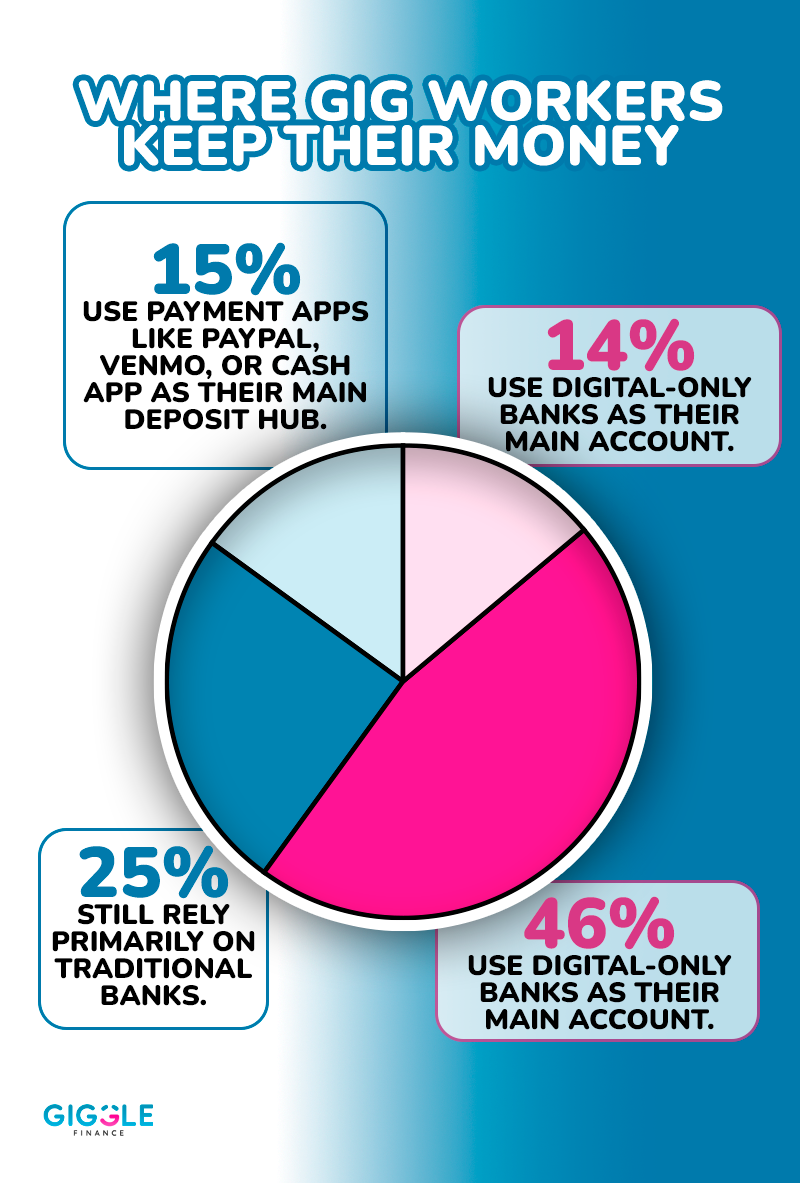
According to data from PYMNTS, roughly one in seven U.S. gig workers now rely on digital-only banks for their main financial activities—a number that continues to grow as instant payments and mobile banking become the norm. As a result, gig-first banking has become a financial movement built around speed, transparency, and independence.
The Rise of Gig-First Neobanks
Over the past few years, the banking landscape has undergone a major change. As millions of Americans trade traditional jobs for freelance and contract work, a new class of financial tools has emerged to meet them where they are. These aren’t just online banks; they’re gig-first platforms that are flexible, mobile, and built around the everyday realities of self-employed life.
Why Gig Workers Needed a New Kind of Bank
Traditional banking systems were designed for predictable paychecks. Gig workers, however, operate on an entirely different schedule, where one’s income can fluctuate weekly, and multiple platforms might pay out at different times. That mismatch has made it harder to budget, save, and plan for taxes.
Digital banks like Lili, Current, and Oxygen were built to fill that gap. Instead of focusing on credit cards or overdraft fees, they prioritize cash flow visibility and faster access to money. With features like early direct deposit, real-time alerts, and automated expense tracking, these tools help gig workers manage their daily finances with greater confidence and less uncertainty.
The Fintech Boom Powering Gig Banking
The expansion of gig-first banks is also part of a broader fintech revolution. The launch of FedNow in 2023 and the growth of Real-Time Payments (RTP) networks have made instant deposits possible for independent earners.
Furthermore, according to PYMNTS Intelligence, nearly 38% of freelancers now use neobanks for business or personal transactions, citing speed and accessibility as their top reasons.
Combined with lower operating costs and smarter data tools, digital banks can offer features that traditional banks can’t match—often with little to no monthly fees. For many, this shift represents more than convenience but also financial control.
Why Traditional Banks Are Failing Gig Workers
For all their legacy and name recognition, traditional banks still operate with systems built for a 9-to-5 world. They’re optimized for biweekly paychecks, steady cash flow, and predictable deposits, but not for drivers, freelancers, or creators juggling multiple income streams. As a result, many gig workers find that conventional banking adds friction instead of freedom.
Delayed Deposits and Income Mismatch
Traditional banks process direct deposits on fixed schedules, which doesn’t align with how gig workers earn. For example, a rideshare driver might get paid daily, while a freelance designer might wait weeks for a client invoice to clear. Yet despite these differences, many banks still hold deposits for 1–3 business days, forcing workers to rely on credit cards or payday advances while waiting for payment.
According to the Federal Reserve, over 60% of gig workers experience income volatility each month, making access to funds in real time a critical need. Neobanks solve this by offering early direct deposits and instant-pay integrations with platforms like Uber, DoorDash, and Upwork, bridging the gap between earning and spending.
High Fees and Overdraft Penalties
Legacy banks have long depended on overdraft fees as a major source of revenue. The CFPB found that U.S. consumers paid nearly $5.8 billion in overdraft and NSF fees in a single year, with lower-income and gig-based workers hit hardest.
For workers living paycheck to paycheck, or platform to platform, these fees can drain what little cushion they have. Digital banks, on the other hand, are eliminating overdraft charges entirely or offering small, fee-free overdraft buffers (like Current’s $200 coverage) to prevent negative spirals.
Lack of Built-In Tools for Self-Employed Finances
Traditional banks often treat freelancers as small businesses but fail to offer the tools they need to manage irregular income, track expenses, or set aside taxes. Because of this, most gig workers must use third-party apps for budgeting, invoicing, and savings automation.
Gig-focused digital banks like Lili include those features directly into their accounts. They can automatically separate tax funds, categorize expenses, and generate reports for quarterly filings. This seamless approach saves time and builds better financial habits for workers who can’t afford missed deductions or late payments.
Where Gig Workers Keep Their Money
As freelance and platform-based work continues to grow, more earners are using digital banking tools to separate income, manage taxes, and keep cash accessible at all times. Many also keep a portion of their income in cash management accounts or app-linked wallets like PayPal, Venmo, or Cash App to bridge short-term expenses.
How Gig Workers Manage Multiple Accounts
Unlike traditional employees with a single checking account, gig workers often spread their finances across several apps for flexibility. For example:
- Neobank – for receiving and spending gig earnings.
- Credit Union or Savings Account – for long-term storage or emergency funds.
- Payment Platforms – for fast transfers and small daily expenses.
This “multi-account” strategy gives freelancers easier access to cash and reduces reliance on overdrafts or credit lines. Also, many neobanks now encourage it, allowing direct linking between accounts for automatic transfers or tax set-asides.
Why Financial Accessibility Matters
For gig workers, financial freedom means having access to funds whenever needed, without hidden costs. This instant access can be the difference between covering an expense today or incurring a late fee tomorrow. Digital banks that offer same-day deposits and automatic savings rules give freelancers more breathing room and help reduce financial anxiety.
This combination of accessibility, automation, and transparency is turning neobanks into the default choice for independent earners looking to simplify their money flow.
Feature Face-Off: Which U.S. Digital Banks Actually Help?

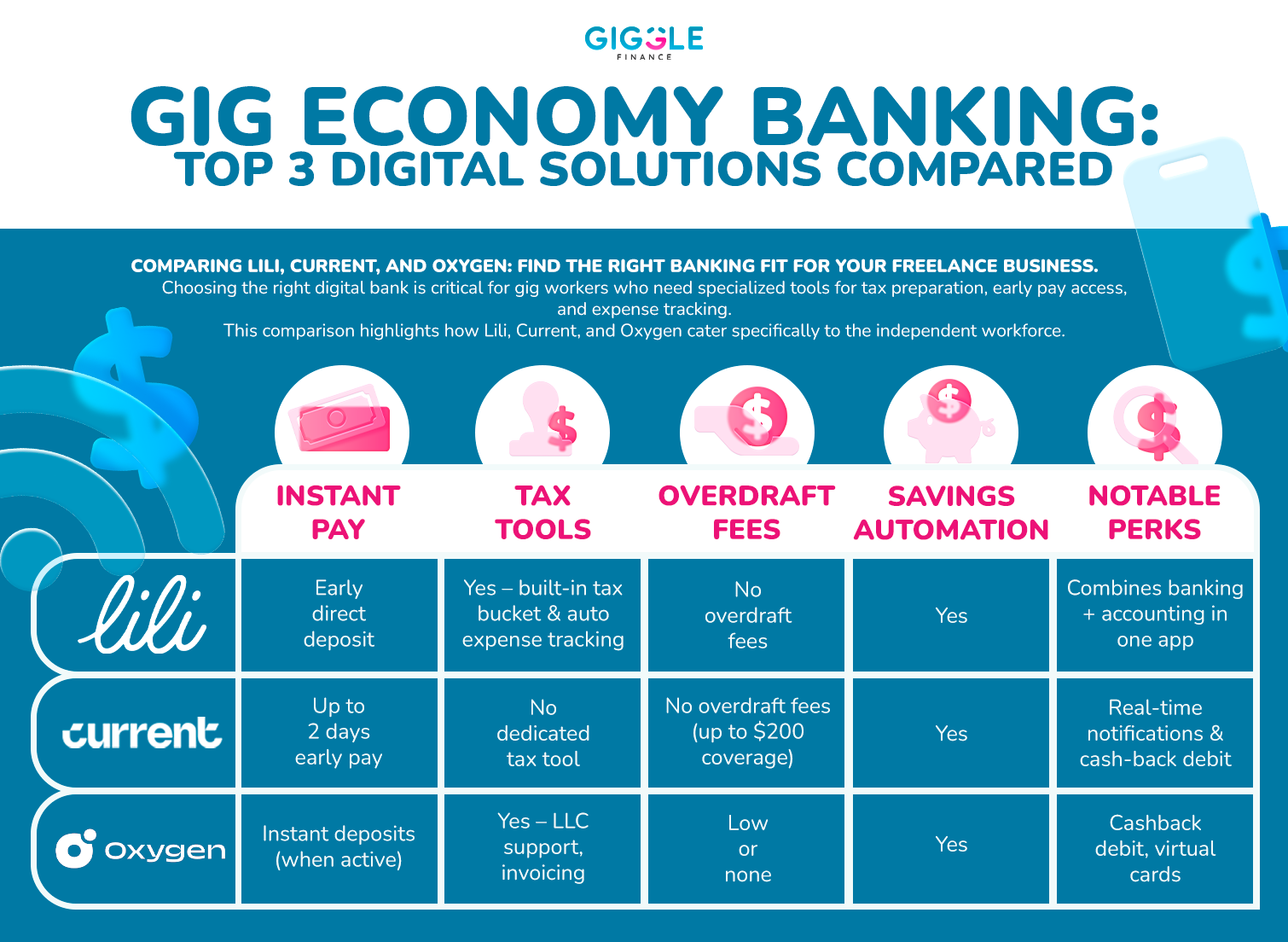
Digital banks vary widely in how well they support gig workers. While some are built with the modern freelancer in mind, others only offer basic checking features with little support for unpredictable income. To see how today’s top platforms measure up, here’s a closer look at Lili, Current, and Oxygen—three names that continue to shape the U.S. gig banking landscape.
Lili
Lili was one of the earliest neobanks built specifically for freelancers and self-employed professionals. Its built-in tax tools automatically categorize expenses, set aside money for estimated taxes, and generate reports to simplify quarterly filing. Users also enjoy early access to direct deposits, automatic savings, and zero hidden fees.
For many freelancers, Lili replaces the need for a separate bookkeeping app by combining banking, budgeting, and accounting in one place. It’s especially popular among creators, service professionals, and gig workers who manage multiple income streams.
Current
Current is known for its fast payments and flexible overdraft protection. With no fees on overdrafts up to $200, real-time transaction alerts, and a built-in budgeting dashboard, it’s one of the most user-friendly banking options for gig workers who rely on consistent access to funds.
The platform’s 4 million users include many rideshare and delivery workers who take advantage of its early deposit feature, often receiving paychecks up to two days sooner than with traditional banks.
Oxygen
Oxygen’s focus is on freelancers and LLC owners. It combines personal and business banking within one mobile platform, making it easy for contractors to separate work and personal spending. The app also offers cashback debit, virtual cards, and integrated tools for LLC formation and invoicing.
Although new account signups are temporarily paused, Oxygen remains an example of how digital banks can serve as a bridge between traditional banking and modern gig work.
What to Look For in a Gig-Friendly Bank
The right neobank makes cash flow management almost effortless, freeing gig workers to focus on their business rather than their balance. Before opening a new account, gig workers should compare features that directly affect their income flow, such as:
- Instant pay and early direct deposits
- Built-in tax savings and expense tracking
- Low or no overdraft fees
- Automation for savings and budgeting
- Invoicing and analytics tools
Faster Money = More Stability
For gig workers, time is money. The longer payments take to clear, the harder it becomes to manage rent, bills, and savings. That’s why instant access to earnings is also a financial safety net.
How Instant Pay Improves Cash Flow
As mentioned earlier, gig workers often waited days for pay before instant deposits, with many relying on credit cards or payday advances to bridge the gap.
With real-time payment systems and instant pay features connected to digital banks, workers can now access their earnings within minutes. This faster access helps reduce overdrafts and makes budgeting between gigs more reliable.”
The Role of Built-In Savings and Automation
What makes gig-first banks so effective is how they combine instant pay with automation. Apps like Lili automatically move a percentage of income into tax or savings buckets as soon as funds arrive. This ensures gig workers aren’t caught off guard by quarterly tax deadlines or unexpected expenses.
Meanwhile, automation transforms inconsistent income into predictable habits. Even a small rule, like saving 5% from every deposit, can help freelancers create stability and build confidence in their finances.
Expert Insight: What Fintech Analysts Are Saying
Financial analysts agree that digital banking adoption among independent earners is one of the most significant shifts in U.S. personal finance over the past decade. For the 64 million Americans earning through freelance or gig work, this shift represents a financial evolution that puts control back into their hands.
Embedded Finance Is Here to Stay
According to Cornerstone Advisors, embedded financial tools like tax buckets, automated savings, and instant payouts are now key to customer loyalty. For gig workers, these features simplify complex money management tasks that traditional banks often overlook. Instead of opening separate apps for taxes, budgeting, and invoices, neobanks integrate these tools directly into one experience.
This approach saves time, cuts hidden fees, and reduces the stress of handling variable income. Analysts also predict that banks integrating automation and smart insights will continue to outperform those that rely on legacy checking products.
Trust and Transparency Drive Retention
A recent report by PYMNTS Intelligence shows that gig workers value trust and clarity above all else. Neobanks that clearly show balances in real time, avoid surprise overdraft fees, and let users customize alerts are the ones building long-term relationships.
Experts also believe this transparency-first model is reshaping the way financial institutions serve customers. Rather than relying on penalties, gig-friendly banks are earning loyalty through features that protect users from uncertainty.
Action Plan for 1099 Workers
You don’t need a complicated setup to manage gig income like a pro. By building a simple banking routine with the right tools, you can make your cash flow more predictable and keep taxes and expenses under control.
Choose the Right Neobank for Your Gig
Pick a digital bank that fits how you earn. If you drive or deliver, look for instant pay and fee-free overdrafts through banks like Current. Freelancers and creators, meanwhile, might prefer Lili for its automatic expense tracking and tax features. What matters most is speed, transparency, and flexibility—three things that traditional banks rarely offer.
Connect Your Payment Apps the Smart Way
Once you’ve opened your neobank account, link it directly to platforms like Venmo, Cash App, PayPal, or Stripe to receive funds faster and reduce transfer fees. Follow these steps to get started:
- Log in to your payment app and open the “Bank or Card” section.
- Add your neobank routing and account number.
- Choose instant deposit (when available) to access money in minutes.
- Confirm deposits appear in your neobank app before spending.
This simple setup turns your neobank into a single hub for income, so you can track all earnings from one place instead of jumping between multiple accounts. For more practical guidance, see how to manage cash flow between gig work payments.
Set Up Smart Automation
Automation helps you stay consistent even when your income isn’t. Start with these quick settings:
- Create an auto-savings rule that moves 5–10% of every deposit into a savings bucket.
- Tag every expense for tax purposes using your neobank’s built-in categories.
- Set up a tax bucket that automatically holds a percentage of your earnings for quarterly payments.
These small systems help you stay ready for tax season, smooth out slow months, and maintain financial balance no matter how your gigs fluctuate.
Conclusion
Digital banks are redefining how gig workers manage their finances day-to-day, from accessing funds faster to automating savings. For millions of freelancers, drivers, and creators, having instant access to funds, built-in tax tools, and automated savings is the new standard for financial freedom.
As neobanks continue to innovate, gig workers now have the same financial tools once reserved for traditional employees. The result is a generation of earners who are more informed, more flexible, and more in control of their cash flow than ever before.
The gig economy may be unpredictable, but with the right banking partner, financial stability no longer has to be.
Disclaimer: Giggle Finance provides Revenue-Based Financing programs for business purposes only. Any mention of any loan product(s), consumer product(s), or other forms of financing is solely for marketing and educational content purposes and to help distinguish Giggle’s product from other comparable financing options available in the market.