On this page
Not every freelancer identifies as a gig worker. For many, the label feels too temporary, suggesting their work is a side hustle rather than a legitimate business. But that perception is starting to change.
Across the U.S., more independent contractors are calling themselves business owners instead of gig workers. They see their work as a long-term career, not just a project-by-project hustle. This shift in identity is changing how freelancers build income, attract clients, and grow over time.
The Identity Divide: Business Owner vs. Gig Worker
Freelancers may use similar skills and tools, but the way they see themselves often shapes how they work. Some view freelancing as a series of short-term projects, while others treat it as running a small business. This difference in mindset can influence everything from pricing to lasting stability.
What the Data Shows
Recent studies suggest that many independent professionals no longer see themselves as part of the “gig” crowd. Reports from MBO Partners and Fiverr show that nearly 70% of full-time freelancers now identify as self-employed professionals or business owners. In contrast, only a small share still uses “gig worker” as their main label.
How Freelancers Self-Identify
The freelance economy includes a mix of self-perception:
- Business Owners / Self-Employed Professionals: Treat freelancing as a sustainable business.
- Freelancers / Consultants: Focus on independence and flexibility, but may not formalize operations.
- Gig Workers / Side-Hustlers: Often take shorter, task-based work through platforms.
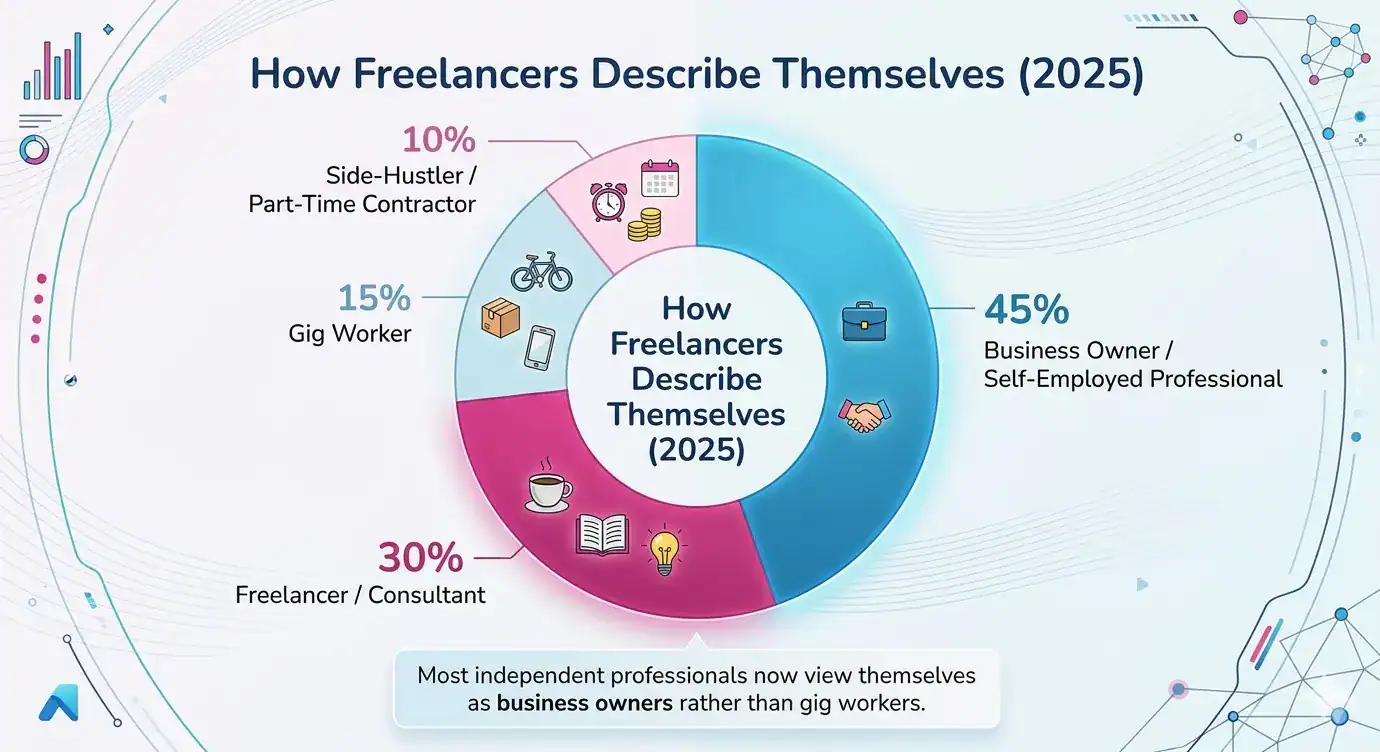
This breakdown suggests that identity often shifts with experience. Freelancers who earn full-time incomes are more likely to call themselves business owners. Those newer to freelancing or balancing several income streams are more likely to still use the “gig worker” label.
Why the Label Matters
Labels influence confidence and decision-making. A freelancer who sees themselves as a business owner is more likely to set structured rates, use contracts, and invest in marketing tools. By contrast, someone who identifies as a gig worker may focus more on securing the next project than establishing a long-term client base.
Seeing yourself as a business owner creates a stronger sense of ownership, and that mindset often leads to stronger client relationships and more stable income over time.
How Identity Shapes Daily Business Habits

A freelancer’s identity, whether as a business owner or gig worker, shapes everything from their daily tools to their mindset and goals.
The Business Owner Mindset
Freelancers who think like business owners treat their work as something worth building and investing in. They plan ahead, create systems, and make decisions that support sustainable growth.
Investing in Tools and Branding
Business-minded freelancers often spend time creating a consistent brand. They design a logo, build a website, and make sure their online profiles look professional. Many also invest in tools that make work more efficient, from invoicing apps and project trackers to scheduling software that saves time and creates a more polished client experience.
Creating Systems and Structure
Freelancers with a business mindset think about the bigger picture. They create repeatable systems, such as client onboarding checklists, proposal templates, and feedback forms, which help deliver work faster and give clients a professional experience.
This structure also builds confidence. Knowing what to expect in every stage of a project makes it easier to handle more clients without feeling overwhelmed.
The Gig Worker Mindset
For those with a gig-focused mindset, the priority is often quick jobs, platform leads, and the freedom to move in and out of work as needed.
Working Project to Project
This approach can appeal to people who want variety, but it can also make income less predictable. Without systems for repeat work or referrals, each new month can feel like starting from zero.
Reacting Instead of Planning
Because the focus is on getting quick jobs, gig-minded freelancers may spend more time searching for clients than developing relationships. They also often set prices based on competition rather than the value they bring.
It’s not necessarily the wrong approach, but it can limit long-term growth. Any freelancer can make the shift to a more stable and strategic mindset with the right habits. Treating freelance work like a business creates structure, reduces stress, and opens the door to more rewarding opportunities.
The Financial Impact of Identity
Identity can influence income too, with business-focused freelancers often earning better rates and creating longer-term client relationships.
How Self-Perception Affects Pricing and Growth
A survey from the UK by Qdos Contractor found that people who identified as “contractors” or “business owners” reported higher day rates than those who called themselves “freelancers” or “gig workers”. Meanwhile, a study of online freelancers found that income was influenced not only by experience and skill range, but also by how effectively freelancers presented themselves.
Building on that, seeing yourself as a business owner also supports growth by encouraging investment in tools, advertising, and ongoing learning. Over time, these investments lead to higher hourly rates, better clients, and more stable income.
How Clients Perceive the Difference
Clients often decide quickly whether a freelancer feels like a strategic partner or just a short-term resource.
Presenting yourself as a business owner can shift that perception in your favor, helping clients see you as reliable, capable, and worth building a sustainable relationship with. In contrast, freelancers who reflect a “gig worker” mindset may be perceived as flexible but replaceable. That can reduce their leverage in pricing, lower client retention, and limit referrals.
Moreover, a study on online‐platform hiring found that freelancer traits, such as how they describe themselves, their skill presentation, and response times, affect the likelihood of being hired.
Choosing Your Identity on Purpose
The label you choose isn’t permanent. By changing how you describe yourself and how you present your work, you can shape how clients see your value.
Shifting from Gig Worker to Business Owner
Freelancers can start building a stronger business identity by changing how they present their work. Small steps, such as creating a professional service brand, can go a long way. This can mean designing a simple logo, writing a short tagline, or keeping your social profiles consistent. These changes tell clients that you take your work seriously.
Build a Service Brand
Create a simple, consistent identity that reflects your work style and values by using the same colors, tone, and messaging across your profiles, website, and proposals. A unified look and message help you appear organized and credible.
Set Clear Pricing Packages
Instead of charging only by the hour, design packages or monthly retainers that show the full value of what you offer. Clear pricing increases trust and makes it easier for clients to understand your worth. It also signals that you’re running a business, not just taking one-off tasks.
Make Marketing a Habit
Spend at least an hour a week updating your online profile, sharing a recent project, or reaching out to potential clients. Small, steady actions keep your business visible and help attract better clients over time.
How to Develop a Brand Around Your Skills
Every freelancer already has a brand, but the difference lies in how clearly it’s communicated.
Define What Makes You Unique
Start by identifying what sets your service apart. Maybe you’re the reliable copywriter who always meets deadlines or the designer who understands the challenges often faced by small businesses. Highlight those strengths in your bio, proposals, and client conversations because a clear focus helps clients remember why you’re the right fit.
Show Consistency and Credibility
Consistency in your brand signals professionalism and builds trust before a project even begins. It also helps you look more established, even if you’re a one-person business.
Build Trust Through Presentation
Use a professional email address, create clear proposals, and gather testimonials from satisfied clients. These small details show that you take your business seriously and make clients more likely to return or refer you to others.
Moving Forward: Rethink How You See Yourself
Your identity shapes the kind of work you attract and the growth you achieve. When freelancers start viewing themselves as business owners rather than gig workers, everything changes, from how they price their services to how clients perceive their value.
Building a business-minded identity doesn’t require a large team or huge investments. It starts with how you show up: communicating clearly, setting fair prices, and treating every client relationship like a partnership.
Remember, your freelance career is more than a series of gigs. It’s a business you’ve built from your own skills, effort, and discipline. See yourself as a professional, and you’ll be better positioned to attract stronger opportunities.