On this page
- Why Freelancers Need Community
- Where Freelancers Can Find Community Offline
- Where Freelancers Can Find Community Online
- Accountability Partners: How to Find and Keep One
- Build Your Own Micro-Community (If You Can’t Find One)
- Turn Community Into Clients and Referrals
- Moving Forward: Solo Doesn’t Mean Alone
Freelancing gives people freedom, flexibility, and control over their careers. But it also comes with something many freelancers don’t talk about openly: feeling alone. Studies show that remote workers and independent contractors report higher levels of loneliness than traditional employees, with many saying the hardest part of freelancing is not work but the lack of connection.
Working solo doesn’t mean you have to build your career alone. Across the country and online, freelancers are creating communities where they can share ideas, get support, find accountability partners, and even land new clients.
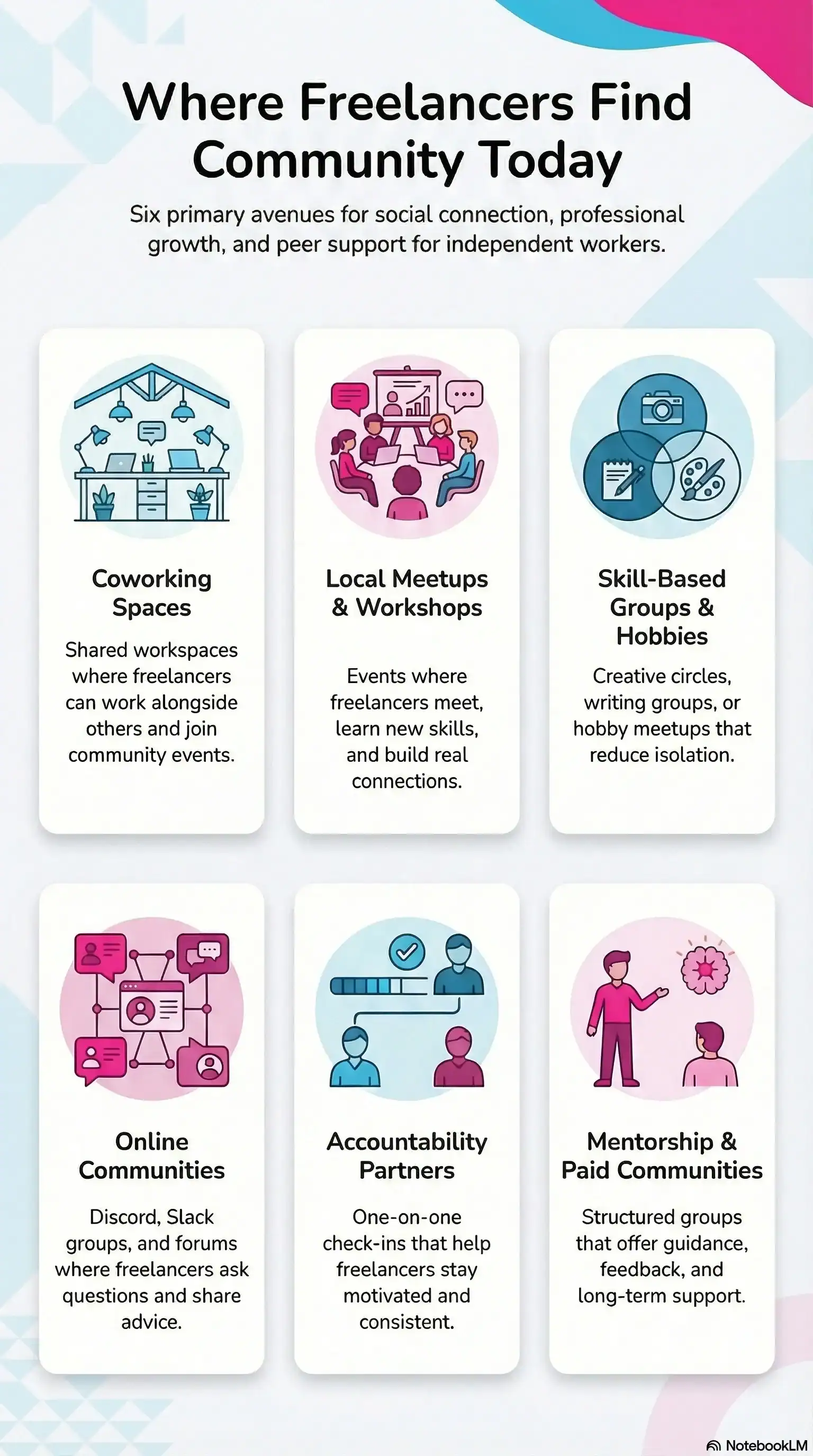
These networks take many forms. Some join local meetups, others connect through online groups, and many find encouragement in coworking spaces or mentorship circles.
Why Freelancers Need Community
Many freelancers work from home, keep irregular schedules, or spend hours focused on solo projects. Over time, this can impact mental health, motivation, and even creativity. Community helps fill those gaps in ways that make work feel more sustainable and meaningful.
The Emotional Side of Solo Work
Studies on remote workers show that freelancers experience higher rates of loneliness compared to people who work on-site. Without coworkers nearby, it’s easy to go days without real conversation. This can lead to stress, overthinking, or losing excitement for your craft.
Having people to talk to, even once or twice a week, can noticeably lift your mood and motivation. Simple check-ins or shared work sessions can help freelancers stay grounded and feel less alone in their day-to-day routines.
The Professional Benefits
Being connected to others also helps freelancers grow. Many independent workers find new clients, learning opportunities, and project collaborations through the communities they join. That’s one reason coworking spaces, mentorship groups, and online freelancer communities have grown so quickly in the last few years.
Community also makes it easier to stay motivated. When you see others working toward their goals, it naturally encourages you to stay focused on your own. Many freelancers say they feel more confident, organized, and supported when they have people to share wins and challenges with.
Where Freelancers Can Find Community Offline
Local groups, coworking spaces, and community events give freelancers a place to meet others who understand their work style and challenges. Even one or two in-person connections can make a big difference in how supported and motivated you feel.
Coworking Spaces
Coworking spaces are designed for independent workers, offering a mix of shared desks, quiet areas, meeting rooms, and community events. Being around others who are also working creates a sense of routine and belonging without the pressure of a traditional office. It’s also a place where you can easily meet people who share similar career paths and interests.
How to Join With Confidence
- Try a day pass before committing
- Tour the space to see if it matches your style
- Look for locations with events like “coffee meetups,” “lunch-and-learn sessions,” or “open cowork days”
- Choose a place with the right noise level and community vibe
Meetup Groups and Workshops
Local meetups bring freelancers together through shared interests. They also give them a way to learn something new while meeting people in a setting they’re comfortable with. These can be writing meetups, photography walks, small business workshops, tech groups, art classes, or creative networking events.
What to Look For Before Joining
- A welcoming host
- Friendly conversation among members
- Activities or structure (instead of groups that feel like random social hours)
- Events that align with your interests and goals
Skill-Sharing Gatherings and Hobby Groups
Not every community space needs to be work-related. Many freelancers feel supported by joining hobby groups like book clubs, volunteer circles, or running groups. These gatherings help break the routine of working alone and give freelancers a place to recharge socially.
Community spaces like these are often free, easy to join, and help freelancers form genuine friendships beyond work.
Where Freelancers Can Find Community Online

Not every freelancer has access to local groups or coworking spaces. However, online communities make it easier to connect with others, no matter where you live or what your schedule looks like.
Many freelancers find real friendships, support, and collaboration inside digital spaces that are active, welcoming, and easy to join.
High-Value Platforms
Strong online communities give freelancers a place to ask questions, share wins, get feedback, and learn from others. These groups often bring together people from different backgrounds and industries, creating a healthy mix of ideas and experiences.
- Discord communities: Many creative, tech, writing, and remote-work servers have active daily chats and support channels.
- Slack groups: Great for niche industries such as marketing, design, writing, or development.
- Reddit: Subreddits like r/freelance, r/digitalnomad, r/smallbusiness, and r/designhelp offer advice, inspiration, and peer support.
How to Tell if a Group Is Worth Joining
- Active daily posts and helpful replies
- Clear rules that prevent spam
- Members who share resources, not just self-promotion
- A welcoming tone from moderators and long-time members
Paid Groups for Serious Growth
Some freelancers prefer structured communities that offer mentorship, accountability, and deeper learning. These paid groups often include workshops, expert Q&A sessions, coworking calls, and industry-specific guidance.
Paid communities are particularly useful if you want more structure, consistent interaction, or direct access to mentors.
Examples include:
- Mastermind circles
- Freelancer academies
- Patreon communities with teaching components
- Online membership groups focused on business growth
Accountability Partners: How to Find and Keep One
Freelancers often work alone, which makes it easy to push deadlines, lose momentum, or feel stuck. Having an accountability partner you check in with regularly can make your solo career feel lighter and more manageable.
Why Accountability Partners Work
Having someone to talk to helps break the cycle of working alone. Sharing your goals with another person creates natural motivation, and celebrating weekly wins together builds confidence. Many freelancers say that even brief check-ins make them more productive and help prevent burnout.
How to Find One
The best partner is someone who understands your work style, communicates clearly, and is willing to show up consistently.
You can find accountability partners through:
- Online freelancer communities
- Coworking spaces
- LinkedIn connections
- Local creative or tech meetups
- Mastermind or coaching groups
- Friends or peers who also work independently
How to Structure Check-Ins
A simple structure keeps check-ins short and effective, helping both partners stay accountable without adding pressure or long meetings.
Here’s a format many freelancers use:
- Weekly call (20–30 minutes)
- Share your goals for the week
- Talk about any roadblocks you’re facing
- Review what went well
- Set next week’s plans together
Build Your Own Micro-Community (If You Can’t Find One)
Sometimes the community you’re looking for simply doesn’t exist yet. And if you can’t find one that fits, you can always bring like‑minded people together yourself to start a micro-community.
These are small, supportive groups created by freelancers who want connection but don’t have access to large meetups or coworking spaces. Even a group of two to five people can create powerful support, motivation, and friendship.
Start Small and Keep It Simple
A small group often works better because it feels more personal and easier to maintain. Your group could meet at a coffee shop, library, park, or through a simple Zoom call.
For your meetups, choose one simple focus, such as weekly coworking sessions, goal-setting check-ins, or creative work blocks. What matters most is consistency and a shared desire to support one another.
Keep It Low-Pressure
A micro-community should feel comforting, not stressful. A short 30-minute virtual session or a casual in-person meetup is enough. Keep the structure light: a quick “What are we working on today?” at the start and a “What did we finish?” at the end.
Let It Grow Organically
Once your small group finds its rhythm, it may naturally grow. Someone might invite a friend or refer another freelancer who connected with the group’s energy. As the group expands, you can slowly add elements like shared resources, monthly workshops, or group challenges, only if they feel helpful.
Turn Community Into Clients and Referrals
Beyond emotional support, a community also opens doors to new projects, partnerships, and long-term clients. When freelancers connect with people who understand their work and value their skills, opportunities tend to appear naturally.
Build Trust First
The healthiest and most supportive freelance communities are built on generosity, not self-promotion. Instead of focusing on pitching your services, show up as someone who helps, listens, and shares useful insights. Over time, people will think of you when they need help or when someone asks for a referral.
How to Share Your Work Without Overselling
You don’t need hard sales tactics to attract clients through community spaces. Small, consistent actions help people understand what you do:
- Share a recent win
- Post a behind-the-scenes look at your process
- Offer a helpful tip based on your field
- Celebrate a client success
- Show your finished projects confidently while not bothering anyone
Collaborations That Grow Your Business
Community also creates opportunities to work with others. Freelancers often team up to co-host workshops, bundle services, split client projects, or cross-promote each other’s work. These partnerships help you reach new audiences and build a stronger reputation.
Moving Forward: Solo Doesn’t Mean Alone
Freelancing may be a solo career, but it doesn’t have to be a lonely one. Building community can start with something small like joining one group, attending a single workshop, or connecting with one accountability partner.
The goal is to find a community that truly understands your journey, shares your values, and supports your growth. When you surround yourself with people who celebrate your wins and help you through tough moments, freelancing feels far more sustainable and rewarding. Being part of a community can also open new doors for collaboration, referrals, shared skills, and long-term friendships.
And as you grow your freelance work or start building your own micro-community, you may reach a point where funding can help you take on bigger opportunities. If you’re ready to take that next step, you can explore flexible funding through Giggle Finance, created specifically for independent workers building careers on their own terms.
Disclaimer: Giggle Finance provides Revenue-Based Financing programs for business purposes only. Any mention of any loan product(s), consumer product(s), or other forms of financing is solely for marketing and educational content purposes and to help distinguish Giggle Finance’s product from other comparable financing options available in the markets.