
On this page
- Quick Answer
- How DoorDash Pay Works in 2026
- How Uber Eats Pay Works in 2026
- Side-by-Side Comparison: 10 Key Metrics
- Which Pays More by City? (2026 Data)
- Pros and Cons of Each Platform
- Can I Drive for Both DoorDash and Uber Eats?
- Net Pay After Expenses (The Number That Actually Matters)
- Tips to Increase Your Uber Eats and DoorDash Earnings
- What to Do During Slow Weeks
- Frequently Asked Questions About Uber Eats vs. DoorDash Driver Pay
- Whether You Drive DoorDash, Uber Eats, or Both
Quick AnswerBased on 2026 data from Gridwise’s network of 100,000+ tracked drivers:
|
If you are deciding between DoorDash and Uber Eats, or wondering if earning from one app is not enough, it can depend on where you are and how you work. Both platforms offer real earning potential, as shown in this Uber Eats vs. DoorDash driver pay comparison based on actual 2026 earnings data from tens of thousands of drivers. And whether you drive for one or both, Giggle Finance is built to support delivery workers when operational costs hit between payouts.
How DoorDash Pay Works in 2026
DoorDash calculates driver pay using three components.
Base Pay
Base pay on DoorDash ranges from $2 to $10 per delivery, calculated using a dynamic formula that accounts for estimated time, distance, and order desirability. Low-paying orders often increase slightly over time until a driver accepts them, with the rate increasing by $0.25 every few minutes. On a similar note, long-distance deliveries over 7 miles or restaurants with average wait times over 11 minutes typically trigger higher base rates.
Tips
Tips make up a large share of DoorDash earnings. According to Gridwise data, they account for about 52% or more of total income for top earners, with a median tip of $3.56 per delivery. Since customers can add tips up to 30 days after delivery, payouts may also include tips from previous weeks.
Peak Pay and Challenges
During high-demand periods, DoorDash activates Peak Pay, which adds $1 to $5 per delivery on top of your standard earnings. The platform also offers periodic challenges, such as completing a set number of deliveries within a time window for a bonus payment. These promotions are not guaranteed for every order, but can boost earnings during peak windows like dinner rushes and weekend evenings.
How Uber Eats Pay Works in 2026
Uber Eats uses a similar pay structure, with some differences in promotions and tips.
Base Pay
Base fares for Uber Eats deliveries typically range from $2 to $4, with additional pay added for distance and time. Base pay is lower than that of DoorDash on average, which is one reason the platforms attract different driver profiles. Uber Eats compensates for this through its incentive structure and the tip rates customers tend to leave on the platform.
Tips
Tips on Uber Eats are a major earnings driver. At a median of $3.73 per delivery, they represent approximately $6.26 per hour in additional earnings for the average driver and make up roughly 40 to 50% of total compensation. Meanwhile, Uber Eats drivers in higher-income urban markets tend to see above-average tip rates, which is a significant factor in why the platform outperforms DoorDash on hourly earnings despite lower base pay.
Surge Pricing and Promotions
Uber Eats uses surge pricing during high-demand periods, similar to the Uber rideshare model. Drivers can see surge areas on the map and adjust their positioning to take advantage of higher pay. The platform also offers Quests, which are bonuses for completing a set number of deliveries within a specific timeframe. Unlike DoorDash challenges, Quests are shown in advance, making it easier to plan your schedule.
Side-by-Side Comparison: 10 Key Metrics
To understand DoorDash vs. Uber Eats pay, it helps to compare the key metrics that matter most to drivers, using data from Gridwise (100,000+ tracked drivers, 2025–2026), Indeed, and Glassdoor.
| Metric | DoorDash | Uber Eats |
|---|---|---|
| Median Hourly Pay (Total Trip) | $11.26/hr | $14.07/hr |
| Top 10% Hourly Pay | $16.50/hr | $20.83/hr |
| Median Tip per Delivery | $3.56 | $3.73 |
| Base Pay per Delivery | $2 – $10 | $2 – $4 |
| Order Volume | Higher in most markets | Moderate |
| Peak Pay Bonus | +$1 to $5 per delivery | Surge multiplier |
| Promotion Type | Challenges (target-based) | Quests (visible in advance) |
| Payout Schedule | Weekly + Fast Pay ($1.99/transfer) | Weekly + Instant Pay (small fee) |
| IRS Mileage Deduction (2026) | 72.5 cents/mile | 72.5 cents/mile |
| Multi-apping Allowed | Yes | Yes |
Which Pays More by City? (2026 Data)
City is one of the biggest variables regarding which pays more, as earnings can vary across markets, whether you are driving for Uber Eats or DoorDash.
| City | DoorDash Est. Hourly | Uber Eats Est. Hourly | Edge |
|---|---|---|---|
| New York City | $20 – $32/hr | $25 – $35/hr | Uber Eats |
| Los Angeles | $18 – $26/hr | $22 – $30/hr | Uber Eats |
| Chicago | $17 – $24/hr | $20 – $28/hr | Uber Eats |
| Miami | $16 – $22/hr | $17 – $25/hr | Close / Market-dependent |
| Suburban / Smaller Markets | $12 – $18/hr | $11 – $17/hr | DoorDash (higher volume) |
Note: Figures represent gross hourly estimates before expenses and taxes. Actual earnings vary by driver strategy, time of day, and market conditions. Sources: Gridwise 2025-2026, MileageWise, employers.io.
Pros and Cons of Each Platform
Both platforms have advantages and disadvantages depending on your situation.
DoorDash
Pros
- Higher order volume in most suburban and mid-size markets.
- Scheduled dashes allow you to lock in high-demand time slots in advance.
- The DasherDirect card provides 2% cashback on gas purchases.
- More consistent order flow, which helps full-time drivers stay busy.
Cons
- Lower median hourly pay than Uber Eats nationally.
- Lower base pay per delivery, heavily reliant on tips.
- Market saturation in some areas reduces available orders per driver.
Uber Eats
Pros
- Higher median hourly pay nationally, roughly 25% above DoorDash.
- Quests are visible in advance, making earnings planning easier.
- Stronger performance in major urban markets where tips are higher.
- Surge pricing can create significant earning spikes in high-demand windows.
Cons
- Lower order volume than DoorDash in suburban and smaller markets.
- Less consistent earnings in markets without strong urban demand.
- No scheduled delivery windows, so peak windows require real-time positioning.
Can I Drive for Both DoorDash and Uber Eats?
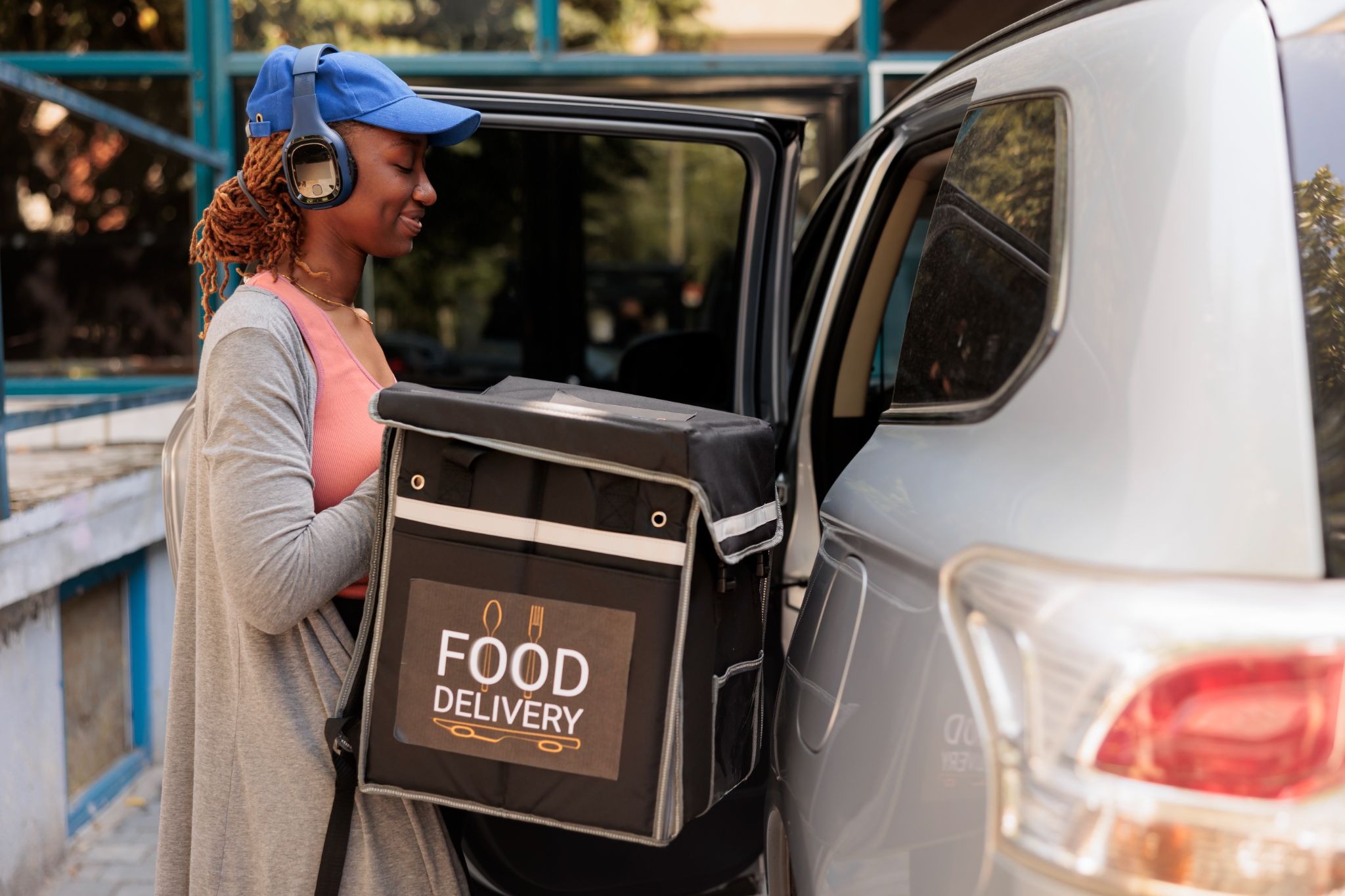
Alt text: Food delivery driver loading an insulated delivery bag into a car.
Yes, and most experienced delivery drivers do. Running both apps simultaneously, a practice known as multi-apping, can help increase earning opportunities across both platforms.
How Multi-Apping Works
Start by using one app as your main app, and keep the other as a backup during slower periods. Then, if both apps show available orders at the same time, choose the one that pays more.
However, avoid accepting two orders from different apps at once, as this can slow you down, lead to late deliveries, and hurt your ratings, which may even risk deactivation. Instead, focus on reducing downtime between orders, so you can stay efficient without taking on overlapping deliveries.
Which App to Prioritize
In major urban markets, prioritize Uber Eats during peak windows when surge pricing is active, and switch to DoorDash during off-peak hours when its higher order volume keeps you moving. Meanwhile, DoorDash is typically the stronger primary platform in suburban or smaller markets.
Tracking your actual earnings per hour on each app in your specific market is the only reliable way to know which deserves more of your time. This also gives you a clearer picture of your overall performance and helps you plan your work more effectively.
Net Pay After Expenses (The Number That Actually Matters)
Gross pay looks good on paper, but it doesn’t reflect what a driver actually keeps. Vehicle costs can significantly reduce take-home earnings, and accounting for them changes the comparison considerably.
1. Fuel and Vehicle Expenses
Every mile driven for delivery carries a cost in fuel, maintenance, tires, and depreciation. Once mileage is factored in, the gross gap between the platforms narrows considerably.
A driver earning a higher gross rate while burning through more miles can end up with similar take-home pay to a driver earning less per hour but driving shorter routes. Tracking actual mileage on each platform is the only way to know your real net hourly rate.
2. Urban vs Suburban Delivery Markets
The market you drive in shapes your expenses as much as your earnings. Uber Eats deliveries in dense urban areas tend to be shorter, which keeps fuel burn and vehicle wear low, though parking can also become more difficult and time-consuming in busy city zones. DoorDash deliveries in suburban markets tend to run longer, which raises per-trip costs but often comes with stronger per-mile pay.
That difference means a high gross rate in a sprawling suburban market can deliver weaker net pay than a slightly lower gross rate in a compact urban zone. Net earnings, not gross, should guide the decision.
3. Bonus Pay and Customer Tips
Beyond base pay, tips and incentives make up a significant portion of delivery earnings on both platforms, especially during busy hours and high-demand periods. Customer tips can noticeably increase total payout per order, while promotions such as Peak Pay, Boost zones, Challenges, and Quest bonuses give drivers additional ways to increase earnings throughout the week.
Because these incentives often change based on demand, location, and time of day, understanding how each platform structures bonus pay can help drivers plan smarter schedules and focus on the most profitable delivery windows.
Tips to Increase Your Uber Eats and DoorDash Earnings

Drivers who understand local demand patterns, peak delivery windows, and order selection often put themselves in a better position to increase weekly income.
Drive During High-Demand Hours
Timing can affect delivery earnings just as much as the platform itself. Drivers who work during busy periods often see more incoming orders, higher tips, and stronger bonus opportunities compared to slower daytime hours.
For most markets, the busiest delivery windows include:
- Lunch rush, which is around 11 AM to 2 PM
- Dinner rush, which is around 5 PM to 9 PM
- Weekend evenings
- Major sporting events and holidays
- Bad weather periods, when fewer drivers stay active
Understanding local demand patterns can make a noticeable difference in weekly earnings. Many experienced drivers test different schedules over time to identify which hours consistently bring the best results in their area.
Be Selective With Orders
Not every delivery is worth accepting, especially once fuel, mileage, and wait times are factored in. Before accepting an order, it helps to look at the payout amount, total driving distance, traffic conditions, and possible restaurant delays.
Low-paying deliveries with long routes can quickly reduce take-home earnings after vehicle costs are considered. Over time, choosing stronger-paying orders more consistently can help improve overall hourly earnings while reducing unnecessary mileage and downtime.
Learn Your Strongest Delivery Zones
Certain neighborhoods, restaurant clusters, and shopping areas consistently generate more orders than others. Drivers who stay close to busy restaurant zones during peak hours often spend less time waiting between deliveries.
Testing different areas throughout the week can help identify which zones regularly produce stronger payouts and shorter downtime.
Track Your Expenses and Mileage
Gross earnings only show part of the picture. Fuel costs, maintenance, tires, oil changes, and depreciation all affect what drivers actually keep at the end of the week.
Tracking mileage and weekly expenses gives drivers a better understanding of their true net earnings and can also help during tax season when claiming deductions.
Take Advantage of Promotions and Bonuses
Both Uber Eats and DoorDash regularly offer promotions that can increase total earnings during certain periods. Peak Pay, Boost zones, Quest bonuses, Challenges, and Delivery Streaks can all add meaningful extra income during busy weeks.
Drivers who monitor these promotions ahead of time can often plan schedules around the highest-paying delivery windows.
Consider Running Both Apps
Many experienced delivery drivers eventually use both Uber Eats and DoorDash at the same time. Running both apps can help reduce downtime between orders and create more opportunities to choose the best-paying delivery available at that moment.
However, managing multiple apps works best when done carefully. Accepting overlapping orders from different platforms can delay deliveries, hurt ratings, and create unnecessary stress during busy shifts.
What to Do During Slow Weeks
Even the most strategic delivery drivers hit slow weeks. When a slow week on either platform creates a gap between your earnings and your operating costs, having a fast, reliable funding option available for delivery drivers makes the difference between staying on the road and falling behind.
Whether you drive for DoorDash, Uber Eats, or both, Giggle Finance offers cash advances based on your gig income, not your credit score. The application is fully online, uses a soft credit check that does not affect your score, and returns an approval decision in minutes. Repayment is structured as a percentage of your actual earnings, so slow weeks do not create an additional fixed burden on top of already reduced income.
Frequently Asked Questions About Uber Eats vs. DoorDash Driver Pay
Does Uber Eats or DoorDash pay more per hour in 2026?
Based on Gridwise data from over 100,000 tracked drivers, Uber Eats pays around $14.07/hr, while DoorDash is at $11.26/hr. That is a roughly 25% gap at the median level. However, DoorDash tends to outperform in smaller markets due to higher order volume.
Which platform has more orders available?
DoorDash has higher order volume in most markets, particularly suburban and mid-size cities. Uber Eats, on the other hand, has stronger order density in major urban markets like New York, Los Angeles, and Chicago.
What is the IRS mileage rate for delivery drivers in 2026?
The 2026 IRS standard mileage rate for business driving is 72.5 cents per mile. Both DoorDash and Uber Eats drivers can deduct this on their taxes for every mile driven while on a delivery or actively seeking orders.
Is it worth driving for both DoorDash and Uber Eats?
For most drivers, yes. Multi-apping reduces dead time between orders and lets you know which pays more across two platforms at any given moment. Top earners run multiple apps strategically rather than committing exclusively to Uber Eats or DoorDash.
How do tips compare between DoorDash and Uber Eats?
Uber Eats median tips are slightly higher at $3.73 per delivery vs. DoorDash at $3.56. The difference is more pronounced in major urban markets where Uber Eats customers tend to tip more generously. In suburban markets, the tip difference between platforms is often negligible.
Whether You Drive DoorDash, Uber Eats, or Both
The best platform for you depends on your market, your schedule, and how you work. What stays consistent across both is that operating costs continue between payouts. Expenses like fuel, repairs, and insurance are part of running a delivery business on any platform.
Giggle Finance helps cover these costs with cash advances based on your gig income, not your credit score. With a soft credit check, approval in minutes, and repayment tied to your earnings, it supports how you work. See how it works for food delivery drivers.
Neither one is the highest payer, though: see how much Spark drivers make for the comparison.
For the Uber Eats side in depth, see how much Uber Eats pays drivers.
For the DoorDash side in full detail, see how much DoorDash drivers make per hour, day, week and year.
Disclaimer: Giggle Finance provides Revenue-Based Financing programs for business purposes only. Any mention of any loan product(s), consumer product(s), or other forms of financing is solely for marketing and educational content purposes and to help distinguish Giggle Finance’s product from other comparable financing options available in the market.