

On this page
Where you live can make a big difference in how much you earn as a gig worker and how many opportunities are out there. Factors like demand, cost of living, transportation, local taxes, and city infrastructure all affect your bottom line.
Some U.S. cities strike a nice balance with plenty of demand, good pay potential, affordable housing, and manageable transportation costs. Others, unfortunately, come with lower pay rates and higher hurdles to overcome.
Why Gig Workers Choose to Work a Side Hustle
In 2024, the median U.S. household income sits at about $80,610 (U.S. Census Bureau). However, according to a TurboTax survey, 69% of households earn less than that, and 44% of people with a side hustle report that their household income is under $50,000.
Most people take on side gigs to bring in some extra cash, but the payoff varies. About 45% earn less than $500 a month, while around 27% make at least $1,000.
For many (around 79%), a side hustle is just that: extra income. The other 21% rely on it as their main source of money. Among those surveyed, the income helps with everyday bills (56%), covers extras like travel or shopping (52%), or goes toward savings and investments (40%).
Beyond covering expenses, gig work appeals because it bends around people’s lives instead of forcing them to adjust to rigid schedules. Some see their side hustle as the first step toward building a full-time business of their own.
Best U.S. Cities for Gig Workers in 2025
For gig workers who want to see if the grass is greener on the other side or call a new place home, knowing which can help them make an informed decision about where to invest their time and effort.
Places Where Gig Work is Thriving
The demand for side hustles looks very different from city to city, influenced by local economies, lifestyles, and even culture. A TurboTax survey highlights the types of gigs most in demand across the country:
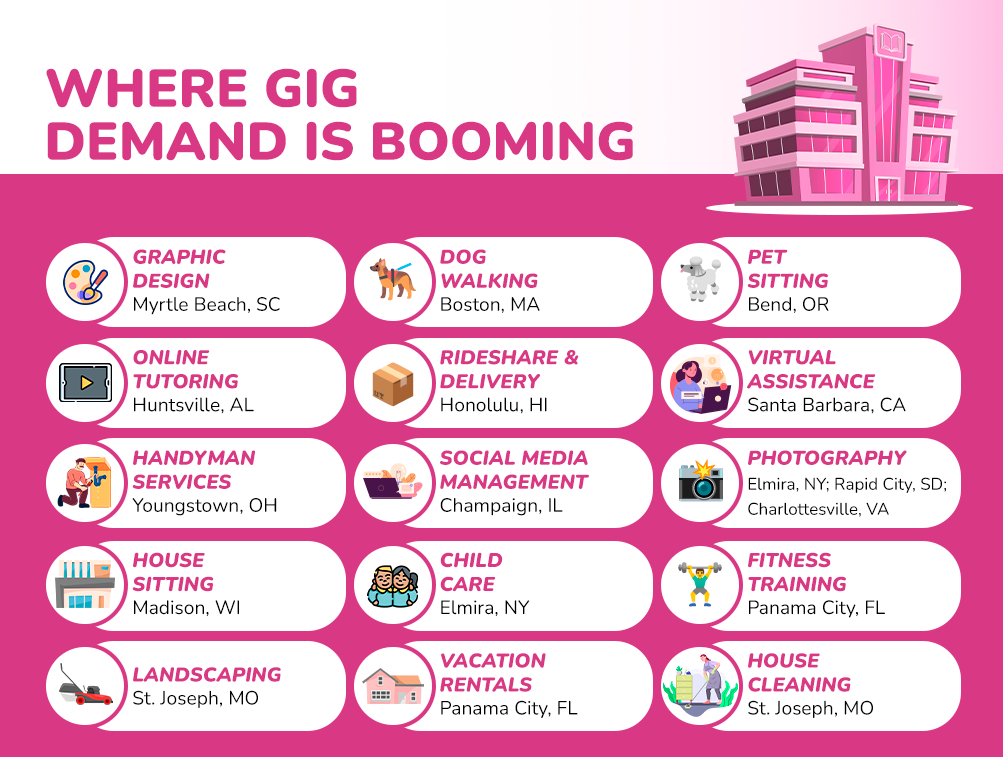
- Freelance Graphic Design – Myrtle Beach, South Carolina
- Dog Walking – Boston, Massachusetts
- Pet Sitting – Bend, Oregon
- Online Tutoring – Huntsville, Alabama
- Rideshare & Delivery – Honolulu, Hawaii
- Virtual Assistance – Santa Barbara, California
- Handyman Services – Youngstown, Ohio
- Social Media Management – Champaign, Illinois
- Photography – Elmira, New York; Rapid City, South Dakota; Charlottesville, Virginia (tie)
- House Sitting – Madison, Wisconsin
- Child Care – Elmira, New York
- Personal Assistance – Helena, Montana
- Fitness Training – Panama City, Florida
- Lawn Care & Landscaping – St. Joseph, Missouri
- Vacation Rentals – Panama City, Florida
- House Cleaning – St. Joseph, Missouri
Local demand often reflects what each area values or struggles with. Tourist hotspots like Honolulu, Myrtle Beach, and Panama City experience higher demand for vacation rentals, rideshare services, and fitness options due to the constant influx of visitors. Affluent cities, such as Santa Barbara and Boston, tend to lean toward outsourcing tasks like virtual assistance and cleaning. College towns and smaller business hubs, including Champaign, Huntsville, and Madison, create opportunities for tutoring, social media management, and house sitting.
Ultimately, the most effective side hustles are those that cater to local needs. These gigs help fill gaps in regional economies while giving workers flexible income streams. Still, competition can be tough—63% of workers with location-based hustles report facing heavy rivalry. Remote workers, on the other hand, can often sidestep some of that competition, even in crowded urban markets.
Where Gig Workers Can Live with Low Cost of Living
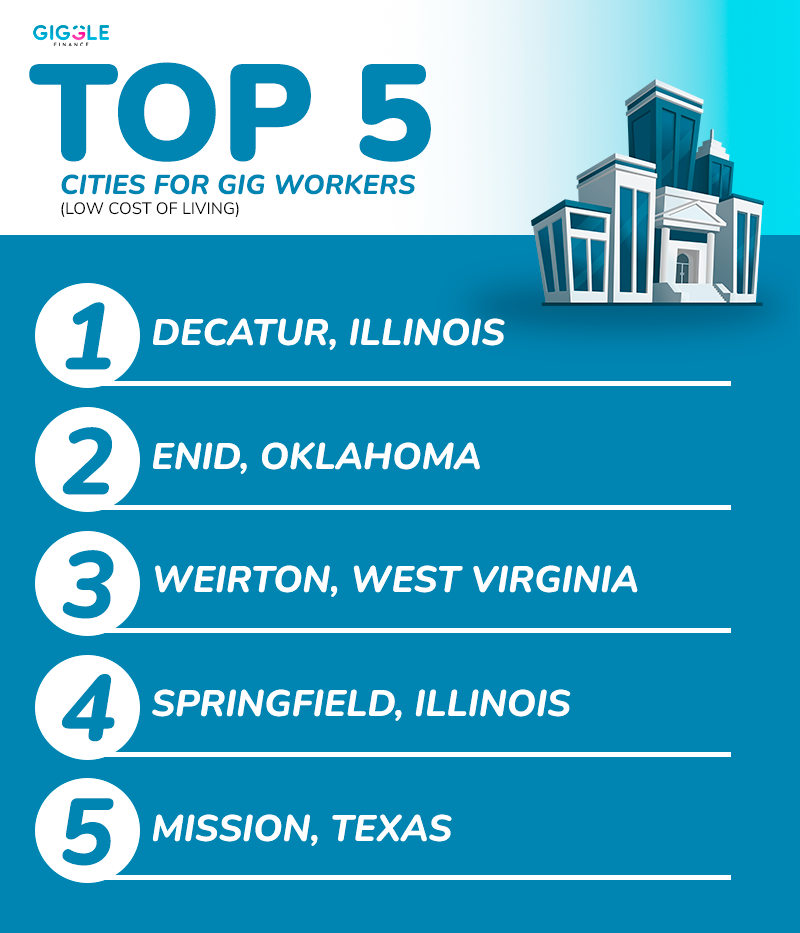
According to the U.S. News & World Report’s 2025-2026 rankings, some U.S. cities stand out for having affordable housing, low rents, and everyday costs that let your dollar go further—making them good candidates for gig workers, especially those in online roles.
Here are five cities that frequently top affordability lists:
| City | Why It Stands Out | Key Data |
|---|---|---|
| Decatur, Illinois | Ranked the most affordable U.S. city for 2025–2026, thanks to exceptionally low housing and living costs. | Median rent: ~$570 Median home value: ~$89,855 Population: ~66,692 Median household income: ~$49,682 |
| Enid, Oklahoma | Known for very low rent and housing costs relative to incomes. | Median rent: ~$647 Median home value: ~$143,305 Residents spend only ~12.5% of their income on rent (approximately) Population: ~50,763 Median household income: ~$62,361 |
| Weirton, West Virginia | Strong affordability: low rent and a favorable rent-to-income ratio. | Median rent: ~$528 (approximate) Residents spend ~11.1% of income on rent (surveyed figure) Median home value: ~$117,561 Median household income: ~$57,282 |
| Springfield, Illinois | Combines state capital infrastructure with affordable housing. | Median rent: ~$711 Median home value: ~$153,738 Population: ~113,645 Median household income: ~$64,709 |
| Mission, Texas | One of the lowest cost-of-living cities in the U.S. for 2025–2026. | Median rent: ~$699 Median home value: ~$165,761 Housing costs are said to be less than half the national average Population: ~100,000 Median household income: around $60,000 (estimate) |
* “Key Data” comes from a mix of U.S. News rankings and third-party real estate or local data sources.
Why These Cities Make Sense for Gig Workers
- Lower baseline expenses. Cities like Decatur and Enid keep core costs, like rent, property prices, and utilities, well under national averages.
- Less financial pressure. With living costs so reduced, gig income doesn’t have to stretch as far to cover essentials.
- Less competition locally. In smaller or less popular areas, local competition for gigs may be lower (though that depends on demand).
- Still connected enough. These cities tend to be well-connected (in terms of internet and transportation), so many online gigs still work.
U.S. Cities That Might Be Tough on Gig Workers
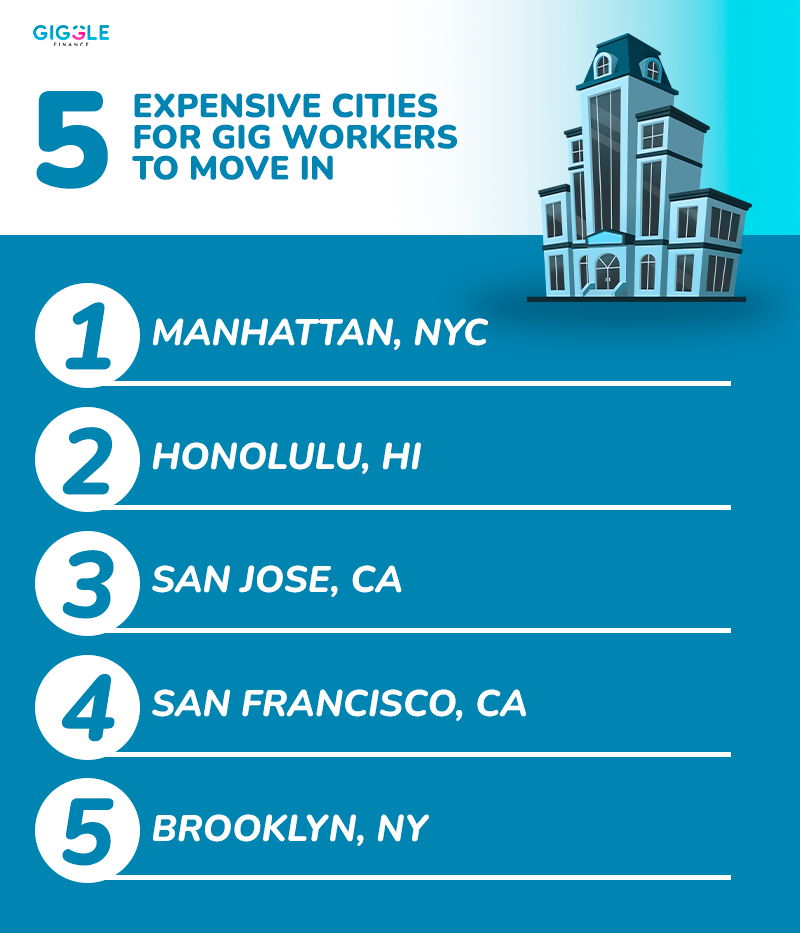
Some cities make it especially difficult for gig workers to hold onto their earnings. High rents, steep grocery bills, and inflated everyday costs mean less of your side hustle income stays in your pocket.
| City | Why It’s Challenging | Key Data |
|---|---|---|
| Manhattan, NYC | The priciest borough in the country, with housing and living costs that dwarf national averages. | Avg. rent: $5,596/mo Cost of living: 131% above U.S. average Housing costs: ~401% above average |
| Honolulu, HI | High everyday costs and utilities offset higher household incomes. | Groceries: ~20% above U.S. average Housing & utilities also well above average |
| San Jose, CA | High-income city where steep housing prices eat into earnings. | Median home value: ~$1.5M Median household income: $141,565 |
| San Francisco, CA | Extremely high home values plus groceries and utilities far above average. | Median home value: ~$1.3M (varies by source) Groceries: 22% above U.S. avg. Utilities: 46% above U.S. avg. (source estimates differ) |
| Brooklyn, NYC | Nearly as costly as Manhattan, with rents that rival many U.S. home mortgages. | Avg. rent: ~$3,700/mo (~$44,000/yr) High population density intensifies competition |
* “Key Data” reflects cost-of-living reports from RentCafe, Investopedia, HousingAnywhere, and related sources. Exact figures may vary slightly depending on the dataset and reporting year.
Why These Cities Strain Gig Workers
- Sky-high housing costs. In places like Manhattan, San Jose, and San Francisco, rents and home prices eat up such a large share of income that gig earnings don’t go very far.
- Everyday essentials cost more. Groceries, utilities, and basic services often cost 20–40% more than the national average, reducing disposable income.
- Competition is fierce. Densely populated metros like New York and San Francisco attract a vast pool of workers, making it harder to stand out in the gig economy.
- Little financial breathing room. Even with higher average household incomes, the gap between what people earn and the cost of living is narrow, leaving gig workers with limited savings potential.
How to Help Boost Your Gig Work Income

From choosing the right location to strengthening your online presence and refining your services, here are proven strategies to help you earn more and stay competitive in today’s fast-moving gig economy.
1. Target High-Demand Cities
Location is key in gig work, so set yourself up where demand is high. Research areas with thriving gig economies and search for phrases like “side hustle in demand near me” or “top local side gigs.” These searches can help you identify regions where your skills are most needed.
When considering a move or a shift in your hustle, don’t overlook the importance of transportation access and local infrastructure, as these factors can directly impact your ability to land gigs quickly and efficiently.
2. Consider Online Opportunities
If you’re not already tapping into the digital gig economy, it’s time to start mixing it with your gig work that requires you to be in a physical location. The beauty of expanding into online work is the freedom to reach clients beyond your immediate geographic area, increasing both your income potential and the flexibility to work from anywhere.
Explore platforms like Upwork, Fiverr, and TaskRabbit, and you’ll see how many virtual gigs are available and your potential competition in nearly every field.
3. Build Your Network and Online Presence
Your reputation is everything, and in the gig economy, your network is a big part of that. You’re missing out on opportunities if you’re not actively promoting yourself on social media or professional platforms.
Pick a platform that aligns with your niche, whether Instagram for creative work, LinkedIn for business services, or Facebook groups for local gigs and stay consistent. Engage with your audience, showcase your work, and always respond to inquiries promptly. Over time, this will help build your credibility and attract more clients.
4. Plan for Seasonal Swings
The gig economy isn’t always predictable. Many gigs are cyclical, with demand peaking at certain times of the year and dipping at others. For example, freelance writing might be in high demand at the start of the year, while event planning could peak in the summer.
During slow periods, it’s essential to have a backup hustle to fill the gap. This could mean picking up a seasonal gig, diversifying your offerings, or branching into another skill set you already have. Planning and staying adaptable will help you stay financially steady year-round.
5. Leverage Your Current Skills
The easiest way to get started with side gigs is by using skills you already have, which could be directly related to your current job or expertise. Plus, when you work within your field of expertise, the learning curve is minimal, meaning you can provide high-quality service right out of the gate and start earning quicker.
6. Keep Evolving
Assess how you’re finding work, how much you’re charging, and how you’re offering your services. Implementing adjustments, such as tweaking your pricing structure, offering a new
How to Boost Your Gig Income
From where you work to how you present yourself online, small changes can make a big difference in your earnings. Here are proven strategies to help you stay competitive and grow in today’s gig economy.
Target High-Demand Areas
Location still matters. Research cities or regions where gig demand is strong. Simple searches like “side hustle in demand near me” or “top local side gigs” can help you find hotspots for your skills.
If you’re considering a move or want to expand locally, consider the access to and quality of transportation and infrastructure. Being able to get to jobs quickly can directly impact how much work you book.
Tap Into Online Opportunities
If you haven’t already, blend online gigs with your local work. Digital platforms expand your reach, giving you the chance to work with clients beyond your immediate area. That means more flexibility and more income potential.
Popular platforms include Upwork, Fiverr, and TaskRabbit, all of which offer a wide range of opportunities and show you what kind of competition exists in your niche.
Strengthen Your Network & Online Presence
Your reputation is your currency. Promote yourself where your target clients are—Instagram for creative work, LinkedIn for professional services, or local Facebook groups for community-based gigs.
Stay active: share your work, engage with others, and respond quickly to inquiries. Consistency builds credibility, which leads to more clients over time.
Plan for Seasonal Swings
The gig economy isn’t steady year-round. Demand rises and falls depending on the season and industry. Freelance writing might spike at the start of the year, while event planning peaks in summer.
Prepare for slow periods by diversifying. Pick up a seasonal gig, offer additional services, or lean into another skill you already have. Flexibility keeps your income steady.
Leverage Skills You Already Have
The quickest way to earn is by using what you already know. Whether it’s related to your day job or a personal strength, your existing skills reduce the learning curve and allow you to deliver high-quality work from the start.
Keep Adapting
Regularly review how you find work, how much you charge, and the services you offer. Small changes, such as adjusting your rates, introducing a new service, or revising your marketing strategy, can spark new growth. The gig economy rewards adaptability, so be open to experimenting.
Set Boundaries to Avoid Burnout
Define your work hours and stick to them. If you work from home, carve out a dedicated workspace to separate your personal and professional life. Boundaries protect your productivity and help maintain a healthy work-life balance.
Track Your Finances Carefully
Separate personal and business accounts to stay organized. Use accounting tools (like QuickBooks or Wave) or hire a bookkeeper to track income, expenses, and taxes. Keeping tabs on your cash flow will show you which gigs are most profitable and help you plan smarter.
Prioritize the Customer Experience
Happy clients are your best marketing tool. Communicate clearly, meet deadlines, and add extra value when you can. A satisfied client is more likely to rehire you, refer you to others, or offer consistent work—all of which grow your income faster than chasing new leads.
Building a Sustainable Future in the Gig Economy
For gig workers, location plays a bigger role than many realize. Choosing the right city or going fully remote can make the difference between scraping by and building a stable, thriving career. Cities with affordable living costs, steady demand, and strong infrastructure create more room for sustainable income. At the same time, high-cost metros often cut too deeply into take-home pay, no matter how much work is available.
The path to stronger earnings comes down to strategy: positioning yourself in high-demand markets, mixing local and online gigs, and building a professional network that keeps opportunities flowing. Staying aware of new gig hotspots and updating your skills ensures you’ll remain competitive as the market shifts. In the end, long-term success in the gig economy comes from staying adaptable, choosing the right environment, and treating your hustle like the business it is.
Disclaimer: Giggle Finance provides Revenue-Based Financing programs for business purposes only. Any mention of any loan product(s), consumer product(s), or other forms of financing is solely for marketing and educational content purposes and to help distinguish Giggle Finance’s product from other comparable financing options available in the markets.