
On this page
- Why Traditional Gig Roles Are Evolving Amid Automation
- How AI Microtasks Work Compared to Rideshare and Delivery Earnings
- The Potential of Microtasking as a Core Gig Income Stream
- Risks and Opportunities: Data Privacy, Task Volume, and Earning Stability
- Diversifying Gigs: Combining Physical and Digital Work to Stay Competitive
- Preparing for AI-Powered Gig Platforms: What Drivers Should Do Now
- Embracing the Future as New Opportunities Await Gig Workers
Uber Technologies is redefining gig work by launching an innovative program that enables drivers to earn money through Artificial Intelligence (AI) training gigs. This initiative offers drivers digital microtasks that contribute directly to AI model development.
As traditional rideshare and delivery roles face increasing automation, Uber is pioneering a future where physical gig work and digital microtasks coexist, creating new income opportunities for gig workers.
Why Traditional Gig Roles Are Evolving Amid Automation
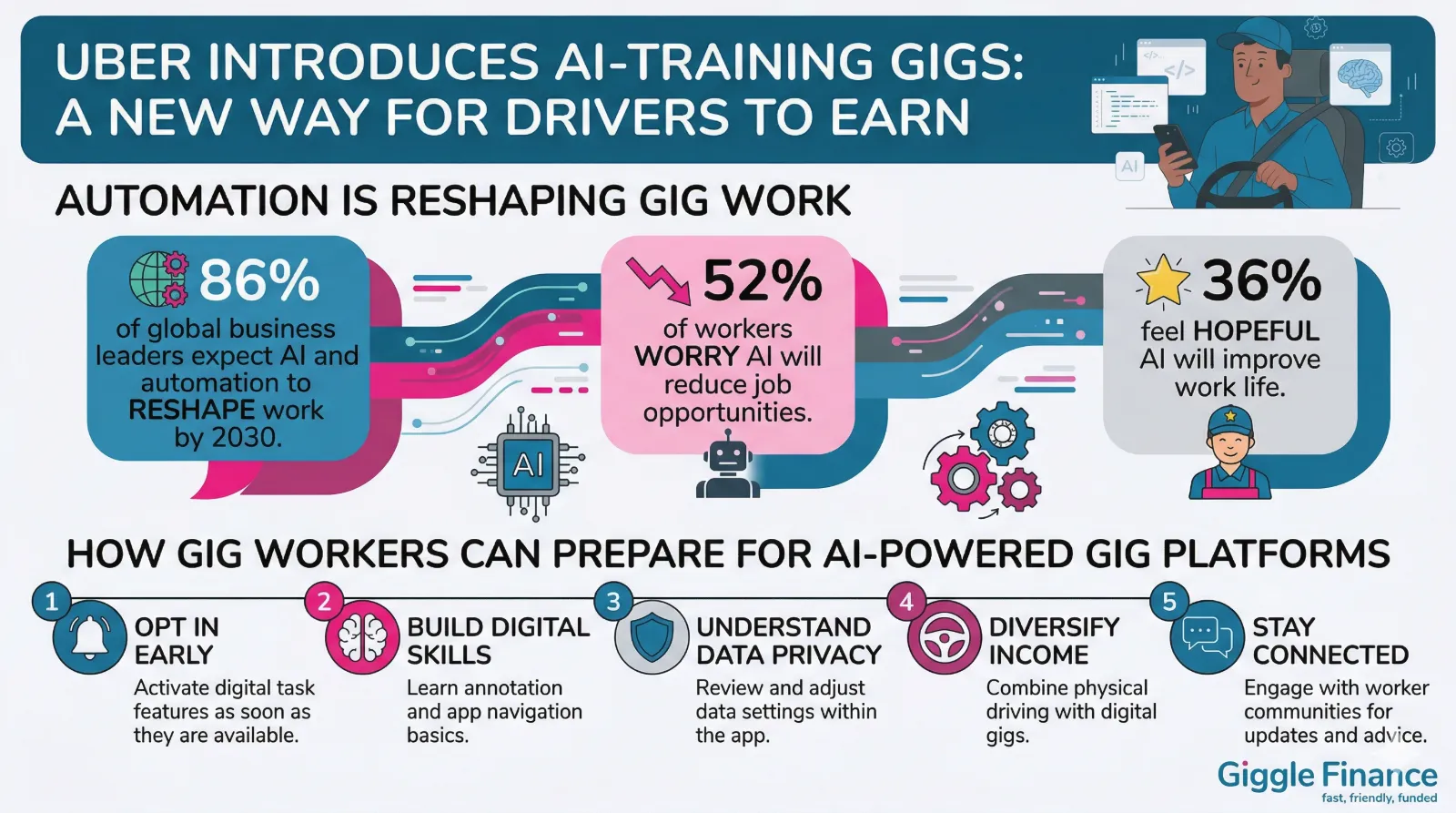
The rise of AI sparks mixed emotions among workers. The World Economic Forum’s Future of Jobs Report 2025 revealed that 86% of respondents expect AI and automation technologies to reshape their businesses by 2030.
In addition, a Pew Research Center survey revealed that about 52% express concern about AI’s impact, with 32% worried it could lessen job opportunities over time. At the same time, there’s a cautious optimism, with 36% actually feeling hopeful about how AI might improve working life. Even so, for many, the rapid changes can feel overwhelming.
Meanwhile, according to Goldman Sachs, the widespread adoption of AI may lead to a short-term increase in unemployment of roughly half a percentage point while workers transition into new roles. Yet, as AI becomes more routine in various jobs, overall productivity is expected to increase by 15%. This shift means that routine gigs might change, but those who diversify and acquire digital skills can ride the wave and discover new sources of income well into the future.
Automation is reshaping the gig economy, with a growing share of rideshare and delivery jobs at risk of being replaced by autonomous vehicles and AI technologies.
After teaming with Waymo for driverless rides in Austin and Atlanta, Uber plans to expand its robotaxi fleet to San Francisco using Lucid electric vehicles powered by Nuro technology. The company is also partnering with Nvidia, as it aims to expand its fleet to 100,000 autonomous cars soon.
Despite this, Uber is offering drivers new forms of digital engagement to supplement income during downtime. The move to integrate AI microtasking into the Uber platform addresses both automation risks and the growing demand for annotated datasets, which are essential for AI development.
How AI Microtasks Work Compared to Rideshare and Delivery Earnings
Through a pilot program from Uber’s AI Solutions Group called digital tasks, drivers not transporting a person or food from point A to point B can take on brief digital tasks. This includes tasks like recording voice clips in their native language, sending in pictures based on a category, or submitting documents in different languages. Each task is designed to be completed in just a few minutes.
These work opportunities show up in the driver app for those who opt in, and the number of available tasks depends on current client needs. Before accepting, drivers see how long each task might take and its pay. Additionally, earnings are posted to the driver’s account within 24 hours.
While rideshare driving gigs average around $18 to $25 an hour, and delivery work pays roughly $15 to $20 an hour, these digital tasks pay a set amount per task. That means they might not replace peak rideshare earning nights, but are perfect for filling downtime. By combining traditional driving with short digital gigs, drivers can increase their total earnings and utilize downtime more effectively.
The Potential of Microtasking as a Core Gig Income Stream

For Uber drivers and couriers, having digital tasks within the same app means you can earn money without having to move the car. This is especially useful during slow seasons or while waiting for your next trip. Currently, the most effective way to utilize these tasks is as “filler income” during breaks, low-demand hours, or off-peak days, rather than treating them as a full replacement for rides or deliveries.
From a benefits perspective, microtasks offer unparalleled flexibility. You can jump in and out whenever it suits you, with no fixed shifts and no minimum hours. There’s usually a low barrier to entry, too, since most tasks only ask for a smartphone, basic instructions, and attention to detail instead of degrees or certifications. Because payouts tend to be fast, these tasks can help smooth cash flow between bigger jobs, making them a natural add-on to rideshare, delivery, or freelance work. For many workers, they also act as a gentle on-ramp into digital and remote work, building comfort with online tools and payments.
However, there are trade-offs to consider. Pay per task is often low, so even a high number of completed tasks may not match what you can earn during a strong driving window. Furthermore, many tasks are repetitive and simple, which means they rarely require the development of advanced skills or lead to clear career progression. If you rely on them too heavily, there’s a risk of getting stuck in work that doesn’t grow your earning potential over time.
Risks and Opportunities: Data Privacy, Task Volume, and Earning Stability
While AI training gigs offer exciting prospects, gig workers must be aware of risks alongside opportunities. Data privacy is a primary concern, as drivers may submit personal data, including photos and audio clips. That said, drivers must fully engage with privacy policies and be informed about how their data will be collected, used, shared, and protected. For drivers, understanding these policies helps prevent unexpected data use and ensures you can exercise your rights regarding data access, control, and deletion.
Additionally, since Uber’s digital tasks are still in the pilot phase and only available to a select number of drivers, there is no concrete information yet about how many tasks will be available in the long term or how frequently they may appear.
The long-term stability of income from microtasks depends on sustained demand for AI training data and the platform’s commitment to maintaining such gigs. However, diversifying work types mitigates the risks associated with relying on a single income source and prepares workers for a more tech-integrated gig economy.
Diversifying Gigs: Combining Physical and Digital Work to Stay Competitive
To keep up with inflation and save for retirement, the gig economy has evolved into a multifaceted ecosystem where workers take on various roles across both physical and digital platforms. For example, Uber’s AI-training gigs demonstrate how drivers can blend their traditional rideshare or delivery jobs with digital microtasks. This combination not only helps increase total earnings but also builds resilience against fluctuations in any one area.
In other words, diversification can act as a buffer. Automation and seasonal slowdowns can decrease opportunities in driving or delivery, but having digital tasks as part of your portfolio creates more stability. It broadens your income base and spreads risk. Plus, developing digital skills keeps you aligned with the future of work, where tech integration is inevitable.
Preparing for AI-Powered Gig Platforms: What Drivers Should Do Now
As AI-driven gig work continues to grow, drivers who act early will have a real advantage.
- Stay informed about new gig features, such as Uber’s digital tasks, by checking updates regularly so you can participate early and gain valuable experience.
- Develop your digital skills and hone delivery driver skills by becoming comfortable with app navigation and learning the basics, such as data annotation, to prepare for future tech-driven gigs.
- Manage personal data carefully by reviewing the privacy settings and understanding the platform’s policies to maintain control over your information.
- Build a diversified gig portfolio combining physical driving with digital or remote tasking opportunities.
- Connect with driver and gig worker communities to share insights, stay updated on trends, and strengthen your support network.
Embracing the Future as New Opportunities Await Gig Workers
As automation changes the landscape, gig workers who adapt to these new tasks and diversify their skills will unlock new income streams and greater stability.
Staying informed, building digital skills, and striking a balance between physical and digital work are essential strategies for remaining competitive and thriving in the future of flexible work. Rather than fearing technology, this is a moment to innovate and harness AI’s potential to expand your earning power in a workforce that is evolving fast.
Disclaimer: Giggle Finance provides Revenue-Based Financing programs for business purposes only. Any mention of any loan product(s), consumer product(s), or other forms of financing is solely for marketing and educational content purposes and to help distinguish Giggle Finance’s product from other comparable financing options available in the markets.