

Why Every Gig Worker Needs a Weekly Sunday Reset
Gig workers face distinctive hurdles that make weekly resets essential. Unlike a typical 9-to-5 job, gig roles often come with unpredictable schedules that can shift from day to day or week to week. Research shows that irregular work hours and working multiple platforms correlate with higher stress, lower job satisfaction, and increased mental health challenges among gig workers compared to the general public. This unpredictability often leads to a state of constant alertness and decision fatigue, where every day feels reactive rather than proactive. As a result, work-life boundaries become blurred, increasing the risk of burnout and reducing overall well-being. Amid these pressures, a Sunday reset routine offers a practical and wellness-focused solution. Weekly resets provide structure to the chaos, giving you space to pause, reflect, and plan, allowing you to review accomplishments and set goals that, in turn, can help improve focus and sustained performance.Step-by-Step Sunday Reset Routine Tailored for Gig Life
A Sunday reset for gig workers is a blend of practical organization, financial check-ins, physical upkeep, and mental wellness practices. The following detailed steps guide you through a Sunday reset designed for the unique needs and challenges of gig life.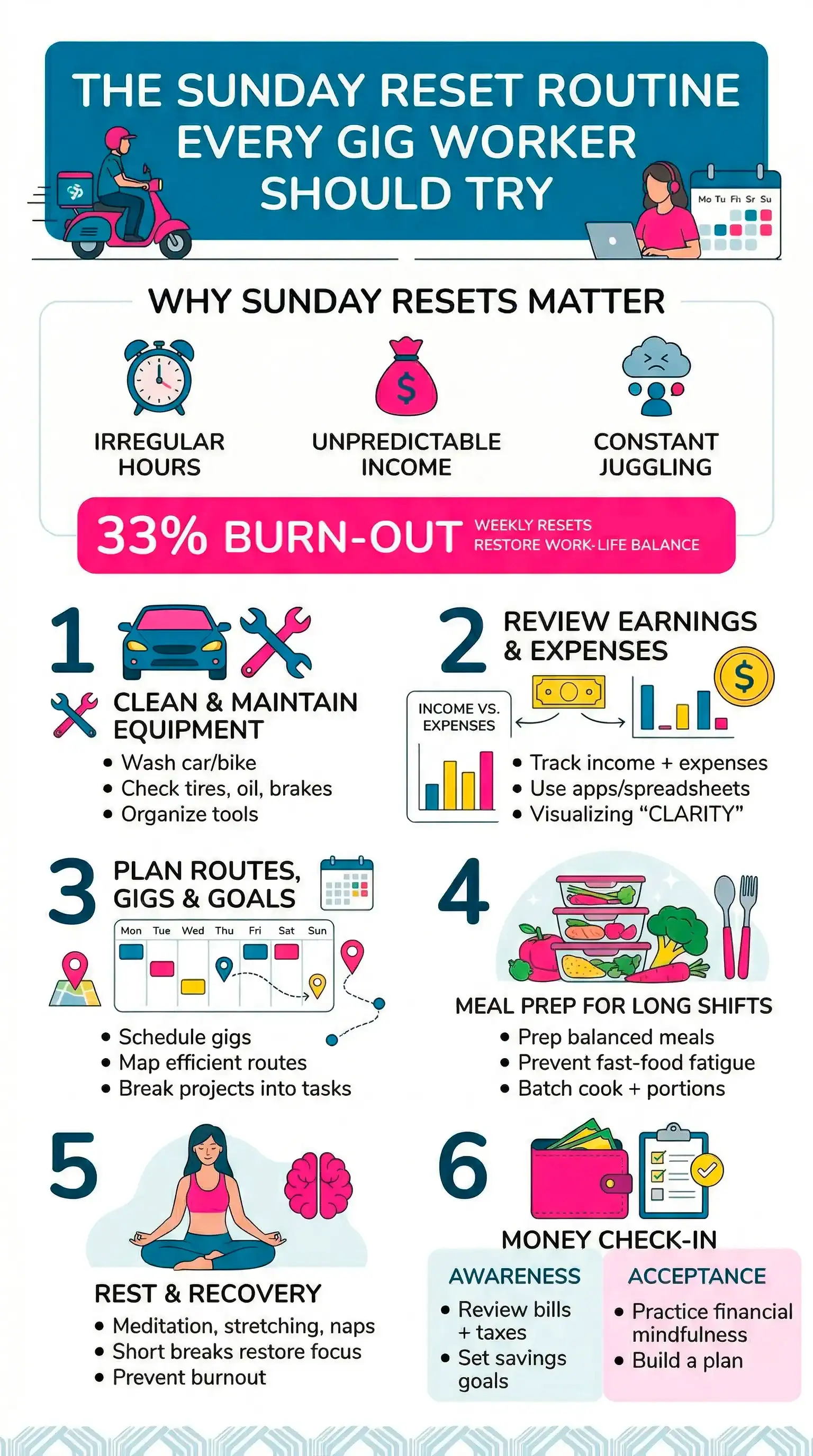
1. Clean and Maintain Your Car, Bike, or Tools
Your vehicle or equipment is your mobile workspace. Washing your car, checking tire pressure, inspecting brakes, oil levels, or tuning your bike ensures safety and reliability on the road. For cleaners and creators, organizing tools and supplies ensures efficiency during your shifts. Regular upkeep helps your gear last longer and reduces the chances of unexpected breakdowns during busy weeks. Beyond that, a clean and well-maintained workspace or vehicle boosts your confidence and professionalism when you’re out on the job.2. Review Weekly Earnings and Expenses
Financial stress is a major source of burnout for gig workers. Thus, financial check-ins directly support your mental wellness by turning unknown or frequent money worries into manageable data. In order to do this, gather all your income data from the past week. This could include things like delivery fees, cleaning payments, freelance invoices, or creative sales. At the same time, track associated expenses such as fuel, vehicle maintenance, supplies, subscriptions, or software tools. Using spreadsheets or specialized bookkeeping apps makes this process simpler and more accurate. Seeing your financial picture clearly not only helps control overspending but also highlights profitable opportunities and areas where costs can be cut.3. Plan Your Weekly Routes, Gigs, or Goals
With your finances under review, set concrete plans for the week ahead. Use digital calendars or productivity apps to schedule gigs, deadlines, and appointments. For drivers and delivery workers, planning efficient routes before heading out can save significant time and reduce fuel costs. Creators and side hustlers benefit, too, by breaking down large projects into manageable deadlines and milestones. A clear weekly plan helps you stay organized and reduces last-minute scrambling. By knowing what’s coming and when, you avoid the last-minute scramble common in gig work.4. Meal Prep for Long Shifts
Maintaining energy during long, unpredictable shifts is essential to staying productive and focused. Therefore, setting aside time on Sunday to prepare meals and snacks can relieve much of the weekday pressure. By planning balanced, nutrient-rich meals ahead of time, you ensure your body has steady fuel throughout busy days. Moreover, having ready-to-eat meals eliminates the temptation to grab unhealthy fast food, which can cause energy crashes and mood dips. According to research, individuals who follow a balanced eating pattern tend to experience fewer mental health challenges and higher cognitive performance compared to those with less balanced diets. This balanced approach involves enjoying a variety of foods in moderation. It includes a good amount of healthy proteins, fruits, vegetables, and dairy. At the same time, it allows for smaller portions of bread, cereals, processed foods, and even occasional drinks, such as wine. This way, you avoid restrictive eating and instead build a sustainable, enjoyable food routine. To streamline this process, consider batch cooking staples like grains and proteins, and pre-chopping vegetables. Also, portion snacks like nuts or fruit for easy grab-and-go options. This approach turns meal prep into a manageable, time-saving habit rather than a chore, helping you stay nourished and focused during demanding gig shifts.5. Rest and Recovery Time
One of the most essential parts of the Sunday reset is intentional rest. Whether it’s a power nap, meditation, gentle stretching, or simply disconnecting from screens, this downtime is essential for recharging your mind and body. Psychologists recognize rest and recovery as key to reversing fatigue and preventing burnout. In addition, taking breaks improves mood, well-being, and work performance. In one study, students who took a five-minute break during a demanding 45-minute attention task performed better than those who worked straight through. It didn’t matter what kind of break they took, whether sitting quietly, listening to music, or spending the break as they wished; all breaks helped refresh attention. The research highlights that working without a pause depletes mental energy. Our brains run out of “mental fuel” when forced to sustain focus continuously. Short breaks provide an opportunity to recharge this energy, enhancing concentration and overall performance. Conversely, taking time for reflective practices such as meditation, yoga, and prayer can improve your mental calm and promote physical wellness.6. Conduct a Money Check-In
After reviewing your earnings, take a moment to look ahead. Check upcoming bills, taxes, and savings goals so you’re not caught off guard later in the month. It helps you avoid last-minute financial stress, a common source of anxiety among gig workers. Additionally, practicing financial mindfulness can improve both your financial outcomes and psychological well-being, according to a study. This practice includes two main parts: First is financial awareness, which means having a clear understanding of your current money situation, including your assets, debts, income, and expenses. Second is financial acceptance, which involves acknowledging your financial condition without judgment. This acceptance enables you to make informed decisions without being overwhelmed by emotions, whether positive or negative. By combining awareness with non-judgmental acceptance, you create the space to handle your finances thoughtfully and with greater confidence.Tools and Apps to Make Your Sunday Reset Easier
 Technology can be a powerful ally when it comes to building habits that boost your gig work efficiency. The right apps not only streamline your tasks but also reduce errors and free up valuable mental space. Integrating these tools into your Sunday reset routine can simplify preparation and help you work smarter throughout the week.